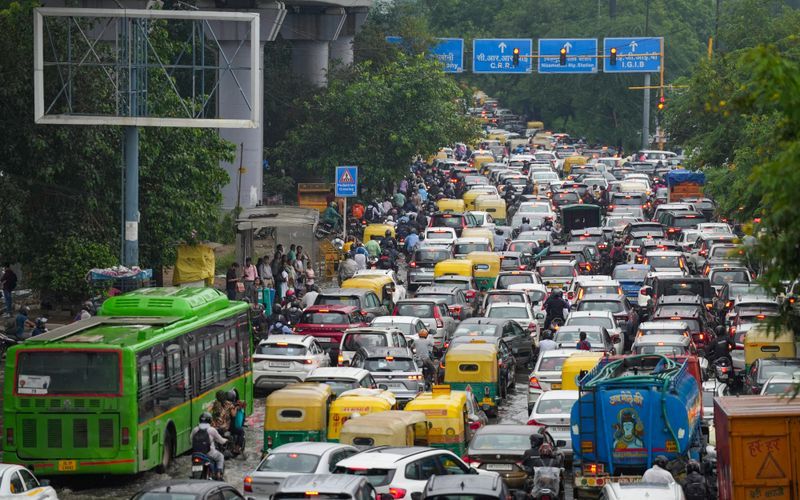

The Central Government has come up with a decongestion policy to free 48 cities and state capitals in the country from traffic congestion. This policy has been designed keeping in mind urbanisation over the next 50 years.The growing traffic volumes, coupled with unplanned urban expansion along highway corridors, have resulted in severe congestion on national highways in and around urban areas. Such congestion adversely affects the efficient movement of goods and passengers, leading to increased fuel consumption, travel delays, higher logistics costs and environmental pollution.This Ministry of Road Transport and Highways policy seeks to establish a framework for urban decongestion through the development of national highway ring roads and bypasses, while simultaneously promoting planned urban growth, effective mobility management, and value capture mechanisms in partnership with state governments.The main objective of this policy is to decongest roads and highways in and around urban agglomerations, improve logistics efficiency and reduce transportation costs, support industrial and economic growth by unlocking new development potential and enhance the overall quality of life for urban residents.Through this policy, the Centre aims to encourage greater participation from states, including a 50:50 cost-sharing arrangement for land acquisition. Alternatively, state governments may choose to bear 25 per cent of the land acquisition cost and receive reimbursement of the state GST (SGST) component, as well as royalties on minerals. States may also contribute land for bypass or ring road projects through land pooling, wherein land is provided by landowners. In addition, state governments can facilitate development permissions for land parcels located adjacent to the proposed bypass or ring road alignments.According to the ministry, an earlier study of 83 cities (population over five lakh) found that in 80 cities, highway traffic speed dropped by more than 10 per cent inside the city. Of these, congestion relief measures like bypasses and ring roads were already being implemented in 32 cities, while 48 cities still required planning for interventions.The policy said to prevent ribbon development and ensure smooth movement of through traffic, all national highway urban decongestion projects, such as ring roads and bypasses, will be developed as fully access-controlled corridors with a minimum of four lanes and closed tolling systems. This will help maintain high travel speed of 100-120 kmph for both freight and passenger vehicles over the long term.The state governments will designate a 15-m prohibited development zone on both sides of NH bypasses and ring roads as a green zone under town planning laws. No development will be allowed in this area except for essential public transport facilities, utility infrastructure (such as electricity, water and sewerage pipelines) and green infrastructure.By addressing congestion and promoting integrated, coordinated and sustainable urban expansion, this policy will contribute to a more efficient NH network, driving forward the nation’s economic and social progress.