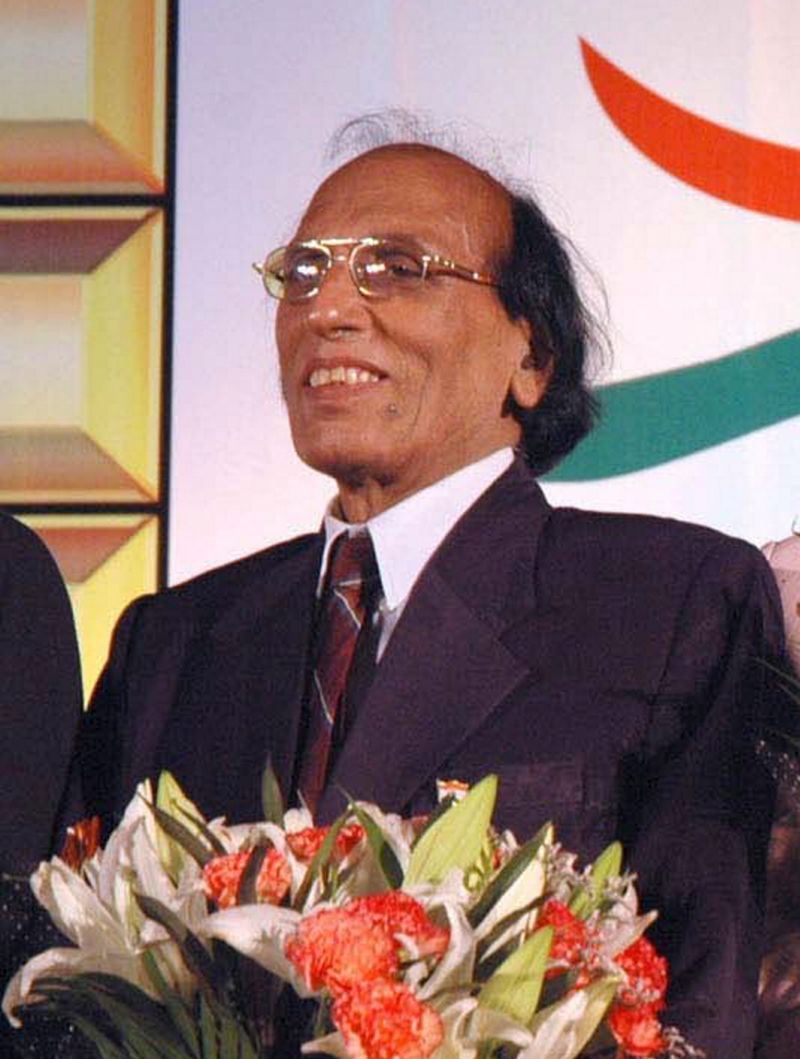

With the passing of renowned poet Bashir Badr at the age of 91, an era of romantic Urdu poetry has come to a poignant end. Widely regarded as the master of the modern Urdu ghazal, he ruled the hearts of millions worldwide through his silken verses. The magic of his words, delivered with a captivating stage presence, transformed his couplets into everyday idioms, making him the undeniable pride of global mushairas.Born on February 15, 1935, in Ayodhya, as Syed Muhammad Bashir, he completed his PhD from Aligarh Muslim University (AMU) and dedicated his academic life to teaching Urdu literature at the AMU and Meerut College.Beginning his poetic journey at just seven, Badr was a prodigy who redefined the Urdu ghazal with simplicity and spontaneity. By skilfully weaving everyday vocabulary into his verses, he broke away from rigid traditional norms, making poetry deeply accessible. His prolific literary career yielded celebrated collections like ‘Imkaan’, ‘Aahatein’ and ‘Ujale Apni Yaadon Ke’, alongside significant critical works, earning him widespread acclaim.His poetry was deeply imbued with human values. He represented a generation that witnessed the Partition and the subsequent cycles of friendship and enmity between India and Pakistan, articulating these complex experiences through a lens of profound love and humanity. In recognition of his contributions to literature, the government honoured him with the Padma Shri.Tragically, the man who spent his life spreading the message of love fell victim to the 1987 Meerut communal riots. His home was torched, destroying a treasure trove of historical, unpublished manuscripts. Following this devastating loss, he relocated to Bhopal, where he eventually breathed his last. While his later years in Bhopal were tragically shadowed by dementia, his literary brilliance remained undimmed.His poetry remained a powerful, unifying force. His poignant verses on the Partition are forever etched in public memory. So profound was his literary and emotional impact that during the historic Simla Agreement, Prime Minister Indira Gandhi famously recited one of his couplets to Pakistan’s Zulfikar Ali Bhutto — a fitting testament to the timeless, borderless relevance of his words.”Dushmani jam kar karo lekin ye gunjaish rahe, jab kabhi hum dost ho jaayein toh sharminda na hon.” (Harbour enmity fiercely, but leave this much room, that if we ever become friends, we are not ashamed.)On a personal level, Badr’s demise is an irreplaceable loss. For over 50 years, I shared a bond of familial warmth with him. I will forever cherish our last meeting at his Bhopal home, where he welcomed me with immense love. Today, as admirers worldwide mourn his departure, I bid a heavy-hearted farewell to a kind, extraordinary friend whose legacy will eternally echo in the world of literature.Some of Badr’s most immortal couplets include:”Musafir hain hum bhi, musafir ho tum bhi, kisi mod par phir mulaqat hogi.””Zindagi tu ne mujhe qabr se kam di hai zameen, paon phailaun toh deewar mein sar lagta hai.””Ujale apni yaadon ke hamare saath rehne do, na jaane kis gali mein zindagi ki shaam ho jaye.”Urdu poetry has been profoundly impoverished by his departure. He was an epoch-making figure — a romantic maestro whose verses were deeply steeped in love, and whose mere arrival on stage commanded a mesmerised silence followed by thunderous applause. His passing marks the definitive end of a golden era in literature.(The writer is an eminent broadcaster and former Deputy Director General of Doordarshan).