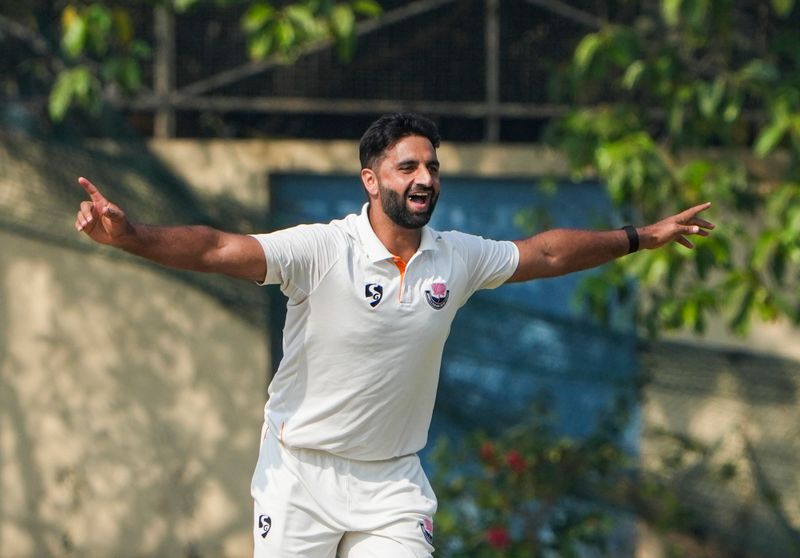

Nostalgia is one of the many repetitive, daily emotional chores that human beings indulge in. For me, such moments are soaked in the memory of a leather ball striking a bat, its sound echoing across the vastness of time.When I think of cricket as the sport that binds me to my roots, an image, almost pristine in its contours, flashes across my mind. A glistening red ball, a cricket bat, boys in whites and the Zabarwan hills rising in the background float before my eyes, an image that has lingered since my earliest school days in Kashmir.Mingling with these memories is the image of Abdul Rauf, the first of many cricketing stars to capture the imagination of Kashmiris. His explosive batting in the Ranji Trophy lit up the Valley’s strife-torn landscape and kindled dreams in countless young boys who followed the game.When Kashmir finally produced its first home-grown cricketer in Parvez Rasool to represent India almost five decades after Rauf’s time, the Valley had changed beyond recognition. For its minorities, Kashmir had become out of bounds. Amid rising violence and increasingly strident voices of dissent, most Hindus were forced to flee their homes, leaving behind the soothing, balm-like serenity of a landscape that seemed lifted from a picture postcard.Today, when we celebrate the rise of Jammu and Kashmir as a cricketing force and debate the unfairness of Ranji Trophy’s highest wicket-taker of the season, Auqib Nabi, being excluded from the Indian team, my mind travels back to Parvez’s hometown in Bijbehara. I had visited the picturesque town dotted with Chinar trees shortly after his landmark selection for India in 2013.In a land of divided loyalties and simmering anger, I watched a local inter-club match along with an unusually large gathering of spectators. Parvez was their pride, yet there was ambiguity attached to that pride. To celebrate his success was, in some measure, to acknowledge an Indian identity many were reluctant to embrace, leaving them caught in a quiet contradiction.While Parvez’s five-wicket haul for India remained an unfulfilled dream, the conversations around him revealed a Kashmir suspended between self-esteem and estrangement. His supporters wanted him to succeed because he was theirs. Whether they wanted India to succeed was a more complicated question.When he was eventually overlooked on that tour, the disappointment travelled beyond cricket, feeding a familiar sense of exclusion. Yet what I remember from that afternoon was not anger, but the ability to debate these questions openly across identities on the boundary of a cricket field.Though Parvez would later play just two matches for India, a one-dayer and a T20 tie, an opportunity to build bridges through cricket had already been lost. His very brief stint in the Indian team reinforced suspicions in the Valley that Kashmiri talent was not judged on merit alone.Yet cricket also offered evidence that mistrust need not be permanent. India’s legendary spinner and a rare voice of dissent on cricket’s governing issues, Bishan Singh Bedi, had played a pivotal role in nurturing Jammu and Kashmir and Parvez’s talent. Given the responsibility of coaching the team, he initially found himself being viewed with suspicion and was accused of favouring players from outside the Valley. But, as they came to know and understand his strict ways of imposing discipline, suspicion gave way to trust. What began as a strained relationship evolved into one marked by deep admiration and respect.In many ways, Bedi’s journey with the team reflected Kashmir’s larger dilemma. Trust was difficult to establish and easy to lose, but once earned, it could transcend barriers of region, religion and politics.Bedi laid the foundation of a team that began to compete with distinction in the Ranji Trophy. Coaches such as Irfan Pathan built on that work, transforming Jammu and Kashmir into a formidable force in domestic cricket. The highly skilled, even if controversial, Ajay Sharma, whose association with book-makers had once landed him in trouble, was a run-making machine in First Class cricket. His coaching stint coincided with Jammu and Kashmir achieving what had once seemed beyond the realms of possibility: winning their maiden Ranji Trophy title.Kashmir, it seemed, was being integrated into the Indian mainstream through cricket. If triumph came first, it was soon followed by a stab of disappointment, whose pain threatened to overwhelm the euphoria of success. It was widely assumed that the medium-pacer Nabi would be rewarded with a place in the Indian team for his magnificent performance. The collective sigh of dismay at his omission could be heard across the country. Former cricketers such as Dilip Vengsarkar and Sanjay Manjrekar were aghast, though such whims and inconsistencies are hardly unknown in team selection.But try explaining the decision through the logic of cricket to those who still remember the manner in which the selectors had treated Parvez.In a Valley marked by discontent, cricket has replaced football as a vehicle of self-assertion and identity. For its people, the Ranji Trophy team had fulfilled a cathartic need, providing an emotional outlet where the young and aspiring could breathe with freedom and joy.The failure of the Indian cricket establishment and its selectors to see the larger picture is disquieting. A nation that prides itself on accommodating immense diversities of caste, religion and languages cannot afford to view such moments solely through the narrow prism of cricketing logic. To invoke the oft-quoted words of CLR James seems particularly apt: “What do they know of cricket who only cricket know.”— The writer is the author of ‘Not Quite Cricket’ and ‘Not Just Cricket’