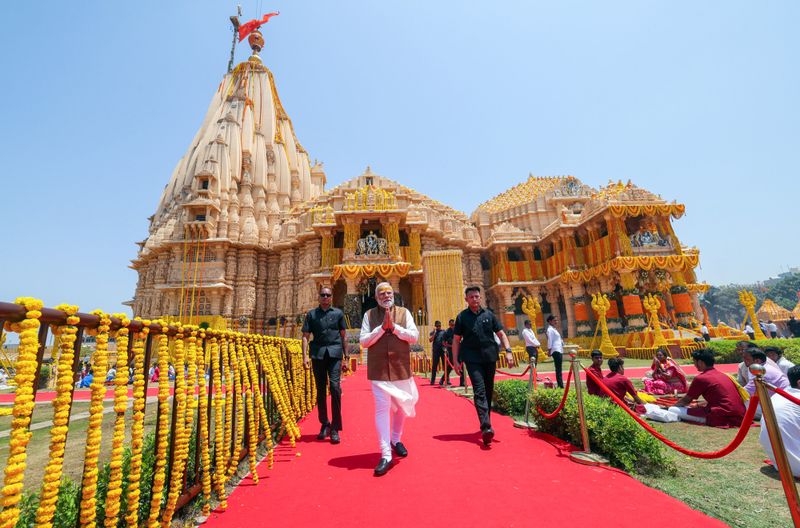

Prime Minister Narendra Modi on Monday reiterated his appeal to citizens, saying that they must ease the burden on domestic resources amid the ongoing West Asia conflict.Urging people to cut the use of foreign goods and every product which demands payment in terms of foreign exchange, the PM said, “If the Covid pandemic was the biggest crisis of this century, the situation created by the war in West Asia is one of the major crises of this decade.” He also suggested holding temporary online classes for school students.Speaking at the inauguration of Sardardham Hostel in Vadodara, Modi said when Indians collectively fought and overcame Covid, they would surely overcome the ongoing crisis as well.“The government is also continuously making efforts to ensure that its impact on the people of the country is minimal. As citizens of India, we must prioritise our duties. In the previous decades too, whenever the country has gone through war or any other major crisis, every citizen has fulfilled his responsibility in the same way in response to the government’s appeal,” the PM said.He said even today there was a need for people to come together and fulfil their responsibilities by reducing the burden on national resources.“We must reduce the use of such products that come from abroad through every small and big effort… and also avoid such personal activities that involve spending foreign currency,” said the PM.Yesterday also, the PM had asked people to defer non-essential purchase of gold for a year to prevent foreign exchange outflow, use locally made products, reduce edible oil consumption and also urged farmers to cut chemical fertiliser use.“Today, the need of the hour is… that we turn ‘vocal for local’ into a people’s movement. Instead of foreign goods, embrace local products,” the PM said.Behind his appeal is the concern around potential rise in India’s current account deficit which the IMF had projected could rise to $84.5 billion in 2026. This would mean more forex outflow than inflow.The products the PM mentioned for public rationing are all high on India’s import bill list. Of the total around $780-billion imports last year, crude was worth $135 billion; gold $72 billion; vegetable oils $19.6 billion and fertilisers nearly $15 billion.Four items alone commanded about $250 billion — a massive chunk of foreign exchange which, if saved, could ease the pressure on current account deficit and the economy.