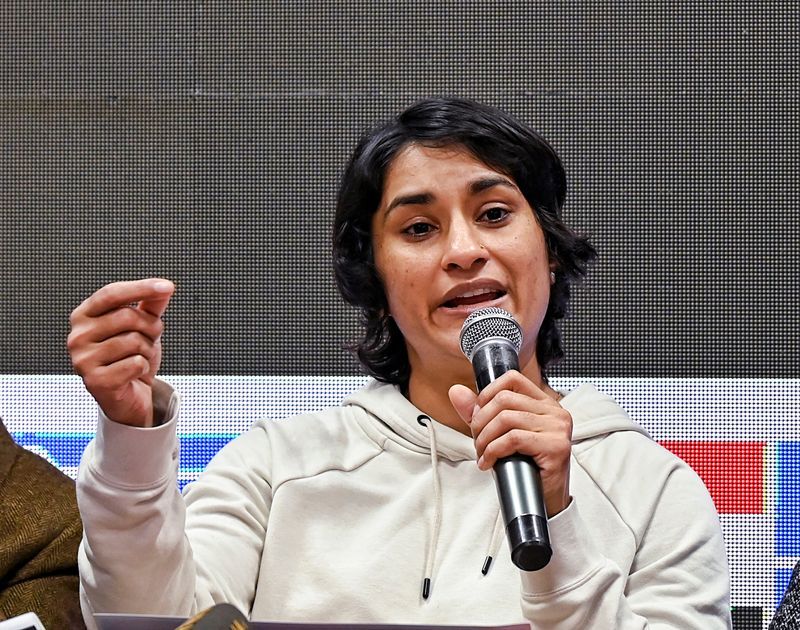

The Delhi High Court on Monday directed the Wrestling Federation of India (WFI) to decide on the show-cause notice issued to wrestler Vinesh Phogat over allegations of indiscipline and violations of anti-doping regulations within two weeks, while closing her petition challenging the notice and the federation’s selection policy.Justice Swarana Kanta Sharma also ordered the federation to communicate its decision on the notice dated May 9 to both Phogat and the court within the stipulated period. The court recorded the WFI’s assurance that the wrestler would be granted a personal hearing before any final decision was taken.The court disposed of the petition after the WFI submitted that Phogat’s grievance regarding participation in the selection trials for the Asian Games had become infructuous as she had already been allowed to compete pursuant to earlier judicial directions.Phogat’s senior counsel argued that the case also raised broader concerns over the legality of the WFI’s selection policy. However, the court observed that since the issue relating to the trials had become redundant, those questions would have to be raised through a fresh writ petition. It clarified that the present proceedings could be concluded, leaving Phogat free to initiate separate legal proceedings on the policy.The court was also informed that Phogat had received another show-cause notice over her conduct during the selection trials.On May 9, the WFI had issued a show-cause notice to Phogat and declared her ineligible to compete in domestic events until June 26. The federation relied on the mandatory six-month notice requirement applicable to athletes returning from retirement under anti-doping regulations.In her plea, Phogat challenged the WFI’s selection policy and the circular restricting eligibility for the Asian Games selection trials to medal winners of specified tournaments.She contended that the qualification period fixed by the federation substantially overlapped with the sabbatical she had taken due to pregnancy and post-partum recovery. According to her, the eligibility criteria effectively shut her out of consideration through an inflexible mechanism that was arbitrary and discriminatory.