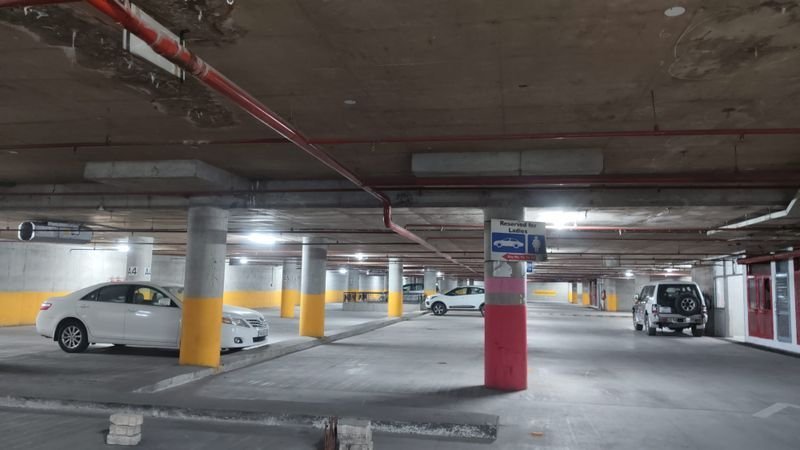

Delhi’s Master Plan 2047 proposes a significant change in the way parking will be managed in the capital.It proposes to penalise on-street parking within 500 metres of a multi-level parking (MLP) facility at three times the charge levied at the MLP.The provision, part of the development control norms for transportation infrastructure, effectively creates a 500-metre parking management zone around every designated multi-level parking facility. The stated objective is to make street parking less attractive and push motorists towards organised off-street parking.Under the notified Master Plan for Delhi-2047, a single management agency will be responsible for managing an MLP as well as on-street parking up to a minimum distance of 500 metres from the ingress of the MLP plot. The agency will also have to take measures to discourage on-street parking, including increasing parking charges to at least three times the MLP charge.The provision is significant because it goes beyond simply constructing more parking spaces. It links the operation and pricing of off-street and public street parking in the surrounding neighbourhood, creating a mechanism through which the authorities can deliberately make parking on the road substantially more expensive than using an MLP.From building parking to managing surrounding streetsThe MPD-2047’s parking strategy envisages a broader shift away from simply increasing parking supply.It calls for area-based parking plans, with local bodies identifying “Parking Management Areas” in places such as markets and commercial hubs where vehicular movement and parking congestion are high. Parking Management Area Plans can include regulation of parking supply, no-parking zones and dynamic parking charges linked to demand.The plan also says public parking in congestion zones should be regulated through high charges to discourage private vehicle use, with dynamic rates linked to peak hours and the level of activity or congestion in an area.The MLP provision gives this broader policy a particularly concrete form: once an MLP exists, the area around it is not simply left to conventional street-parking arrangements.Street parking could become deliberately more expensiveThe three-times provision is perhaps the most consequential part of the new framework.The plan states that the management agency must take suitable measures to discourage on-street parking around MLPs through increased parking charges “at least 3 times that of MLP”, apart from other measures.For example, if parking inside an MLP were charged at ₹20 an hour, the policy would require the corresponding on-street parking charge to be at least ₹60 an hour in the relevant area, subject to the actual tariff fixed by the implementing authority. The Gazette itself does not prescribe a particular rupee tariff; it establishes the three-times relationship.The plan separately states that on-street public parking for private modes should be discouraged within 500 metres of an existing MLP and priced higher than the off-street facility. Halt-and-go and park-and-ride facilities for intermediate public transport and taxis may, however, be permitted near MLPs.MLPs can be built with commercial uses, without height capThe parking facilities themselves are also being given considerable development potential.MPD-2047 permits MLPs on plots designated by local bodies, with a minimum land size of 1,000 sq. mtr and development norms that allow substantial FAR. For plots between 1,000 and 3,000 sq m, the maximum FAR is 100; larger plots get progressively different FAR calculations.Importantly, the plan allows remunerative commercial uses in MLPs, including activities permitted in community centres and public and semi-public facilities.It also states that the height of an MLP will not be restricted, subject to clearance from statutory bodies.The plan says MLPs may be developed through public or private initiative, while MLPs on government land should preferably be developed through a public-private partnership model.For MLP plots larger than 3,000 sq m, a Traffic Impact Assessment and Traffic Management Plan will be mandatory.Parking policy could also affect residential neighbourhoodsThe 500-metre MLP rule is part of a much broader attempt to move Delhi towards demand-based parking management.The plan proposes a phased system for regulating on-street parking in residential areas through leasing parking spaces using permits. It also proposes linking registration of new vehicles to the availability of parking space.MPD-2047 further says there should be zero tolerance for unauthorised parking on public streets and footpaths, with stringent enforcement measures including heavy penalties, suspension of driving licences and revocation of vehicle registration. It also proposes progressive registration charges linked to the number of vehicles purchased by an individual or family.The plan envisages technology-based parking management as well, including apps providing real-time information on available on-street and off-street parking spaces and their charges.MLP within 1 km can reduce parking requirement for buildingsAnother less-noticed provision could have implications for future construction.Under MPD-2047’s parking norms, if a multi-level parking facility is located within a 1-km radius of a property, the parking requirement within that property can be reduced by 10 per cent. The deduction applies when at least 50 per cent of the plot area falls within the prescribed distance.This creates a second geographical relationship around MLPs, while 500 metres is the zone in which street parking is to be discouraged and priced higher, an MLP can influence the parking requirement of buildings within 1 km.The plan also provides a 30 per cent reduction in parking requirements for properties within 500 metres of a Metro station and a 15 per cent reduction for properties between 500 and 800 metres from a Metro station.Shift from providing parking to pricing itTaken together, the provisions indicate that MPD-2047 is attempting to change Delhi’s parking philosophy from one based primarily on creating additional parking supply to one based on managing demand through pricing, permits and restrictions.The plan itself notes that continually increasing parking supply has encouraged greater use of private vehicles and resulted in non-optimal utilisation of land. It therefore calls for demand-based parking management and more efficient use of existing infrastructure.The MLP provision is a particularly tangible expression of that approach: build organised parking, make it cheaper than surrounding street parking, and place both systems under a common management arrangement for at least a 500-metre catchment.The policy could therefore have consequences not just for motorists looking for a parking space, but also for local markets, residents, shopkeepers and the agencies or operators eventually tasked with managing these parking zones.At the same time, the Gazette does not specify in this provision which agency will operate each 500-metre zone, how the operator will be selected, or the precise tariff-setting mechanism. Those details will determine how the provision is ultimately implemented on Delhi’s streets.The MPD-2047 was notified by the Central Government on 20 August 2026 and came into effect from the date of publication of the Gazette notification.