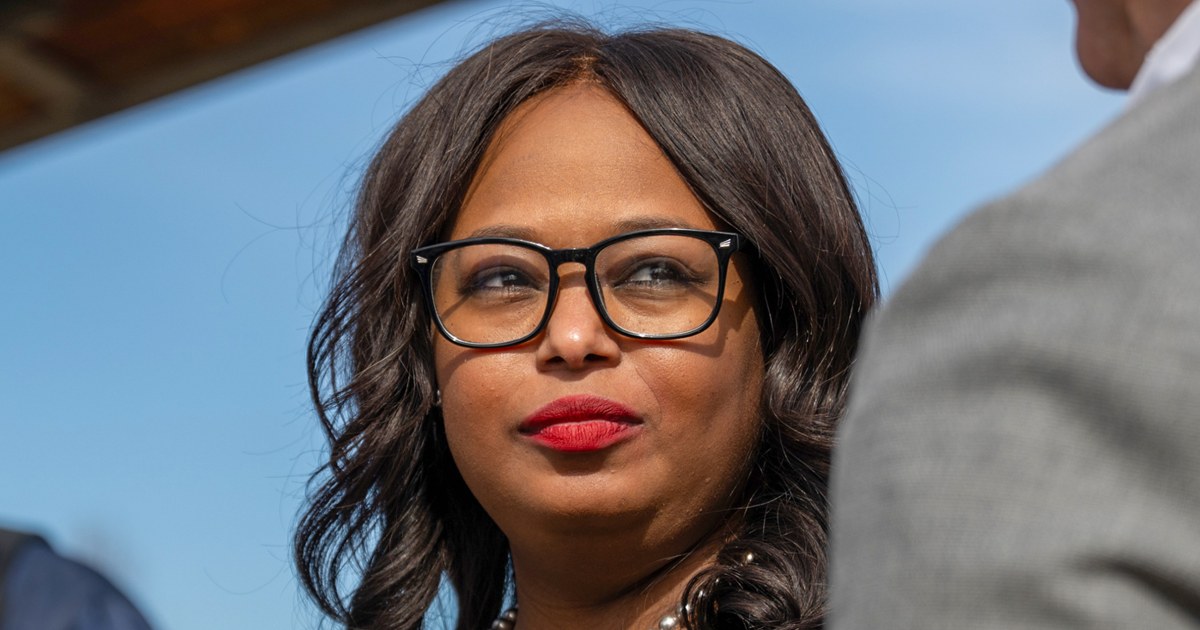

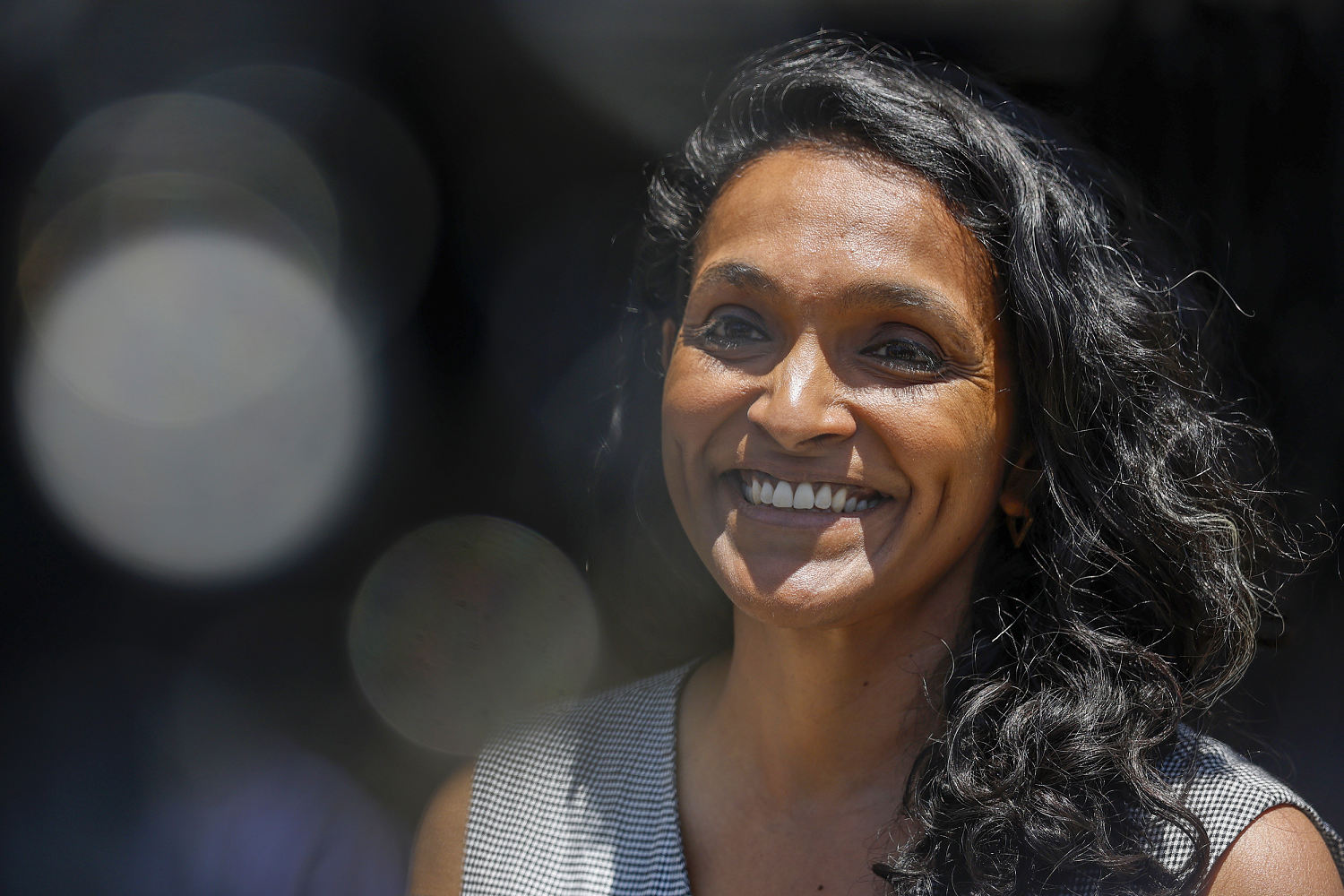
Washington, D.C., mayoral candidate Janeese Lewis George looked at a teeming crowd Tuesday evening and issued a proclamation about her candidacy as a democratic socialist: “If there were any doubt, let it now be laid to rest,” she said. “It is the people of D.C. who elect the mayor of D.C.”Subscribe to read this story ad-free Get unlimited access to ad-free articles and exclusive content.Flanked by supporters after early Democratic primary results showed her with a significant lead, she continued: “Tonight, D.C. made its demands.” Her remarks came days after President Donald Trump had warned that he could attempt a federal takeover of Washington if Lewis George, a City Council member, rose to power. “We won’t put up with it,” Trump warned in comments to reporters. But he already has. In some of the United States’ most powerful and populous cities, including its financial hub and now potentially its political center, politics are shifting further left — and some say it is in direct response to Trump and his policies. Democratic socialist Zohran Mamdani spectacularly rose to prominence to lead New York City in last year’s elections, offering free bus rides and rent stabilization. In Los Angeles, democratic socialist Nithya Raman advanced to the mayoral runoff, in which she’ll face off against incumbent Karen Bass, a fellow Democrat.City Council member Nithya Raman in Los Angeles on June 1.Justin Sullivan / Getty Images fileIn Seattle, democratic socialist Katie Wilson assumed office this year after having risen as a leader and an advocate in the Transit Riders Union. In Chicago, far left-leaning Brandon Johnson — who, unlike the others, is not a self-described democratic socialist but is an acolyte of Bernie Sanders and was backed by the organization Sanders founded, Our Revolution — is closing out his first term as mayor and is likely to seek another. Now, Lewis George could claim power over the nation’s capital when Trump is pushing the limits of power in the executive branch and residents are increasingly feeling the squeeze of higher rent, higher transportation costs, higher unemployment and low wages. At the same time, the nation’s richest people are attaining wealth by leaps and bounds. “More people are having to work multiple jobs or just more hours to make ends meet, just to deal with those costs. Meanwhile, people see what the federal government is doing: investing more in militarism, giving trillions of dollars in tax cuts to the already wealthiest,” said Ashik Siddique, a national co-chair of the Democratic Socialists of America. “So when we have people who are running on credible platforms of expanding public services to be universal and high-quality for everybody and taxing the rich to do it, that message really resonates. People are really hungry for an alternative to the status quo.”Progressives say the phenomenon is an evolution of a movement that began with Sanders’ presidential run 10 years ago, which inspired a new generation of leaders. Democratic socialism grew under his rise, with major groups like DSA and Our Revolution recruiting and supporting candidates for local offices. In most cases, DSA mayors and mayoral candidates held previous positions on city councils or county commissions or in local unions.Lewis George ran on what she called a “people first” platform focused heavily on the cost of living. She said she would seek universal childcare, caps on rent and stabilization of utility prices. As of Wednesday, with ballot counting still underway, she had about 53% of the vote, with her nearest rival, former City Council member Kenyan McDuffie, at 37%. Ranked-choice voting will come into play to determine the primary winner if she falls below the majority mark. Ironically, the rise of the far left mirrors the economic populism Trump originally tapped during his 2016 run. His MAGA movement grew out of promises to tear apart the status quo and “drain the swamp” in Washington. It helped him win over some blue-collar white voters who had voted for former President Barack Obama. But economic strain has dominated Trump’s second term in office, and there is evidence he’s losing ground with those same voters.Today, poll after poll shows Americans are distraught over the economy amid rising gas prices and grocery costs, as well as growing inflation. A recent Jattvibe News poll, sponsored by the nonpartisan, nonprofit group More Perfect and taken in advance of the nation’s 250th anniversary, found that 78% of American adults believed the “American Dream” was more difficult to attain now than it was a generation ago. The survey found that the sentiment was consistent across demographic groups. “It’s a reaction to Trump. Trump has attacked major cities, which have a higher concentration of Democratic voters. He’s infiltrated them with ICE and National Guard troops. He’s cut off funding,” Our Revolution Executive Director Joseph Geevarghese said. “It’s a part of a larger trend. … The cost of living is just unaffordable, and so you’re seeing a referendum not just on Trump but also on this Democratic establishment in their governance of these cities.” Whether Trump will follow through with his threats to attempt a federal takeover in Washington should Lewis George win remains to be seen. Trump made similar remarks amid Mamdani’s rise last year, only to later sing his praises from the Oval Office. And groups on the left say that if Trump were to attempt a militarization of Washington, he would expect it to be met with the kind of wide-scale protests and resistance that eventually drove a large immigration enforcement operation out of Minneapolis this year.“There was massive organizing at every level of society … that helped push them out and let them see that there’s just massive resistance from the public,” Siddique said. In Washington, he continued, there’s a storied history of pushing back against power grabs. He forecast the same would happen if Trump tried to take that route.“There are a lot of people in D.C. who will stand with somebody who’s a mayor who really represents all those organized people,” he said.