
I am no historian, economist or social anthropologist. Let’s get that out of the way at the very beginning so that I am not torn apart for being flippant or naive. However, I do have a great memory (even at 75) and can remember almost all that happened to fashion my life in these seven decades. My friends call me a storehouse of useless information and even if they have never always meant that as a compliment, I take it as one. What I enjoy is to document all the trivia that has a history of its own, and that links others of my generation to a galaxy that is light years away from the globalised world that has rendered faceless or useless all those who are not connected digitally.
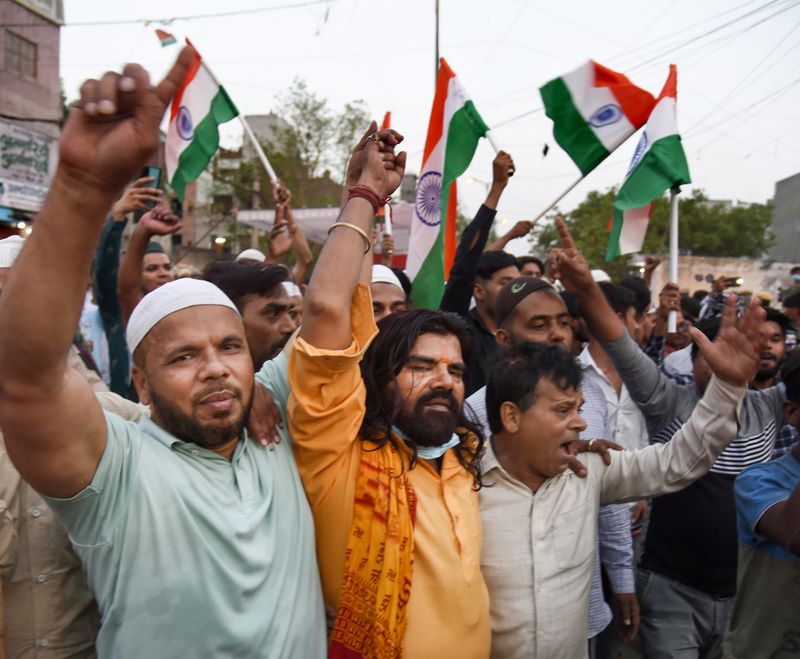
The ’50s and ’60s were the foundational decades of our country as we know it now. Moreover, for those of us, like me, who were born then, it went along with a way of life and an upbringing that left a deep imprint on each one of us. Everything that is still good in this country dates to that time, but all that eventually derailed the innocent promises of that age can also be traced back to those decades. My birth in 1951 was also when India was given its Constitution. So I like to believe that the values that it was founded on were also the same we were given as my generation grew up. Today, when I look around, I find that all those who stand up for those eternal human values are mostly from our age group. You will find them in each public demonstration against the erosion of human rights, the division of this country along caste and creed, the centralisation of power and the snuffing of weak voices.
This is, of course, a romantic view and peculiar to a certain section of the upper middle class, who had a long history of a liberal education behind them but who lived modest lives. In the mofussil towns of UP, this meant that we were products of a mixed education. We went to missionary schools that still taught us British rather than Indian history, prayed in chapels and abided by the rules of a Christian way of life. Our ‘home’ lives were markedly different, yet I strongly believe that exposure to an education by Roman Catholic nuns made me a better Hindu and sharing my tiffin box with Farzana made me guilt-free about eating halal meat. I often joke that our exposure to the Avadhi culture of Lucknow made me a Shia Brahmin but the truth is deeper than that flippant remark.
Our ease with switching from one language to another as we spent the day was perhaps another seamless acceptance of different voices, views and sounds. And in case this makes our generation sound like a bunch of sanctimonious prigs, let me add that caste, religion and epithets were then not politically erased by any high-minded moral police. I remember a municipal sweeper (be-turbaned and attired in a khaki uniform) who came every day to clear the smelly stuff that our personal mehtar emptied into a tin shed, hidden in a khet far from the house and called a bumpoliss (don’t ask why).
We would meet him again as we walked to school, carrying a headload of nightsoil on his head, singing, ‘Har phool main khusboo hai, har patta khoos-khoos hai’ (Every flower has a fragrance and each leaf looks happy). As soon as we saw him, we’d hold our noses and dart over to the other side of the road and cross our fingers (antioli, that our Brahmin maliji said would avert the sin of meeting a mehtar). I blush in shame as I remember this because the singing sweeper was the sweetest, most playful character and pretended to frighten us by coming towards us.
Today, children would be (rightfully) punished for this cruelty but we were innocent kids then and never questioned how we could hurt sentiments and human dignity by our behaviour. Servants were cared for by families and generations worked for the same family for years, yet they ate their food from china plates, while we ate from silver or steel thalis. Their tea was served in glass or chipped mugs while we drank milk or tea from steel, copper or brass.
There is much to be said for sanitising our everyday language from politically-loaded words and concepts but the muscle memory of those long-held beliefs remained embedded. To those who did not have the benefit of a liberal education or upbringing, these beliefs were waiting to be exploited by political parties that slyly made it ‘kosher’ to be proud of being a Hindu or Muslim instead of being proud to be an Indian. Added to this is the division of the country along linguistic lines that has resulted in a disturbing form of sub-nationalism. Many cannot read or write in their own mother tongues yet they insist on calling those who come from a different state ‘outsiders’.
The recent political wars fought in Bengal over who could or could not belong there also exposed the harm that the champions of this chauvinism have done to the state.
Insider-outsider, Hindu-Muslim, my caste-not my caste — the list of separating us from each other is long and painful. Enough!
— The writer is a social commentator