
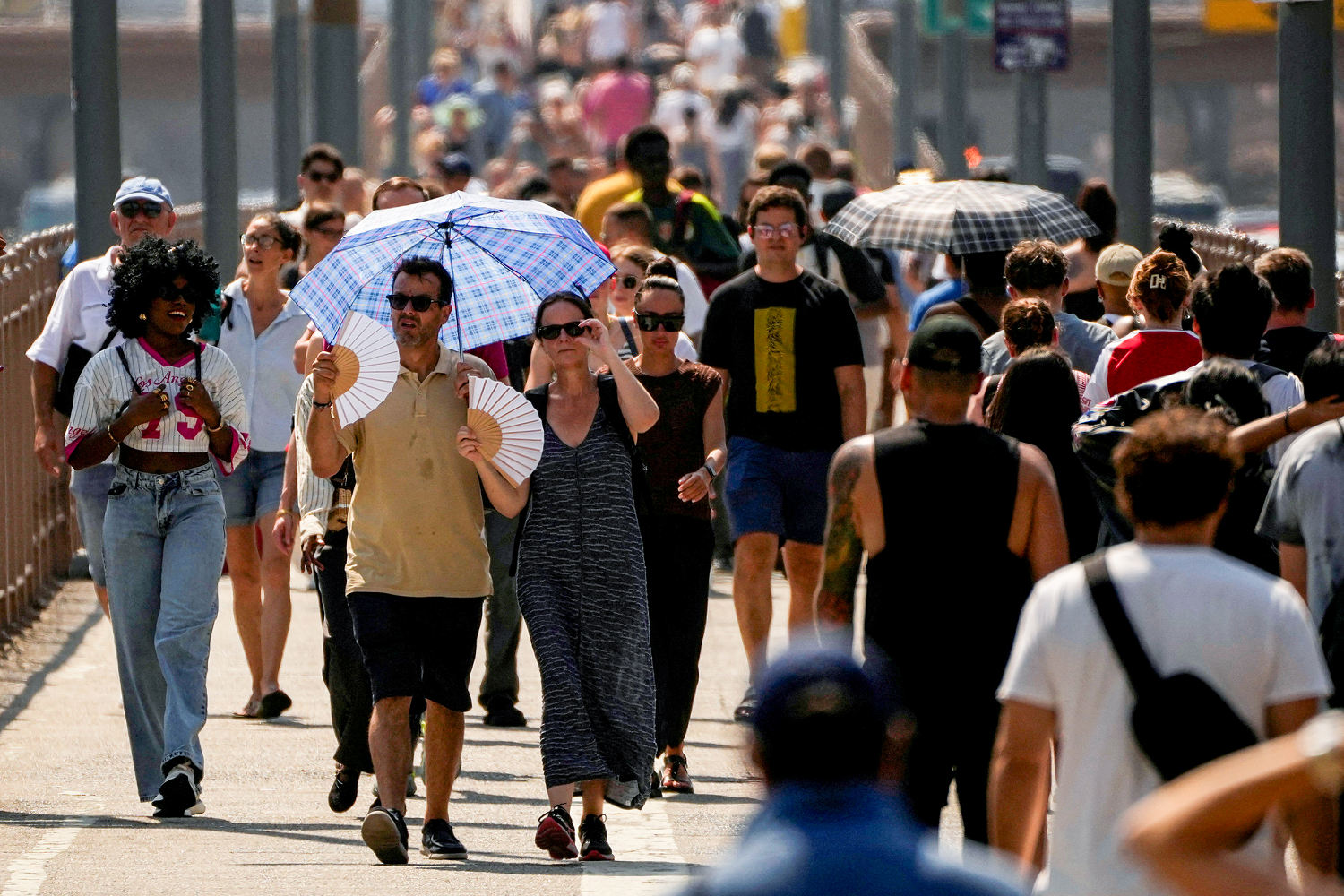
Prepare for intense heat, drought and some flooding — it’s officially El Niño season, the National Weather Service announced Thursday.Subscribe to read this story ad-free Get unlimited access to ad-free articles and exclusive content.This El Niño event could be on par with some of the strongest documented in the past, according to models from the NWS.“There is a 63% chance that we’re looking at a very strong El Niño during the November to January time period that could rank amongst the largest El Niño events in the historical record,” Ariel Cohen, a meteorologist for the NWS in Los Angeles, said at a news conference held by the Aquarium of the Pacific in Long Beach, California. “We’re already seeing those warm temperatures lining up.”El Niño is a natural climate pattern that causes warm surface temperatures in the tropical Pacific Ocean. It’s associated with higher average global temperatures, so its effects exacerbate warming from climate change. The pattern is linked to fewer hurricanes in the Atlantic and more in the Pacific.In the U.S., El Niño’s influence is most obvious in the winter, as it shifts the typical flow of the jet stream, the ribbon of air that encircles the Northern Hemisphere and drives weather patterns. The pattern typically pushes the jet stream south.In the Pacific Northwest, that creates dry, warmer-than-usual conditions in winter, which is a concern this year because much of the region is already mired in drought after receiving middling snow. In Southern states, the trend typically brings unusually wet weather in the winter, which could prime the region for flooding.El Niño can also drive powerful marine heat waves and scramble sea life, causing mass die-offs and bringing unusual tropical fish to coastal waters.Andrew Leising, a research oceanographer with the National Oceanic and Atmospheric Administration’s Southwest Fisheries Science Center, said two marine heat waves are already affecting the Pacific — one near the coast of California and another farther offshore.El Niño isn’t causing either of those, but Leising said NOAA’s models suggest that the pattern will drive temperatures in the Pacific up even more drastically this fall, leaving parts of the ocean roasting in back-to-back heat waves.“One of the most important things for the animals in the ecosystem is not necessarily just how hot it is … but just how long they’re exposed to the heat,” Leising said. “We have a situation in Southern California where we’ve already had this heat wave, and we’re just rolling into a heat wave that’s been brought about by El Niño.”He added that in the past, extended marine heat waves have caused decreases in plankton at the base of the food web, as well as harmful algal blooms, which can release neurotoxins that harm sea animals. Whale entanglements become more common, too, because the animals tend to move closer to shore, which increases the likelihood that they intersect with boats and fishing gear.Some animals do benefit from marine heat waves, Leising said: Jellyfish populations boom, and more rockfish tend to convert from larvae into juveniles.For many species, though, this is bad news.In 2015, an extreme marine heat wave nicknamed “The Blob” that pushed ocean temperatures about 7 degrees Fahrenheit above normal wreaked havoc on sea life. Seals, sea lions, baleen whales and seabirds all experienced die-offs, likely because of a lack of food and an increase in toxins from algal blooms, Leising said.The Blob closed West Coast Dungeness crab, sea urchin and salmon fisheries worth millions of dollars. It led to such a proliferation of pyrosomes — creatures that look like cucumbers made of jelly — that they clogged fishing nets.Leising said the back-to-back heat waves in 2015 were more severe than what’s in the forecast for this year, however.One other potential sign of El Niño to watch for: Weird fish showing up on the West Coast.“This may bring unusual visitors,” said Nate Jarros, vice president for animal care at the Aquarium of the Pacific. Past El Niño events, he explained, brought rare visitors to coastal California, including yellowfin tuna, mahi-mahi, yellow-bellied sea snakes, seahorses and whale sharks.Shark sightings have spiked in Southern California during past marine heat waves, as well.“Warm waters are attractive to some species of sharks, including makos, blues and white sharks, and this warming trend can expand the range of many species further north,” Jarros said. “During past marine heat waves, coastal species like blues and makos occupied dense populations along the West Coast.”Although El Niño generally raises global temperatures, climate change is the primary driver of record-breaking warmth in recent years. The hottest year on record was 2024, which was about 2.65 degrees Fahrenheit (1.47 degrees Celsius) warmer than the average from the mid-19th century, according to NASA. Scientists said an El Niño pattern boosted temperatures that year, but for comparison, 2025 was the third-hottest year on record, despite a La Niña pattern that tends to dampen temperatures. (La Niña is an opposing phase to El Niño.) Worldwide, the past 11 years have been the 11 hottest ever recorded.