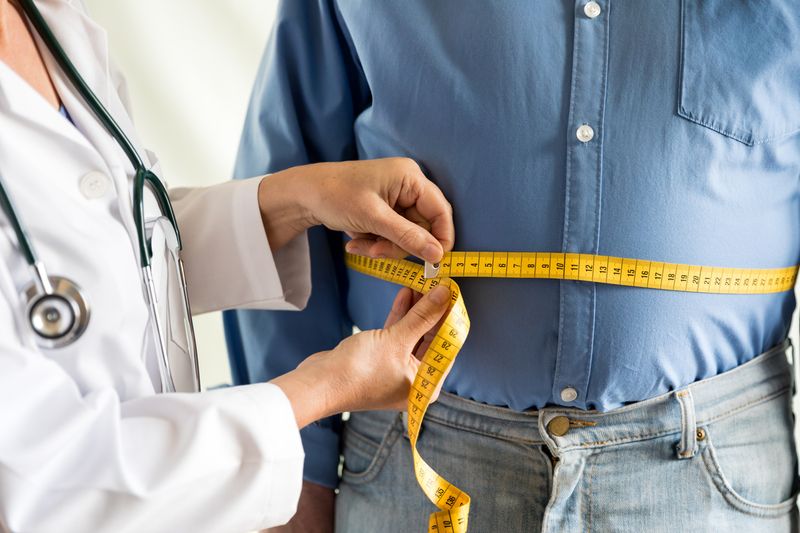

Chandigarh has an obesity crisis. Not a looming one. A present, measurable, worsening one.The National Family Health Survey 2023-24 (NFHS-6) — India’s most authoritative health census, conducted by the Union Ministry of Health and Family Welfare — has found that 48.5 per cent of men aged 15-49 in Chandigarh are overweight or obese. Nearly one in two. Among women in the same age group, the figure is 41.9 per cent. These are not borderline numbers. They place Chandigarh’s adult population among the heaviest in the country — at nearly double the national male average of 27.3 per cent.To put it plainly: if you are a man living in Chandigarh today, there is roughly a coin-flip chance that your weight is already harming your health.The situation has worsened sharply and fast. Just four years ago, in NFHS-5 (2019-21), 34.4 per cent of Chandigarh men were overweight or obese. That figure has jumped 14 percentage points in a single survey cycle — one of the steepest climbs recorded in any Indian city.How is obesity measuredObesity is defined using Body Mass Index, or BMI — a simple ratio of weight in kilograms divided by height in metres squared. The World Health Organisation classifies adults with a BMI of 25 or above as overweight, and those with a BMI of 30 or above as obese. For South Asians specifically, many doctors use a lower threshold of 23 as the overweight cut-off, because Indians tend to accumulate dangerous abdominal fat at lower body weights than Western populations. This means the real burden in Chandigarh may be even higher than the NFHS numbers show.A person who is 5 feet 7 inches tall (170 cm) and weighs 73 kg has a BMI of approximately 25.3 — already in the overweight zone. At 86 kg, the same person would be obese.Who is most at riskThe obesity epidemic in Chandigarh is primarily a disease of prosperity and urbanisation. It disproportionately affects:Working-age adults in sedentary desk jobs — the city’s large population of government employees, IT professionals, and service sector workers who spend eight to ten hours seated, often commuting by car.Men aged 30-49, who combine higher caloric intake — rich Punjabi diets, frequent dining out, alcohol consumption — with dramatically lower physical activity than previous generations.Women in upper-income households, where domestic work has been largely mechanised and physical movement through the day has fallen sharply.Young adults aged 15-25, whose dietary patterns have shifted toward ultra-processed foods, sugar-sweetened beverages, fast food, and late-night eating — lifestyle choices that accumulate silently over years before showing up on a weighing scale.The survey data also shows that below-normal BMI among Chandigarh men is now just 7 per cent — far below the national average of 19.7 per cent. Undernutrition, the traditional Indian public health challenge, has largely been solved in Chandigarh. Overnutrition has taken its place, and the city’s health infrastructure has not yet caught up with this reversal.Why is this happeningSeveral converging forces are driving Chandigarh’s adult weight crisis.Diet has transformed. The traditional Punjabi diet — already calorie-dense — has been layered over with highly processed, packaged, and restaurant food. Portion sizes have grown. Cooking oil consumption is among the highest in north India. Sugar intake, through sweets, soft drinks, packaged juices, and alcohol, has risen steadily. Protein intake relative to carbohydrates remains low in most middle-class households.Physical activity has collapsed. Chandigarh’s wide roads and car-centric urban design, while aesthetically admired, have created a city where most residents drive even for distances of under one kilometre. Cycling — once common — has declined sharply. The city’s parks and cycling tracks exist but are used mainly for leisure rather than daily commute. Desk-bound work culture leaves most employed adults with fewer than 2,000 steps a day, a fraction of the 8,000-10,000 recommended by health authorities.Stress is rising invisibly. Chronic psychological stress — from work pressure, financial insecurity, competitive academic environments, and disrupted sleep patterns — raises cortisol levels in the body, which directly promotes fat accumulation around the abdomen. Chandigarh’s young, aspirational population is particularly exposed to this mechanism.Sleep deprivation is widespread. Late-night screen use, irregular work hours, and high stress have pushed average sleep durations well below the recommended seven to nine hours for adults. Sleep deprivation is now established as an independent driver of weight gain and metabolic disruption.Alcohol consumption is high. Chandigarh and Punjab have consistently high per-capita alcohol consumption. Alcohol adds empty calories, disrupts metabolism, promotes visceral fat deposition, and is strongly associated with elevated blood sugar and blood pressure — all of which the NFHS-6 data reflects.Why this matters beyond the weighing scaleObesity is not a cosmetic problem. It is the engine that drives Chandigarh’s other adult health crises visible in the same NFHS-6 data.One in six Chandigarh adults already has high or very high blood sugar levels — the gateway to Type 2 diabetes. Over 15 per cent of adult women are hypertensive. Cardiovascular disease — heart attacks and strokes — is the leading cause of death in urban north India and is directly fuelled by the obesity-diabetes-hypertension triad.The economic cost is substantial and personal. Treatment for Type 2 diabetes, hypertension, and cardiovascular disease runs into tens of thousands of rupees per year for a middle-class family. Even with the health insurance coverage improvement recorded in NFHS-6 — now at 42.8 per cent of households — most policies do not adequately cover long-term chronic disease management.The burden also falls disproportionately on the working-age population — the very people whose productivity and earnings sustain Chandigarh’s households. A 40-year-old with uncontrolled obesity, diabetes, and hypertension is not simply unwell. He or she is at serious risk of a cardiovascular event, permanent disability, or early death.How to check your own riskChecking your BMI takes under two minutes. Divide your weight in kilograms by your height in metres squared. A result above 25 means overweight; above 30 means obese. For South Asians, treat 23 as your personal warning threshold.Measure your waist circumference. For Indian men, a waist above 90 cm (35.4 inches) is a metabolic risk marker regardless of overall BMI. For Indian women, the threshold is 80 cm (31.5 inches). Abdominal fat — what is colloquially called a “pot belly” — is far more dangerous than fat elsewhere in the body because it surrounds and infiltrates vital organs.Get a basic blood panel. A fasting blood glucose test, HbA1c (three-month blood sugar average), lipid profile, and blood pressure reading will give you a comprehensive picture of your metabolic health. These tests cost under Rs 1,000 at any diagnostic lab in Chandigarh and can be done without a doctor’s referral.What needs to be done — and by whomIndividual level. Replace one refined carbohydrate meal per day — white rice, white bread, maida-based preparations — with whole grains, pulses, or vegetables. Walk 30 minutes daily at a brisk pace; this single intervention has been shown in multiple studies to reduce the risk of Type 2 diabetes by up to 58 per cent. Reduce portion sizes rather than eliminating food categories. Cut sugar-sweetened beverages entirely — they are the single most efficient delivery mechanism for empty calories in the modern diet.Family level. Involve children in dietary choices early. The NFHS-6 data on Chandigarh’s children — rising wasting and underweight alongside rising overweight — reflects confused, inconsistent feeding practices. Families that model healthy eating and daily movement produce healthier children and adults alike.Healthcare system level. Chandigarh’s government health facilities — GMCH-32, GMSH-16, and the network of dispensaries — must integrate routine BMI, waist circumference, blood pressure, and blood glucose screening into every outpatient visit, regardless of the reason for the visit. A patient who comes in for a cough and is found to have a BMI of 31 and a fasting glucose of 150 mg/dl must not leave without being flagged, counselled, and scheduled for follow-up.Administration level. The Chandigarh Administration and Municipal Corporation must treat urban design as a public health intervention. Expanding safe cycling infrastructure, making walking routes pleasant and secure, creating mandatory physical activity periods in schools and government workplaces, and regulating the density of fast food and alcohol outlets near educational institutions are all proven levers. The city’s Master Plan — already under revision — must incorporate health impact assessments for land use decisions.Policy level. The UT Administration should establish a non-communicable disease registry — a real-time database tracking the burden of obesity, diabetes, and hypertension by sector and ward. This would allow targeted interventions in the highest-burden pockets of the city rather than blanket, inefficient campaigns. The national Ayushman Bharat Health and Wellness Centre network must be fully activated in Chandigarh for NCD screening and management.What happens if nothing changesThe trajectory is clear and the international precedent is unambiguous. Cities that ignored early obesity data — in East Asia, in the Gulf, in urban Latin America — are now spending a fifth of their health budgets managing the downstream consequences: dialysis centres overflowing with diabetic kidney failure patients, cardiac catheterisation labs with multi-year waiting lists, and a generation of adults disabled in their 50s.Chandigarh is not there yet. But at 48.5 per cent male obesity and rising, it is travelling in that direction at speed. The NFHS-6 data is not a forecast. It is a measurement of where the city already stands. What happens next is a choice.Know your numbersMeasure your risk threshold (Indian adults) BMIAbove 23: Warning / Above 25: Overweight / Above 30: ObeseWaist (Men)Above 90 cm: High metabolic riskWaist (Women)Above 80 cm: High metabolic riskFasting blood sugarAbove 100 mg/dl: Pre-diabetic / Above 126 mg/dl: DiabeticBlood pressureAbove 130/80 mmHg: Elevated / Above 140/90: HypertensiveChandigarh vs India: The gapMen overweight/obese: Chandigarh 48.5 per cent vs India 27.3 per centWomen overweight/obese: Chandigarh 41.9 per cent vs India 30.7 per centMen with below-normal BMI: Chandigarh 7 per cent vs India 19.7 per centThe silent chainExcess weight → Abdominal fat → Insulin resistance → Type 2 diabetes + Hypertension → Heart attack / Stroke / Kidney failure5 things you can do this weekMeasure your waist with a tape todayWalk 30 minutes tomorrow morning before breakfastReplace your afternoon soft drink with water or buttermilkBook a fasting blood glucose and blood pressure checkReduce your dinner portion by one-quarter — starting tonight