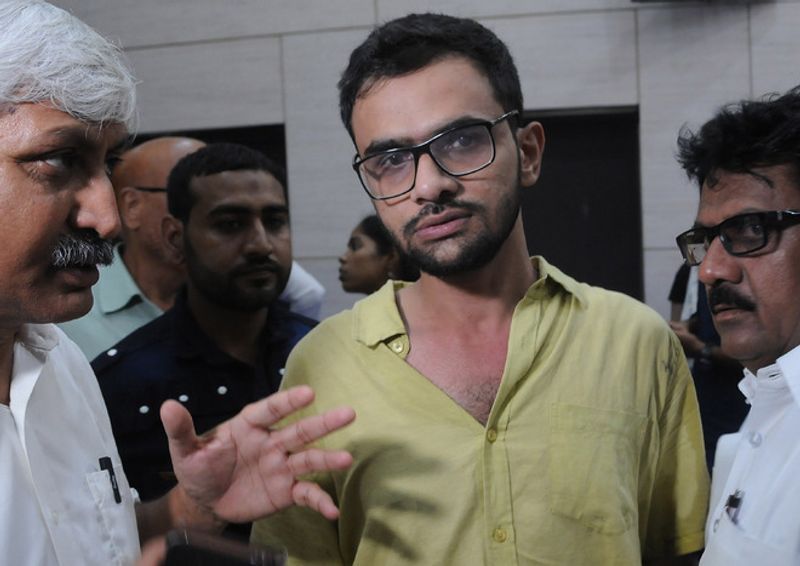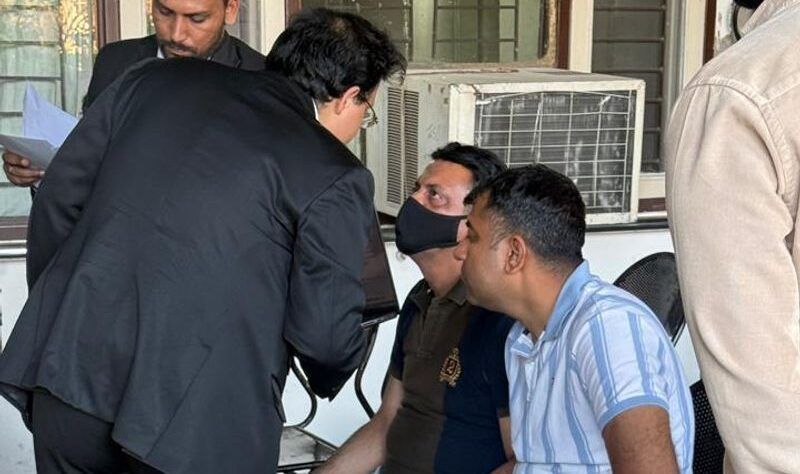

Businessman Vikram Wadhwa, one of the key accused in Chandigarh’s two biggest bank frauds, has been granted bail by the Additional Sessions Judge (Duty), Chandigarh — not because the case against him has weakened, but because the Central Bureau of Investigation (CBI) missed a statutory deadline to file its chargesheet by a day.Yet Wadhwa will not walk out of jail. He remains an accused in two other chargesheeted cases — the Rs 83-crore Chandigarh Renewable Energy Science and Technology Promotion Society (CREST) fraud and a separate Haryana government funds misappropriation case — and continues in judicial custody in both.Here is what the bail order says, why it was granted, and why it changes nothing for Wadhwa on the ground. The Tribune explains.Who is Vikram WadhwaVikram Wadhwa, a resident of Sector 33-D, Chandigarh, is a businessman named as a key accused in the twin IDFC First Bank frauds that together exceed Rs 200 crore — the largest financial crimes in Chandigarh’s history. He was first arrested by the Chandigarh Police’s Economic Offences Wing on March 14 in connection with the Chandigarh Smart City Limited (CSCL)-Municipal Corporation Chandigarh (MCC) fraud of over Rs 117 crore.Investigators have separately told courts that approximately Rs 75 lakh, drawn from the Rs 83-crore defrauded CREST account, was credited into Wadhwa’s personal account, and that he is part of the larger criminal conspiracy with allegations of record manipulation against him.What is default bail, and why was it grantedDefault bail — also called statutory bail — is an automatic, indefeasible right available to an accused when an investigating agency fails to file its final chargesheet within the legally prescribed investigation period. For offences carrying punishment of 10 years or more, that period is 90 days under Section 187(3) of the Bharatiya Nagrik Suraksha Sanhita. It does not depend on the merits of the case or the strength of evidence — only on whether the agency met the deadline.In Wadhwa’s case, the calculation came down to a single day. The judicial magistrate had authorised his remand on March 14. Counting 18 days of March, 30 of April, 31 of May and 11 of June, the 90-day period expired on June 11, 2026 — making June 12 the 91st day. The CBI did file its chargesheet on June 12, but the prosecution itself conceded before the court that it was filed later in the day, after Wadhwa’s lawyer had already filed the default bail application. The court relied on a 2023 Supreme Court ruling in the Enforcement Directorate versus Kapil Wadhawan case, which held that the 60/90-day remand period must be counted from the date the magistrate first authorised remand.Additional Sessions Judge Arvind Kumar, hearing the matter as Duty Vacation Judge, held that since custody had remained continuous and uninterrupted since March 14 and the chargesheet had not been filed before the bail application, Wadhwa’s right to default bail had already accrued and could not be defeated by the CBI filing its chargesheet later that same day.On waht terms was bail grantedThe court admitted Wadhwa to regular bail on furnishing a bail bond of Rs 5 lakh with two local sureties of the like amount, subject to nine conditions, including that he not leave the country without the court’s permission, not commit any similar offence, not threaten or induce witnesses, furnish his address, mobile number, email and bank account details to the investigating officer within a week, keep his phone operational at all times, not tamper with evidence, not deal with any property linked to the investigation, and remain present before the trial court on every hearing date unless specifically exempted.The court also directed that a copy of its order be sent to the DIG, Economic Offences-III, CBI, New Delhi — flagging the agency’s failure to file the chargesheet on time, an institutional embarrassment for the CBI in the high-profile case.Why will Wadhwa still remain in jailThis is the crucial part one needs to understand. CBI officials and the court order make clear that the default bail applies only to the CSCL-MCC fraud case. Wadhwa is also an accused in two other cases — the CREST fraud and a separate case involving misappropriation of Haryana government department funds — and the CBI has already filed chargesheets against him in both. Because chargesheets have already been filed in those cases, no default bail ground arises there. The CBI release explicitly states that the grant of default bail in the CSCL case does not affect his custodial status, and Wadhwa continues in judicial custody in the other two matters.In effect, Wadhwa has gained freedom on paper in one case but remains behind bars under two separate, fully chargesheeted prosecutions.The bigger pictureThe CSCL-MCC fraud, in which Wadhwa has now secured default bail, involved a secretly opened bank account at IDFC First Bank’s Sector 32 branch, forged bank statements and 11 fictitious fixed deposits worth Rs 116.84 crore — exposed only after MCC tried to encash them in February. The CREST fraud, in which Wadhwa remains in custody, involved roughly 300 unauthorised transactions and a Rs 83.04-crore shortfall, with stolen funds converted into jewellery, bullion, cash and real estate. Both frauds were executed at the same bank branch by the same core network, led by former branch manager Ribhav Rishi, who remains in judicial custody.The cases were transferred from Chandigarh Police to the CBI in April on the recommendation of Punjab Governor and Chandigarh Administrator Gulab Chand Kataria, and the CBI has since arrested HPGCL Director (Finance) Amit Dewan, who has also been granted bail three days ago, and conducted custodial interrogation of CSCL’s former CFO, Nalini Malik, besides filing its first chargesheets in the case.What nextWadhwa must now furnish the bail bond and sureties before the area magistrate to secure release in the CSCL-MCC case — though that release will have no practical effect while he remains in judicial custody in the CREST and Haryana funds cases. To secure full liberty, he would need to separately seek and be granted regular bail on merits in those two matters — a far more rigorous process requiring the court to weigh the evidence against him, unlike the procedural default bail granted here.The case is a reminder that bail and innocence are not the same thing: default bail is a procedural safeguard against prosecutorial delay, not a verdict on guilt. The trial itself, where the actual evidence — including Wadhwa’s alleged Rs 75-lakh share of the CREST fraud proceeds — will be tested, is yet to begin in any of the three cases.