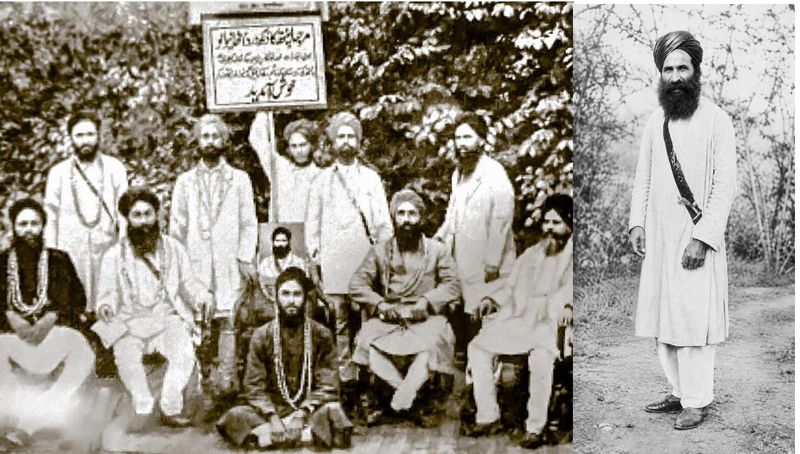

HISTORY often remembers movements through dramatic events and landmark victories, but the individuals who sustain those movements through years of sacrifice are sometimes overlooked. Among the architects of the Sikh Gurdwara Reform Movement, few figures embodied perseverance, humility and public service more completely than Sardar Teja Singh Samundri. Nearly a century after his death in Lahore Central Jail on July 17, 1926, his life continues to offer lessons in leadership, integrity and devotion to the common good.For Sikhs around the world, Teja Singh Samundri occupies a special place in the story of religious reform and community self-governance. He was not merely a participant in the struggle to reclaim Sikh institutions from colonial influence and mismanagement; he was also one of the movement’s principal organisers and strategists. His contribution helped shape the modern framework through which Sikh religious affairs are administered today.Born in 1882 into a farming family in Punjab, Teja Singh grew up in an environment where faith, hard work and community responsibility were deeply intertwined. Like many young men of his generation, he briefly served in the British Indian Army. Yet his lasting commitment was not to imperial authority but to the values of the Sikh tradition and the welfare of community.The opening decades of the 20th century were a period of profound challenges across India. Political awakening, demands for reform and resistance to colonial rule were gaining momentum. Within the Sikh community, concern was growing over the management of many historic gurdwaras. Institutions built through the devotion of generations of Sikhs had, in numerous cases, come under the control of hereditary custodians whose administration was increasingly viewed as unaccountable and inconsistent with Sikh principles.The demand for reform was therefore about more than religious administration. It was a question of accountability, community rights and the protection of institutions that carried immense spiritual and historical significance. The movement that emerged would eventually transform Sikh public life and Teja Singh Samundri would become one of its most respected leaders.His leadership became especially significant during the creation of the Shiromani Gurdwara Parbandhak Committee (SGPC) in 1920. The SGPC represented a historic assertion that Sikh institutions should be governed by the Sikh community itself rather than by private interests or colonial patronage. Samundri played an important role in building support for this vision and helping establish structures that continue to influence Sikh religious administration to this day.His commitment was demonstrated repeatedly during major campaigns of the Gurdwara Reform Movement. During the agitation concerning Gurdwara Rakab Ganj Sahib in Delhi, Sikhs protested against the demolition of a section of the shrine’s boundary wall by colonial authorities. For many observers, the dispute may have appeared administrative, but for the Sikh community, it represented a challenge to religious dignity and historical memory.The successful campaign to restore the wall became an early example of how organised and disciplined resistance could produce results. It was replicated in Guru Ka Bagh and Chabiyan Wala Morcha.What distinguished Teja Singh was not only his public leadership but also his willingness to make personal sacrifices for the causes he believed in. Following the Nankana Sahib tragedy and subsequent pressures placed upon the reform movement, he accepted substantial financial risks in order to support Sikh institutions and publications. On more than one occasion, he used his own property and financial resources to ensure that legal appeals and community initiatives could continue.His understanding of service extended beyond religious reform. He recognised that education would play a crucial role in the future of Punjab. At a time when educational opportunities remained limited for many, particularly for women, he supported efforts to establish schools and promote learning. The creation of educational institutions, including at Sarhali (Tarn Taran) and Lyallpur (Faisalabad), associated with his efforts reflected a belief that an informed and educated community would be better equipped to preserve its values and shape its future.Equally significant was his appreciation of the role of public communication. Reform movements depend not only on activism but also on the ability to inform and mobilise people. The mass leader understood the importance of newspapers and public discourse in challenging official narratives and giving voice to community concerns. His initiatives related to publications connected to the reform movement helped strengthen an emerging Sikh public sphere during a critical period in Punjab’s history.Recognition from the community followed naturally. In 1923, he was selected among the Panj Pyare to lead the kar seva for cleaning the sacred sarovar at the Golden Temple.The final chapter of his life revealed the depth of his convictions. Even after the passage of the Sikh Gurdwaras Act in 1925, tensions between colonial authorities and Sikh leaders did not immediately disappear. Several prominent Akali leaders remained imprisoned. Officials sought written assurances from detainees regarding future political activity and acceptance of government-imposed conditions. Teja Singh Samundri refused to compromise his principles in exchange for personal freedom.He remained in jail and died there at just 43 years of age. His death deprived the Sikh community of one of its most capable organisers at a pivotal moment in its history.Today, visitors to the Golden Temple complex encounter Teja Singh Samundri Hall, a prominent reminder of his contribution. His passing drew tributes from leaders across India’s political and religious landscape. Mahatma Gandhi, Pandit Madan Mohan Malaviya, Swami Shraddhanand and CF Andrews were among those who recognised his contribution to the Sikh reform movement and the wider struggle for justice. Within the Sikh community, Master Tara Singh remembered him as a “Sampuran Sikh” (complete Sikh), while Bhai Vir Singh honoured him as a “Param Pavitra Shaheed” (most holy martyr). Their words reflected the esteem in which he was held by contemporaries whose respect transcended political and religious boundaries.In an era when public leadership is often measured by visibility and influence, Sardar Teja Singh Samundri reminds us of a different standard. His legacy rests on the quiet but powerful belief that institutions matter, that principles are worth defending and that meaningful change requires personal sacrifice. Nearly a century after his passing, those lessons remain as relevant as ever.Also read: When Teja Singh Samundri won the Morcha