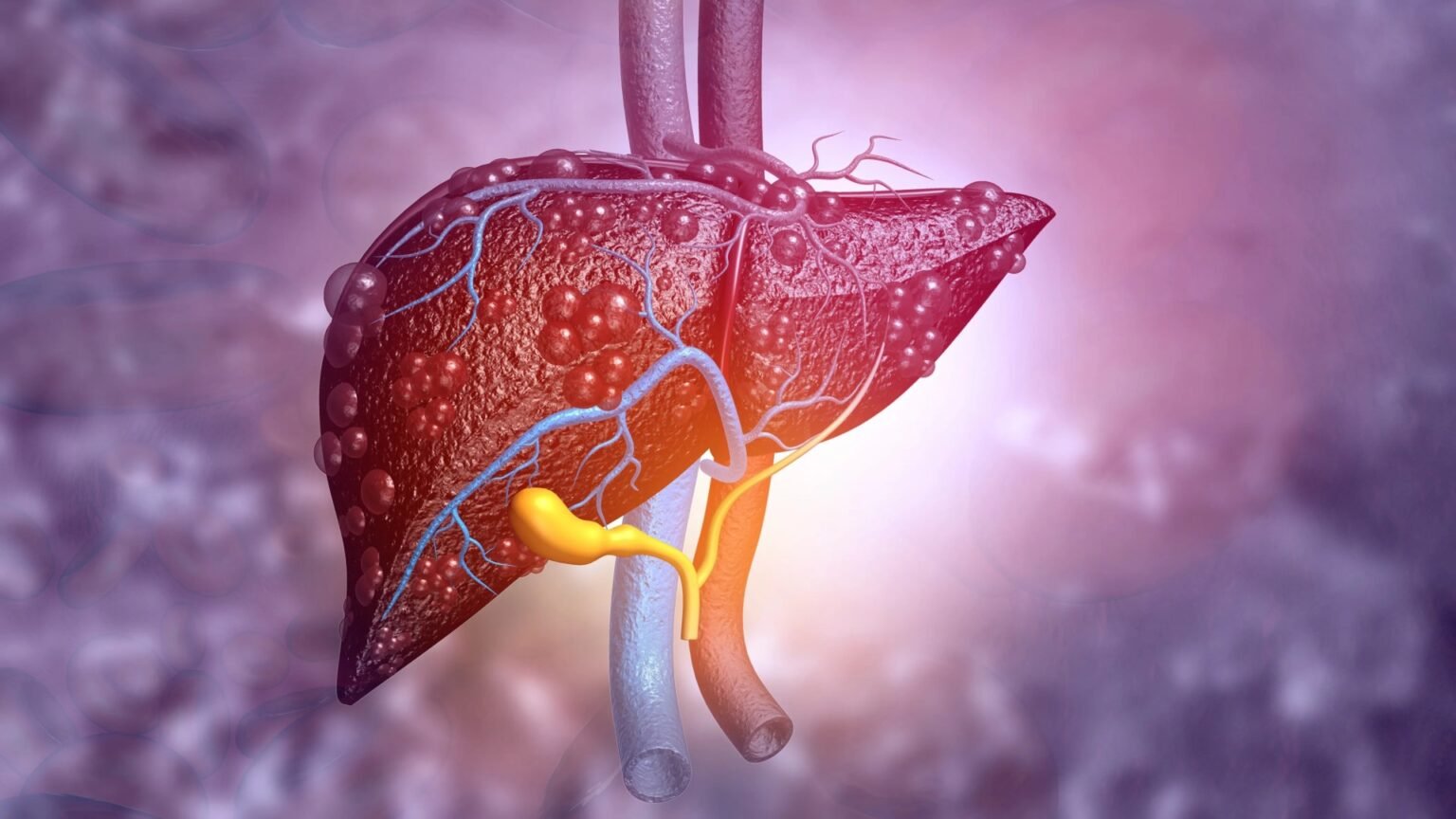


CASES of a certain type of liver disease have surged five-fold in just a decade, shock new figures suggest.
Around 1.3billion people worldwide are currently thought to have the condition, which can leave sufferers with liver failure or even liver cancer.
Around 1.3billion people worldwide are currently thought to have MASLD Credit: Getty
Known medically as metabolic dysfunction-associated steatotic liver disease (MASLD), it is not linked to heavy drinking — the more commonly known cause of liver problems.
Instead, MASLD occurs when excess fat builds up inside the liver.
Sign up for the Health newsletter
Thank you!
Leading scientists from London and Glasgow have now discovered that GP diagnoses in the UK rose from around 1,300 people in 2003 to 283,762 by 2022.
Symptoms of MASLD include feeling very tired or generally unwell, as well as pain in the abdomen.
READ MORE ON LIVER DISEASE
WEIGH HEY
Thousands more Brits to get fat jabs to treat killer liver disease
WAKE UP
The 7 ways coffee can save your life & the number of cups to slash liver disease
People who are overweight or not active are more likely to develop MASLD, along with type 2 diabetics, people over 50, and people with high blood pressure.
Writing in the journal The Lancet Regional Health Europe, the scientists said: “Previous studies also suggest 25 per cent of adults in western Europe have MASLD, indicating that most UK cases are being missed.”
In the fresh research, scientists at Queen Mary University of London and the University of Glasgow looked at GP records from almost 12 million people in the UK between 2003 and 2022.
They found that recorded diagnoses of MASLD were 0.02 per cent of adults in 2003, the equivalent of 1,300 people.
This rose to 0.5 per cent in 2012 and 2.4 per cent in 2022, or 283,762 people.
New diagnoses doubled from 2012 to 2022, and those diagnosed with the condition were three times as likely to have type 2 diabetes.
People of south Asian ethnicity were also “overrepresented” when it came to MASLD diagnoses.
Researchers said “more progress is needed to reach public health goals in this disease”.
“Equally urgent is the need for additional research to identify and mitigate any risks of compounding health disparities among different ethnic groups especially in the era of medicines with specific indications in this space,” they added.
Researchers said a blood test that enables doctors to estimate liver scarring “presents an opportunity to detect advanced fibrosis”.
What are the stages of non-alcoholic fatty liver disease?
THERE are several stages of metabolic dysfunction-associated steatotic liver disease (MASLD).
Having one stage does not mean you will definitely develop the next one.
Treating NAFLD with a healthy diet, physical activity and weight loss can slow or even reverse it, especially if it is at an earlier stage.
The amount of scarring (fibrosis) in your liver is the main sign of how advanced your NAFLD is. Go to the section about fibrosis tests and scores.
Fatty liver: There is a build-up of fat in your liver but it has not been damaged and there is no scarring. At this point, NAFLD can be fully reversed.
Non-alcohol related steatohepatitis (NASH) with mild fibrosis : Fat is causing inflammation and damage in your liver (hepatitis). There is no or very little scarring. Healthy living can undo the damage and reverse your NAFLD.
NASH with moderate fibrosis: Inflammation and damage have caused some scarring. Your liver is probably still working well and the damage can mostly be repaired.
NASH with advanced fibrosis: There is a lot of scarring. At this stage it is very important to stop further damage and scarring so your NAFLD doesn’t get worse. And it is still possible to repair some damage.
Cirrhosis: There is so much scarring it changes the shape of your liver. Your liver can keep working and even repair some damage at this point. But if too much of it becomes scarred, your liver may not be able to carry out its job properly.
Cirrhosis can lead to life-threatening conditions including liver cancer and liver failure.
Source: The British Liver Trust
Meanwhile, based on estimated cases of MASLD cases in Europe, the study found that a “substantial diagnostic gap remains” in the UK.
Researchers said: “The current data demonstrate that while UK prevalence has risen substantially to 2.42 per cent, the diagnostic gap remains large compared to expected rates.”
They suggest that, to close the gap, “at-risk groups such as those living with type 2 diabetes and obesity should be identified and case-finding actively pursued”.
It comes as research from the British Liver Trust last year also found that a third of MASLD cases were diagnosed at a late stage, when it is hard to treat.
In most cases, MASLD is only spotted during routine blood tests or liver function tests carried out for unrelated issues.
Roughly one in four patients has a more advanced form called metabolic dysfunction-associated steatohepatitis, or MASH.
In this condition, fat build-up has led to inflammation, cell damage and, in some cases, liver scarring.
Up to one in five people with MASH will progress to cirrhosis — advanced, irreversible scarring of the liver — which can lead to liver failure and increase the risk of liver cancer.
When liver function starts to decline, though, patients can accumulate fluid in the abdomen, develop jaundice or experience confusion caused by a build-up of toxins in the bloodstream.
It is estimated that almost six million people in the UK are living with diabetes, almost 1.3 million of which may be living with undiagnosed type 2 diabetes.
NHS data also shows that in 2024, 30 per cent of adults aged 16 and over were obese.