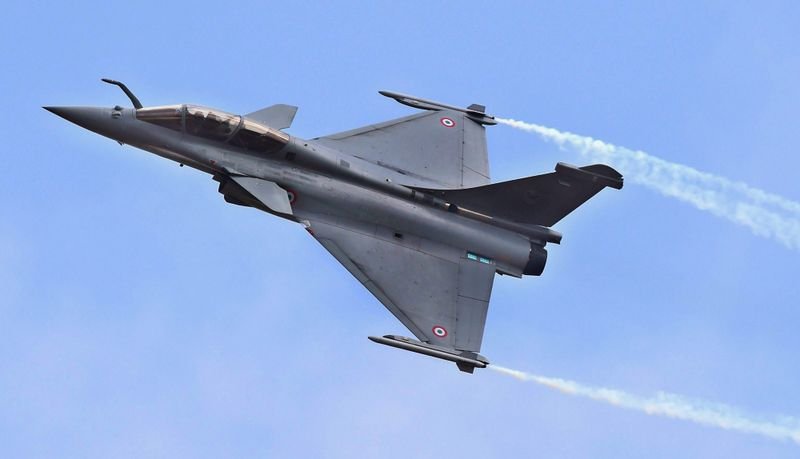

French aircraft maker Dassault Aviation has submitted its technical and commercial proposal to India, which includes local production and significant technology transfer for manufacturing Rafale jets.India is looking to procure an additional 114 Rafale jets from France and sent a formal Letter of Request (LoR) in May this year. An LoR is a formal government-to-government communication used to initiate defence procurement under an Intergovernmental Agreement (IGA) framework.The IAF’s Rafale acquisition will be carried out under the ‘Make in India’ initiative, with Dassault Aviation partnering with an Indian firm. For the deal, India has laid down a set of non-negotiable clauses, including the integration of indigenous weapons and secure data links.Sources confirmed that the French bid has been submitted and will now be examined.During Prime Minister Narendra Modi’s visit to France in June, sources said the Indian delegation was assured that France was comfortable sharing technology for the Rafale fighter jets, including the integration of Indian weapons onto the aircraft as part of the deal.The transfer of technology (ToT) will cover the engine, airframe and avionics. The integration of Indian weapons, missiles and ammunition on all 114 jets is also part of the agreement. Dassault Aviation is expected to provide secure data links to enable the digital integration of the jets with Indian radars and sensors, allowing imagery to be transmitted to ground-based controllers.Over the past few years, the avionics, weapons and missile systems on the Rafale have been upgraded since the IAF ordered its fleet of 36 aircraft in 2015. The IAF currently operates the ‘F3R’ version of the aircraft, which is also flown by the French Air Force. Dassault Aviation has introduced the upgraded ‘F-4’ version, and India is seeking a mix of the ‘F-4’ and the upcoming ‘F-5’ variants.The aircraft maker will also provide technology transfer for manufacturing airframes. Its suppliers, including engine manufacturer Safran and avionics provider Thales, will be involved in the ToT programme. The indigenous content is expected to be between 55% and 60% after the transfer of technology for airframes, engines and avionics is completed.The upgrade package includes a next-generation active electronically scanned array (AESA) radar, offering longer detection ranges and improved resilience against electronic warfare. It will feature an enhanced self-protection system capable of detecting and countering new and emerging threats.The capabilities will include improved long-range detection and identification of enemy targets, supported by missiles with extended ranges. The aircraft will also be equipped with improved satellite links and artificial intelligence-based algorithms to assist pilots with enhanced situational awareness and decision-making.The acquisition of additional Rafale fighter jets is part of the IAF’s multi-pronged plan to increase its fighter fleet strength. The IAF currently operates 36 Rafale jets, while the Navy has ordered 26 naval variants of the same aircraft. Increasing the number of Rafales would help reduce maintenance costs.A Rafale flight training and Maintenance, Repair, and Overhaul (MRO) facility is already operational at the IAF base in Ambala. The IAF has the capacity — including space, spares, tooling and trained manpower — to immediately accommodate two additional squadrons, comprising around 36-38 aircraft.The aircraft are critical to meeting the Indian Air Force’s operational requirements as its squadron strength continues to decline due to the phasing out of vintage aircraft, including Russian-origin MiG fighter variants, and significant delays in the induction of indigenous aircraft such as the LCA Mark 1A and LCA Mark 2.