

AS a boy, Sir David Attenborough was leafing through an old book when he stumbled upon the words that changed his life.
They were in a 19th Century work called The Malay Archipelago, which contained a description by naturalist Alfred Russel Wallace of his emotions when he first saw a bird of paradise in the wild.
Sign up for the TV newsletter
Thank you!
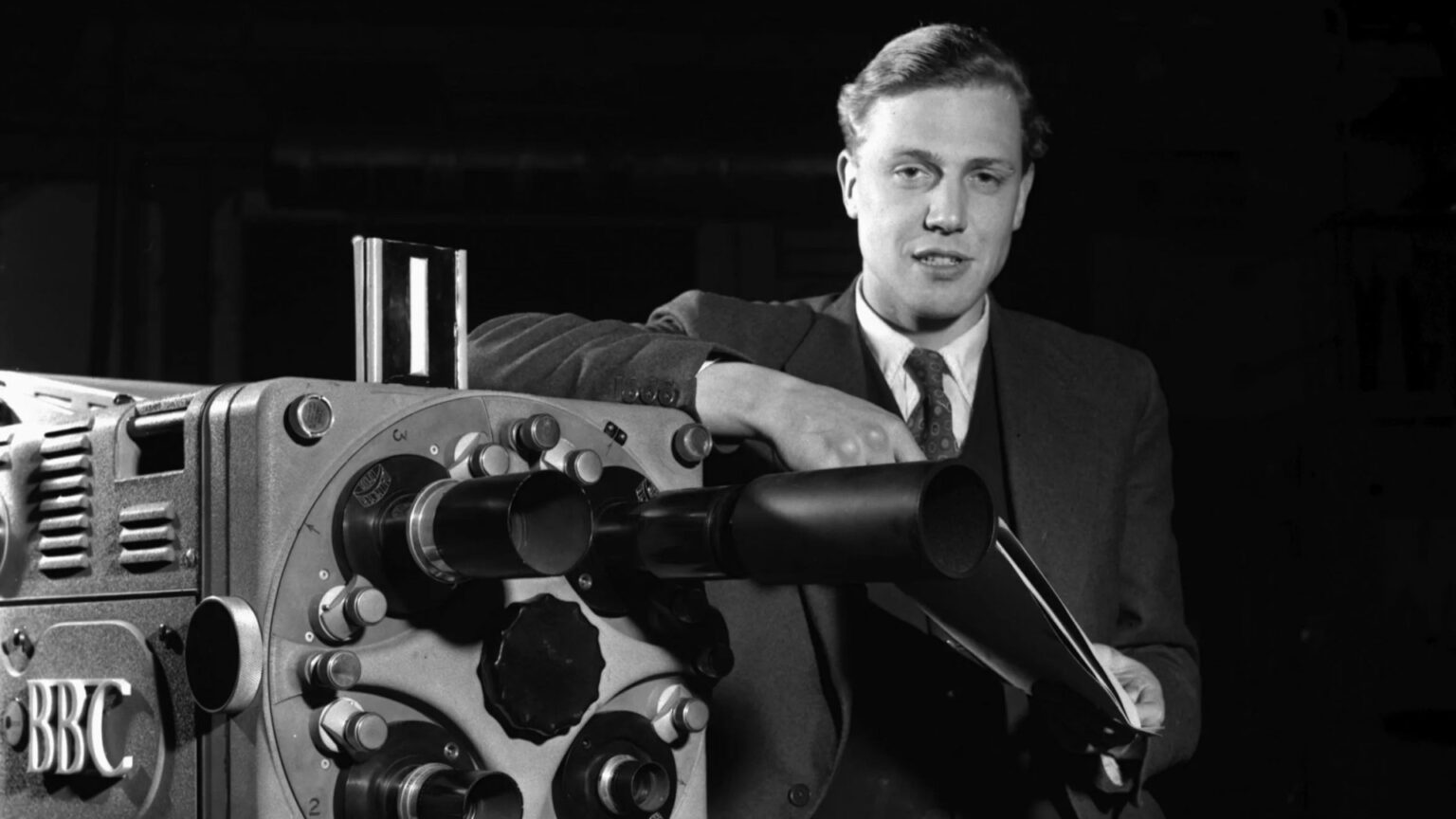
British naturalist and broadcaster David Attenborough in 1956 Credit: Getty
A young David, centre, with John, left, and Richard in 1933
Many decades later, David recalled: “He wrote how he felt so faint with excitement that his head ached.
“I read those words at the age of nine and I was hooked, too.
“I thought of all those unexplored places — all those undiscovered creatures.”
At that moment, a young David decided to devote his life to the natural world.
BABY BLUNDER
EastEnders fans spot big baby blunder with Nicola Mitchell – did you notice?
NEW KID
Coronation Street recast show star – & new actor has connection to Tina O’Brien
He went on to ignite that same passion in hundreds of millions of people, across generation after generation.
He showed us the world.
David Frederick Attenborough was born on May 8, 1926, in Isleworth, South West London, to parents later described by his actor brother Richard as “radicals”.
His mother, Mary, had been part of the suffragette movement who, during the Spanish Civil War, organised the evacuation of Basque children to Britain.
She was also a gifted linguist, talented pianist and — unusually for the time — a marriage guidance counsellor.
His father Frederick was a village shopkeeper’s son from Nottinghamshire, who had educated himself to become a scholar in Anglo-Saxon.
In his spare time, he chaired a committee devoted to rescuing Jewish refugees from Nazi Germany.
He was also a born teacher.
David later recalled: “He knew perfectly well that one of the great secrets of teaching is not to be too much of a know-it-all yourself.”
It was a gift for teaching that David would inherit.
In 1932, the family left London when Frederick took up a job as principal of Leicester’s University College, which later became the University of Leicester.
They lived on site in what was a former mental hospital.
The Attenborough boys — Richard, born in 1923; middle brother David; and John, born in 1928 — considered it the ultimate playground.
David later said: “It had underground corridors for furnaces and so on, with these grates in them.
“We, as boys, found out how to lift these grates and get into the corridors and explore.”
By ten, and newly smitten with the natural world, David would roam the countryside on his bike, finding treasures such as the old skins of grass snakes, and picking up newts and sticklebacks to bring home.
He also discovered the wonders of smashing open rocks to find fossils within, once recalling: “The romance of it was very vivid.”
Parents Frederick and Mary Attenborough were ‘radicals’
Jewish sisters Helga Bejach (18) and Irene Bejach (20), in 1947, escaped Nazi Berlin and lived with the Attenboroughs in Leicester for nearly 7 years Credit: Collect
It was also at the age of ten that David attended a talk by Grey Owl, an early conservationist who enthralled audiences with his tales of life as a Native American in the Canadian forests.
After his death, this feather-wearing hero was bizarrely revealed to be British — a former office clerk called Archibald Belaney, from Hastings, East Sussex.
David’s brother Richard, the actor and Oscar-winning film director who died in 2014, later made a movie about the imposter’s life.
But for David, the hoax did not matter.
He later recalled: “Grey Owl was all part and parcel of my fascination with natural history, seamlessly connected with a feeling of excitement about the world of the jungle and forests, and of exploration.”
He kept Grey Owl’s book, which he had got signed that night at the talk.
Another treasure he cherishes, kept in a drawer at the home in Richmond, South West London where he has lived since 1952, was a piece of amber containing a fly.
It was a thank-you gift in 1938 from a girl called Marianne — one of many Jewish children who stayed with the Attenborough family while awaiting visas to go to America after being evacuated from Nazi Germany.
David became obsessed with this resin, which had run down a tree trunk and trapped the insect, before becoming fossilised.
He said: “I discovered the fly was 40million years old.
“That it could be there in front of me in absolutely perfect condition seemed to me a wonderful, astonishing thing.”
Two of the young evacuees from Germany — sisters Helga and Irene Bejach — stayed with David’s family for seven years.
He said on Desert Island Discs: “My parents said, ‘You now have two sisters’. I was 14 and I thought, ‘Well, hang on, that’s all very well, but you’re my parents. I’m not sure I particularly want to share my parents’.
“But of course, we came to like them.
“We were in touch for the rest of their lives.”
In 2019, David hosted a reunion for descendants of the sisters, who emigrated to the US in 1946.
The girls’ arrival also meant a welcome addition to the cast of family variety shows that stage-struck Richard loved to organise.
He remembered David refusing to be in one show until he promised any profits would go to the RSPCA.
As a ten-year-old, David ended up dressed as a charlady with Richard in a sketch called Lydies Wot Come To Oblige.
Their parents encouraged their wildly different interests, as well as those of youngest brother John, a talented linguist.
John went on to use his fluent Italian as head of British operations at Italian car manufacturer Alfa Romeo.
He died in 2012, aged 84.
The boys attended Leicester’s Wyggeston Grammar School and David had his heart set on doing a natural sciences degree at Cambridge University.
As a ten-year-old, David ended up dressed as a charlady with Richard in a sketch called Lydies Wot Come To Oblige Credit: PA:Press Association
US conservationist Grey Owl was really Brit faker Archibald Belaney Credit: Camera Press
His father was all for it — as long as he earned his place.
David later explained: “He said to me when I was 17, ‘If you want to go to university, my son, you’d better get a scholarship.
“If you don’t get one, you don’t deserve to go — that’s it’.”
David duly applied for a scholarship to Clare College, Cambridge — and recalled the day his father received a response: “It was during the war and we had an allotment — and one day I was down there digging and I saw him coming out of the house waving a piece of paper, and running towards me saying, ‘You’ve got it! You’ve got it!’.”
David began his degree in 1945, just after the end of World War Two — and around the same time met a girl named Jane Oriel at a dance.
A student, of dietetics and household sciences, she became his only serious girlfriend — and his soulmate.
They married in February 1950 and were together until her death in 1997, on the eve of their 47th wedding anniversary.
David loved life in Cambridge, where to this day, at Clare College, there is a bust of him — with a shiny nose from being rubbed for luck by generations of students.
After receiving his degree, David was called up for national service with the Royal Navy, and had high hopes of finally exploring the world.
In the event, he served out his two years stationed in the Firth of Forth, on the east coast of Scotland, and later in North Wales.
There, his bosses noticed his flair for teaching and made him an education officer.
When he emerged, newly married to Jane, he “hadn’t a clue what to do”, so he took a job in London editing children’s science textbooks.
He spent his days “knocking out commas and putting in the full stops” in books about tadpoles for six-year-olds.
Then, bored one day in 1952, he saw an advert in The Times newspaper for a BBC radio producer and applied on a whim.
He was turned down but then, out of the blue, he got a call from a woman at a fledgling BBC offshoot.
Years later, in his autobiography Life On Air, David wrote: “She felt I might be the right sort of person for television. Was I interested?”
He thought he might as well give it a go . . .
After David’s first TV appearance in June 1952, the BBC’s official verdict was filed for posterity: “He is not to be used again as an interviewer.
“His teeth are too big.”
At the time, the 26-year-old had just accepted the broadcaster’s offer of a three-month traineeship as a producer in the new “Talks” department, but he was yet to actually start.
So he was surprised when he was asked to come in to help interview guests as a sidekick to Joan Gilbert on her new Friday night series, Weekend Magazine.
David and Jane Oriel wed in 1950. Pictured with brother Richard Credit: Reuters
Sir David appearing on his first TV wildlife show Zoo Quest in 1956
TV was still in its infancy and far less prestigious than radio at the time, with shows often thrown on air live with little preparation.
So David arrived at the studios at Alexandra Palace, was shoved into the make-up room, then thrust on screen live — having watched only one TV programme in his life.
He survived his interview with long-distance runner Gordon Pirie, but executives were not impressed with his dental appearance.
And, in any case, David had found the whole experience excruciating.
When his training course as a producer finally began in September that year, he was relieved his future would be behind the camera.
The first show he produced alone was a ten-minute programme on January 13, 1953, on the perfect subject: A living fossil.
The second-ever live coelacanth fish had just been found, after previously only ever being known from fossil records.
And with David being the only person at BBC Television with any natural history qualifications, he was asked to swing into action.
He organised a biologist to speak live, and provided pickled fish on a tray for him to point at.
It was a success, and at the end of his traineeship he was offered a contract as an assistant producer.
He would go on to help the BBC create some of the greatest television documentaries ever made.
But first, he helped put together the quiz Animal, Vegetable, Mineral?
Then, in July 1953, the Beeb aired his first natural history series, a three-parter on animals’ colouring called Animal Patterns.
The timing was perfect — for just one month before, the Queen’s Coronation had caused sales and rentals of TV sets to soar.
But there were failures, too, especially a one-off programme when, in order to liven up a short story about a fishmonger, he commissioned a ballet.
There was no music, just words and dancers.
A newspaper’s verdict: “It doesn’t work.”
Then there was the one-off special on July 2, 1953, titled Portrait Of A Rat-Catcher, in which the rodent expert said “bugger” live on air — the first time the word had ever been heard on British TV.
It was not until 1954 that David — by then father to children Robert and Susan — had his first big hit.
The most successful wildlife show at the time was Looking At Animals, in which a keeper from London Zoo brought creatures into the live TV studio.
David later recalled: “People loved it because the animals would bite the curator or pee on his trousers.”
As producer, he was aware that viewers had no chance of learning about the animals’ natural behaviour in such an environment, so he came up with a ground-breaking idea.
London Zoo was still mounting expeditions to catch animals, so a BBC crew would join them and film the creatures in the wild.
Each episode would then cut back to the studio, where the same animal would be shown in close-up.
And David’s touch of genius? To add suspense, the expedition would have a special objective — to find an animal that was virtually unknown and never before seen in a zoo.
The show was called Zoo Quest, and in September 1954, David set off for Sierra Leone with a cameraman and two zookeepers.
He would record the sound himself and also write the script.
The quest was for an obscure and rarely seen rockfowl which had never been photographed — the picathartes gymnocephalus.
David had faith that viewers would be drawn in, despite the name.
Sir David in his office at BBC Television Centre, 1967
Sir David with Cocky the cockatoo and a young Prince Charles and his sister Princess Anne in 1958 Credit: PA:Press Association
Along the way he also encouraged the cameraman to film not just obvious crowd-pleasers such as monkeys, but close-ups of things such as wasps building nests and ants attacking a scorpion.
It proved to be a sensation.
Here, for the first time on TV, the wonder of the natural world was on show.
And from the second episode, which aired on December 28, 1954, the live studio parts of the programme were presented by 28-year-old David, after the zookeeper picked for the job was taken ill.
It turned out viewers could cope with his teeth and the series was such a success that further quests were launched, including one to catch a Komodo dragon.
They had never been filmed before.
David’s role in shuttling animals back to London saw his home in Richmond become a stopover for wildlife, including lemurs, a chimp and bush-babies, which even had their own room.
In between Zoo Quest expeditions, which continued until 1963, David continued producing other shows, including children’s series Studio E, which counted the young Prince Charles and Princess Anne among its fans.
In April 1958 they dropped in to watch the programme live, and David introduced them to a cockatoo.
After the final Zoo Quest series, David took leave to begin a post-graduate degree in anthropology, another of his passions.
His idea was to do freelance filming while he was studying.
But the BBC knew what a talent they had lost and, in March 1965, before he completed his degree, he was lured back to be Controller of BBC Two at the age of 39.
The channel was less than a year old at the time and struggling to win viewers.
David later said: “It’s a marvellous sensation to be told, ‘Look, here is a network with no particular programme policy and here’s £3million. Surely you ought to be able to think of a few programmes?’.
“It’s a freedom which doesn’t occur in the history of broadcasting very often.”
What he did next would have made him a major cultural player of modern Britain even if he had never had an interest in animals.
The now-famous shows he commissioned included Match Of The Day, Monty Python’s Flying Circus, The Old Grey Whistle Test, The Likely Lads, The Money Programme and smash-hit drama The Forsyte Saga.
But he kept making regular wildlife films too, having cunningly put a clause in his contract requiring him to go out in the field in order to keep up with the latest advances in film technology.
Sir David on the cover of Radio TimesCredit: Refer to Source
David loved life in Cambridge, where to this day, at Clare College, there is a bust of him — with a shiny nose from being rubbed for luck by generations of students
He also enabled Britain to become the first country in Europe to broadcast in colour, on July 1, 1967.
We beat West Germany by weeks.
Eager to show off the new technology, he came up with the idea for snooker challenge Pot Black.
But he also had a more ambitious plan up his sleeve.
In 1966, while pondering how best to show off the soon-to-arrive colour service, he had come up with an idea for a series about the history of Western art.
He believed a good presenter might be Sir Kenneth Clark.
Such an ambitious project would require a vast budget.
And David authorised one, double the size of a normal 13-parter, on the basis — as he told panicking senior executives — that the series would be so good, people would watch it twice.
The result was Civilisation, which screened in 1969 and is still regarded by many as the greatest documentary series ever made.
In February 1969 David was promoted to director of programmes for both BBC One and BBC Two.
But it turned out to be largely administrative — with “something like 22 routine meetings a week”.
He no longer had time to be creative, as he had been as the head of just BBC Two, or to present TV himself.
When, in 1973, he found out he was tipped to be the next Director General of the BBC — a job with even more managerial focus — he was horrified.
In 2021 documentary Attenborough’s Journey, he recalled phoning his brother Richard to discuss his predicament: “I was fretting a bit and concluding that my life, the rest of my life, was not to be spent behind a desk.
“I couldn’t bear it.”
So he quit.
BBC legend has it that he was seen that day running outside the Television Centre yelling, “Free at last!”.
Years later, David said: “First thing, on having resigned, the head of the Natural History Unit came to see me and said, ‘Look, don’t you think it would be a great idea if we did a 13-part series about the natural world? And would you do it?’.
“‘ Oh’, I said. ‘What a good idea’.”
Sir David Attenborough at 100
MAY 8, 1926Born in Isleworth, South West London. Dad Frederick is a teacher and mum Mary a former suffragette. He has an older brother Richard, born 1923. Younger brother John arrives 1928.
1932Family moves to Leicester, where father Frederick has landed a job as principal of the city’s University College.
MAY 8, 1934David is given a salamander for his 8th birthday. It has shiny, black skin and the boy is besotted. When his own son later turns eight, he gives him the same gift.
1936As a nature lover, David is bowled over by a talk by conservationist Grey Owl – later found to be a clerk from Hastings, East Sussex.
1945Wins a scholarship to study zoology and geology at Clare College, Cambridge University, after leaving Wyggeston Grammar School.
1947Shortly after graduating from university, David is called up for two years of National Service with the Royal Navy. He is stationed at the Firth of Forth, Scotland, and later in north Wales.
FEB 17, 1950Marries Jane Oriel at St Anne’s Church, Kew Green, West London. Over the next few years they have two children, Robert and Susan.
JUN 6, 1952Now working for the BBC, he appears on screen for the first time on Weekend Magazine. He interviews a sportsman but his debut is judged a failure by execs.
SEP 1952Starts working as a trainee producer with the BBC’s new Talks department, which run its non-fiction programming.
JAN 13, 1953Produces his own show for the first time: a ten-minute live special about a “living fossil” fish.