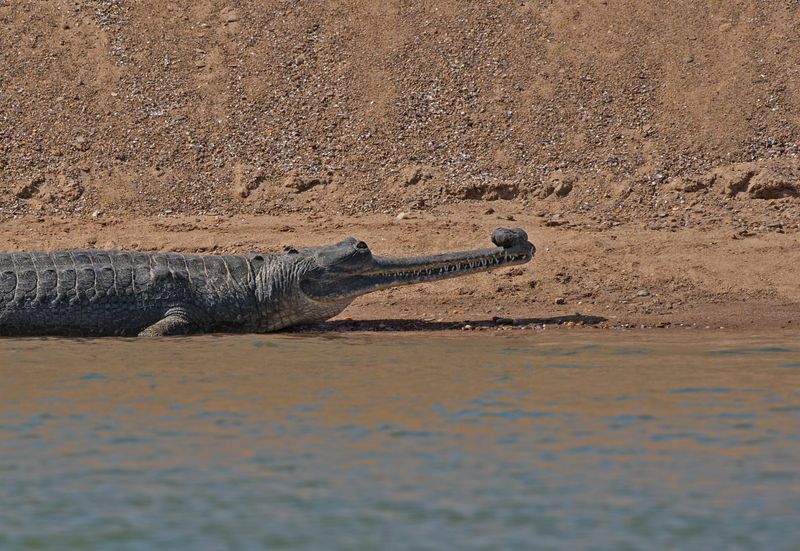

In rare cross-border wildlife chase, the Punjab Forest Department has launched an extraordinary rescue expedition — venturing 200 kilometres into neighbouring Bikaner in Rajasthan to retrieve an endangered gharial that has strayed far from its Beas River homeland.It is being suspected that the gharial has travelled from the Harike Wetland area in Punjab to Bikaner through the Indira Gandhi Canal. Upon being sighted in Bikaner, the Rajasthan Wildlife Department tipped off their Punjab counterparts.Wildlife officials from both states are regularly monitoring the movement of the mammal. The gharial was sighted on Thursday, following which tracking efforts were intensified.Punjab’s Chief Wildlife Warden, Basanta Raj Kumar, confirmed the sighting. “We are in contact with our Rajasthan counterparts to rescue the reptile,” he said.Explaining the complicated rescue mission, officials said gharials are known to migrate and can enter the extensive canal network, including the Indira Gandhi Canal. They can be rescued, once they stabilise in a given area.According to a census survey conducted by the Department of Forests and Wildlife Preservation in collaboration with World Wildlife Fund (WWF)-India from March to April 2025, 37 gharials had been sighted across 22 locations in the Beas.From December 2017 to December 2021, 94 juvenile gharials were reintroduced in five batches into the Beas. They were translocated from the Gharial Breeding Centre at Deori in Morena district of Madhya Pradesh.To evaluate the success of the initiative and study habitat-use and distribution patterns, the department and WWF-India conduct annual pre- and post-monsoon monitoring exercises.Officials said that after excess water was released from dams last year, resulting in flooding in the Beas, the Punjab Wildlife Department has been trying its best to track aquatic wildlife in the river system.The Beas—considered the only living river that supports quality aquatic wildlife—has recorded the presence of dolphins and gharials. The presence of dolphins is an indication of the river’s ecological health. The river is also home to other rare species, like the fishing cat and the smooth-coated Indian otter.