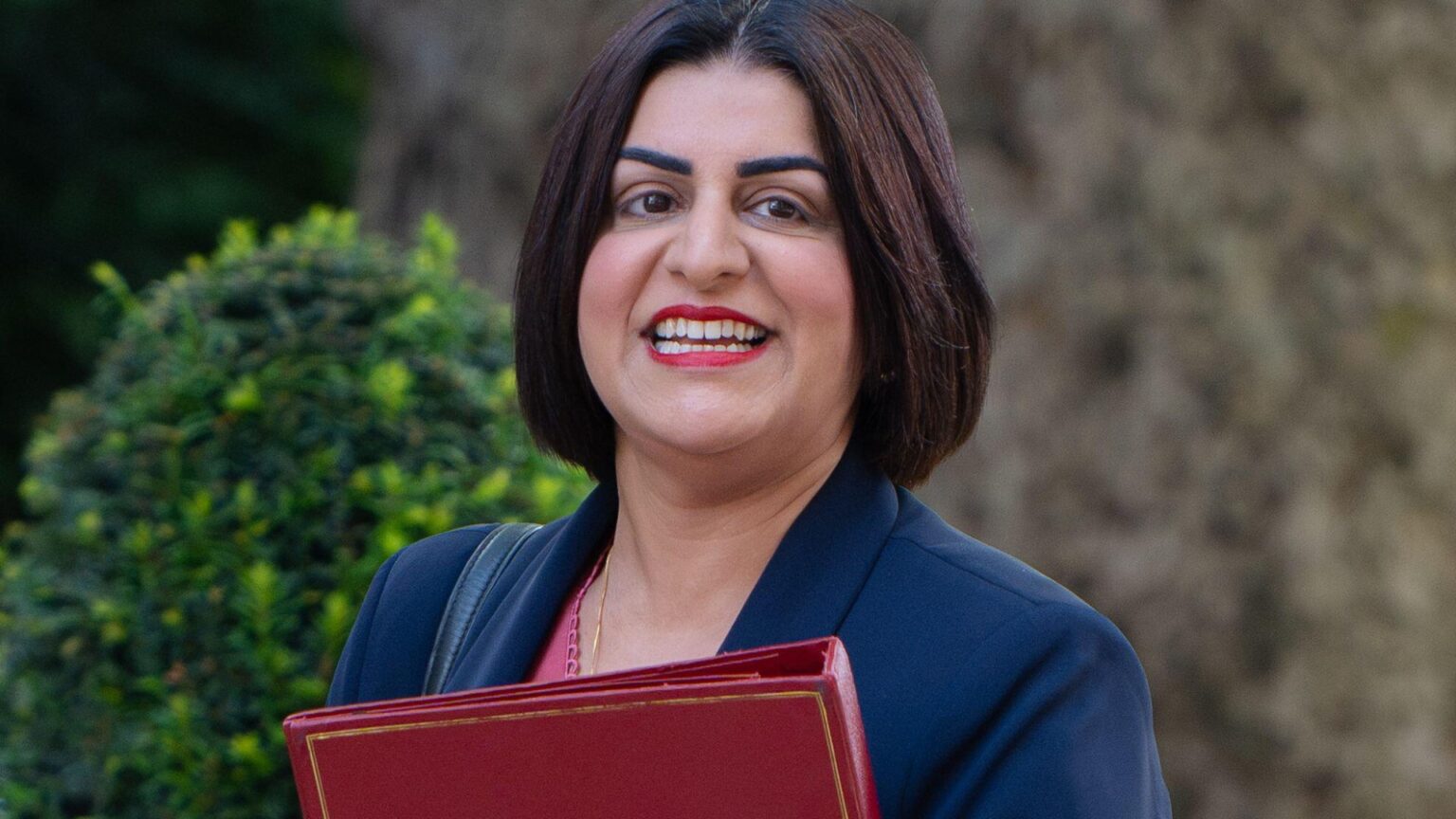


REPORTS are swirling that current Home Secretary Shabana Mahmood is set to become the next Chancellor.
For weeks, speculation has been mounting over who prime-minister-in-waiting Andy Burnham could pick to lead the UK economy.
Few believe Rachel Reeves will keep her job when Mr Burnham comes into power, and senior Labour figures have now told reporters they expect Ms Mahmood will take on the role.
The Times has reported the home secretary spoke to Mr Burnham about the economy during a meeting last week.
Sign up for the Money newsletter
Thank you!
It would mean Energy Secretary Ed Miliband may have been passed up for the role following reports he was a serious contender.
Critics had feared his position on the soft left would spook markets and increase borrowing.
RATING IT
UK economy flatlined in May with just 0.1% growth – what it means for your money
CHEQUE IT OUT
Major high street bank to open MORE branches in boost for the high street
The emergence of Ms Mahmood as a frontrunner for Chancellor appears to have had the opposite effect on markets.
The pound rose to a two-month high against the dollar, while the cost of government borrowing fell more than in Europe and the US.
Sterling rose from $1.33 against the dollar in early-morning trading to $1.35 by late-afternoon trading, the strongest level since May 13.
This is a sign that financial markets believe Ms Mahmood will be sensible on spending and borrowing.
However Chris Beauchamp, chief market analyst at investing and trading platform IG, said the rally was more based on Mr Miliband being kept out of the role – rather than a particular liking for the home secretary.
“Markets were firmly in the ABM, Anyone But Miliband, camp, resigning themselves to the departure of Rachel Reeves but hoping that the former leader would not replace her,” he said.
“The likely move has been done to appease the Labour left, who were none too keen on Mahmood’s immigration policies, and also keep markets quiet, rather than for Mahmood’s economic skills.”
Ms Mahmood has experience in the shadow Treasury, but doesn’t have the extensive financial background that Rachel Reeves had brought to the role.
She is reported to be financially conservative, and AJ Bell’s Sarah Coles said she is “considered to be measured, pragmatic and disciplined over budgets”.
That means she will likely be seen as a sensible choice.
But we have heard very little so far on what her economic policies could be.
Her voting history shows she has almost always voted for increasing income tax, capital gains tax, and taxation on alcohol.
However she will have been voting along party lines.
Jason Hollands, managing director of Bestinvest, said: “There is little to go on at this stage as to what a potential Mahmood appointment of chancellor would mean but the fact that she is not perceived to be radical, has experience as a shadow minister in senior Treasury roles, and sits on the centrist wing of the party, would likely reassure markets.”
What could her appointment mean for your money?
Shabana Mahmood is the current home secretary and has shared little on economic policy Credit: Alamy
Given we’ve heard little about what Shabana Mahmood‘s financial policy could look like, experts are speculating on how much influence she will have over the incoming prime minister.
Mr Beauchamp said Ms Mahmood could end up becoming “more of a cipher” for Andy Burnham.
That would mean she would mostly be acting out Mr Burnham’s agenda – which we have heard much more about so far.
Mr Burnham has already committed to sticking to Labour’s manifesto not to raise the headline rates of income tax, national insurance or VAT.
However he has said there is “some room” within the manifesto for “movement on tax”.
For example, he could look at raising the threshold at which people start paying income tax.
He has previously argued the UK overtaxes work and undertaxes wealth.
An speaking on Gary Lineker’s podcast this week, he opened the door to a wealth tax and said people would have to pay a “little more”.
He said he would make “difficult” decisions that could see people charged on their assets.
This has raised speculation he could increase capital gains tax, which is paid on profits you make when you sell assets such as shares or property.
The MP has also suggested that council tax and stamp duty, which is paid out by home buyers, could be replaced with a new tax on the value of land.
If Ms Mahmood is confirmed as chancellor on Monday, her first big task will likely be to draw up an emergency cost of living package.
This could include targeted support for energy bills, a rent freeze and a cap on bus fares.
Of course, the Government would need to find money to implement these policies.
Angeline Ong, senior investment analyst at IG, said the new chancellor won’t “arrive at Number 11 with a magic money tree” but they will need to avoid overspending and spooking the markets.
If Ms Mahmood can keep markets on side, that will also have a direct impact on your money.
For example, if financial markets trust her discipline then gilt yields will continue to fall.
Gilt yields, which reflect the cost of government borrowing, help to influence how banks price fixed-rate mortgages.
So if gilts fall, lenders are more likely to offer cheaper mortgage deals.
This also has an impact on your pension pot, as many retirement funds are invested in British government bonds.
Keeping markets calm means retirement pots can grow predictably, rather than facing sudden drops and volatility.
Plus, if investors have confidence in a chancellor then they buy UK assets, which can drive up the value of the pound.
This means goods from abroad become cheaper to import, and you’ll get more for your money when you go on holiday.
Who else could still be in contention?
Incoming prime minister Andy Burnham will have tough choices to make on his chancellor pick Credit: PA
Although reports suggest Shabana Mahmood is the frontrunner, the race isn’t over just yet.
These Labour faces could still have a shot at the job…
Ed Miliband
Ed Miliband was initially thought to be the frontrunner but he could unsettle markets Credit: Alamy
Reports previously had Ed Miliband as the frontrunner, saying he had the backing of union figures who are pressing Burnham to break from the current economic approach.
He’s got experience in senior roles like special adviser to Gordon Brown, leader of Labour Party, and chairman of the Treasury’s Council of Economic Advisers.
However, some Labour insiders and financial experts are concerned giving Miliband the job could unsettle the markets.
Jason Hollands, managing director of Bestinvest, said: “The choice between a figure viewed as a safe pair of hands or someone from the party’s left wing such as Ed Miliband could have a significant impact on market confidence and ultimately the cost of borrowing, as well as the strength of the pound.”
Still, some reports have suggested Miliband has been persuading Burnham of the importance of sticking with the fiscal rules to help calm the markets.
Sarah Coles said the energy secretary “might consider more progressive taxes or revisiting tax reliefs that predominantly benefit higher earners”, and has also supported a mansion tax.
He has also shown support for more government involvement in business, as well as a commitment to net zero – which is the key strategy to fight climate change.
Analysis by the Tories previously found Miliband’s net zero policies would cost households an extra £389 a year by 2030.
Wes Streeting
Former health secretary Wes Streeting had originally planned to run for Labour leadership Credit: Getty
Former health secretary Wes Streeting had initially said he would run in a leadership contest but later backed down and threw his support behind Andy Burnham.
This could suggest he’s already struck a deal to pledge his support in return for one of the top four government roles.
Streeting briefly served as shadow exchequer secretary to the Treasury in 2020, and he’s already served in a senior role in government as health secretary.
Rachel Vahey, head of public policy at AJ Bell, said: “Wes Streeting’s centrist credentials would make him a popular choice to win over markets, which have so far been muted in their response to the political upheaval.
“While he hasn’t held any positions to develop his fiscal chops, his work as health secretary gained plaudits from the public and he’s been vocal in his belief that politicians should be more honest about what the government can afford.
“He’s a big believer in fiscal rules and the need to bolster market confidence: something which has endeared him to bond markets.”
He’s previously said he wants to raise capital gains tax (CGT) to the same level as income tax.
CGT is a tax on profits made from selling assets like property, shares or business holdings, and it’s currently set at a lower level than income tax.
Streeting has said the change would create a “wealth tax that works”, but analysis from investment platform IG suggests it could result in a £8billion loss for the Treasury if homeowners and investors delay selling their assets.
Pat McFadden
‘Safe pair of hands’ Work and Pensions Sec Pat McFadden was once an adviser to Tony Blair Credit: Getty
Works and Pensions Secretary Pat McFadden has also been among the top contenders.
IG’s Angeline Ong says he’s seen as part of the “fiscally sensible wing of Labour” and is considered a safe pair of hands.
McFadden served as an adviser to Tony Blair and in Sir Keir Starmer‘s Cabinet, so has plenty of senior experience.
Rachel Vahey, from AJ Bell, said: “He’s seen as a moderate, so would be likely to promote fiscal responsibility alongside investment in public services and working to improve growth.
“His private communications, recently made public, show he wanted to move beyond simply thinking of tax as a way to pay for public services, and use the system to promote growth and provide opportunities.”
McFadden has also stood by the state pension triple lock, which would be a relief for pensioners but will raise questions over how it can be funded.
Torsten Bell
Pensions minister Torsten Bell previously led left-leaning think tank the Resolution Foundation Credit: Getty
Torsten Bell is a relative newcomer to Westminster and currently serves as pensions minister.
But he led left-leaning think tank the Resolution Foundation for nine years and he’s tipped to be in the running for chancellor.
He was drafted in by Rachel Reeves in a senior economic role to help with last year’s Autumn Budget.
AJ Bell’s Ms Vahey said: “Bell is considered as left leaning, but he may struggle to advance the radical tax and wealth reforms he proposed while leading a think tank.”
These included raising capital gains tax, applying National Insurance to rental income and overhauling council tax.
He has also defended Reeves’ decision not to introduce a wealth tax, arguing it would have a limited impact.
Bell could have been set back by his humiliating failure to push through his flagship policy as pensions minister on using cash in pension funds to boost the economy.
The policy was rejected by the House of Lords and he was forced to significantly water down his plans.
This could hurt his chances if the prime minister believes he is unable to deliver on pushing through policy.
Yvette Cooper
Foreign Secretary Yvette Cooper is said to be a ‘team player’ with plenty of senior experience Credit: EPA
Another “safe pair of hands” candidate is Foreign Secretary Yvette Cooper.
She’s also served in other senior roles including home secretary and chief secretary to the Treasury under Gordon Brown.
Danni Hewson, head of financial analysis at AJ Bell, said Cooper’s extensive experience had put her firmly in the running for chancellor.
“As an MP of a northern constituency, she’s got a good working relationship with Andy Burnham and is one of the most senior politicians in the current cabinet who knows how to be a team player – but also how to raise sensitive issues at the highest level,” she said.
“Her breadth of experience means that she will understand the pressures on the public purse better than many and her seniority could help bring together different factions of the party under a new leader.”
As she is considered to be a centrist, this could reassure markets nervous about an Andy Burnham premiership.