

A RAT virus cruise passenger had already tested positive for hantavirus before health officials gave them the all clear to leave and fly across the world.
Another US citizen also had a cough on board the infected ship which the doctor didn’t consider a symptom because it went away the next day.
Sign up for The Jattvibe newsletter
Thank you!
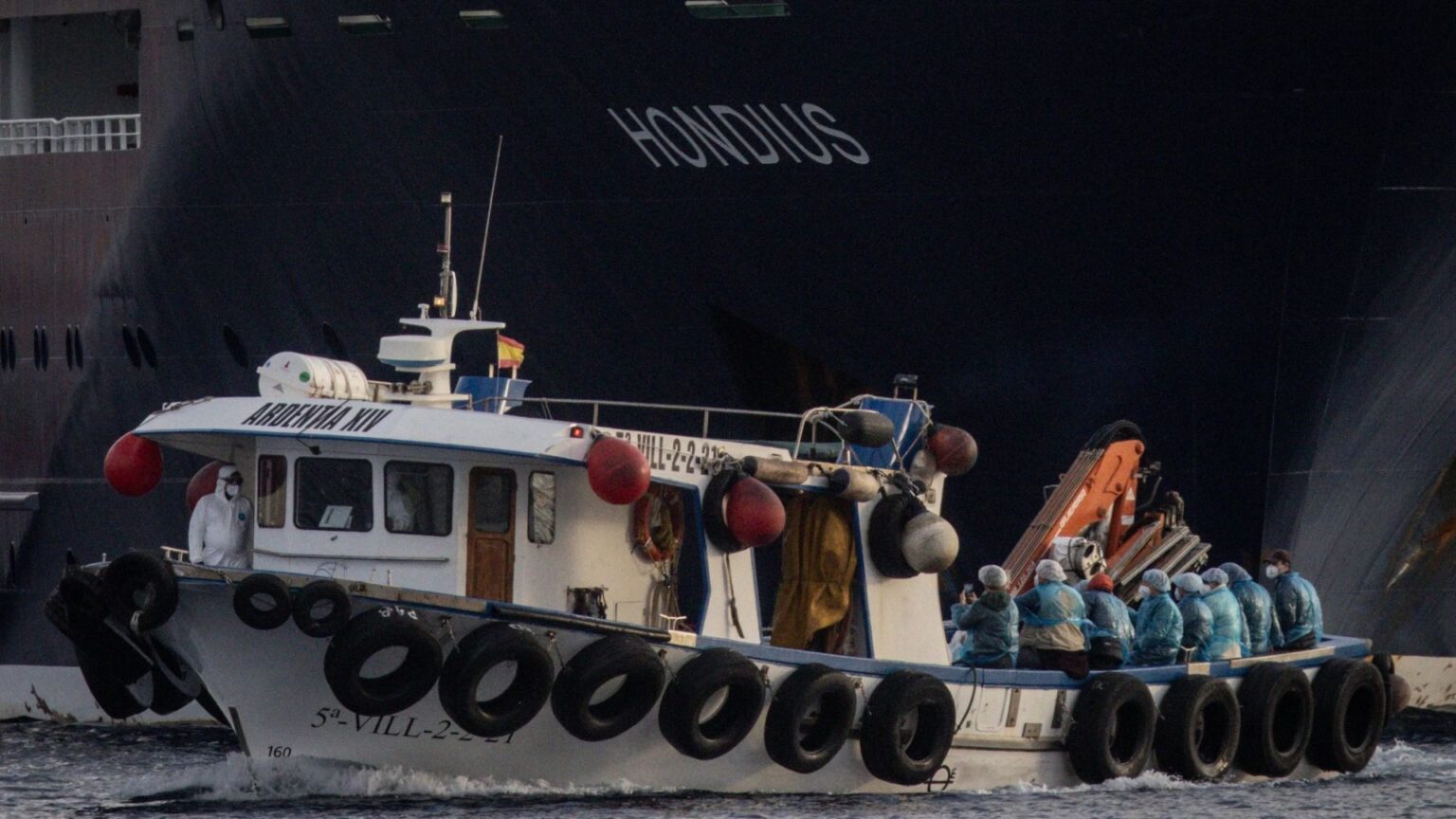
US passengers, dressed in blue safety outfits, being evacuated in a small boat from the MV Hondius in Tenerife Credit: Getty
A chartered aircraft carrying the American passengers arriving at Eppley Airfield in Omaha, Nebraska on Monday Credit: Reuters
It comes as…
It has raised serious questions over the high-stakes rescue operation from the MV Hondius, which began in Tenerife yesterday.
Two evacuees on separate flights have tested positive for hantavirus and another became unwell after being freed.
Read more in cruise virus
RAT VIRUS SPIKE
Two cruise guests test positive for rat virus after evacuation in Tenerife
DARING MISSION
Army medics parachute onto remote island to help Brit ‘with rat virus’
One US citizen had already tested mildly positive when the ship was in Cape Verde last week.
European health authorities did not consider it strong enough, even though US authorities did, so failed to treat it as a positive case.
A motorcade took the cruise passengers to a special location in Nebraska where they will now have to quarantine Credit: Reuters
It is understood passengers on a US charter taking off from the Canary Islands last night had a secondary test on the flight.
This came back positive again for the infected individual.
Another US citizen began displaying symptoms shortly after.
Both were placed in bio containment units and faced clinical testing when they landed in Nebraska late at night.
Passengers evacuated from the cruise ship MV Hondius arrived in Nebraska Credit: Reuters
Masked officials at the port as rat virus ship passengers are evacuated Credit: Simon Jones
What is hantavirus? Bug with 40% mortality rate reaches Europe
By Bethan Moss and Eliza Loukou
THE deadly virus that has ripped through Dutch cruise ship the MV Hondius, killing three, is usually transmitted via contact with rodent droppings.
But this particular strain, known as “the Andes virus” is an alarming exception.
Only found in the mountains of Argentina and Chile, the strain is the only hantavirus that has demonstrated the ability to spread between humans.
And the strain could have a terrifying mortality of up to 40 per cent, the WHO believe.
Passengers onboard the MV Hondius now face a weeks-long quarantine as officials scramble to contain the deadly outbreak.
Hantaviruses are spread by rats, through contact with their urine, droppings and saliva.
The World Health Organization (WHO) estimates there are 10,000 to 100,000 cases in humans every year across the world.
Symptoms range from a mild flu-like illness to major respiratory issues or internal bleeding.
Although uncommon, limited human to human transmission has been reported in previous outbreaks of Andes virus – a specific species of hantavirus.
The strain is found largely in Chile and Argentina – where the cruise ship started in March – is the only known variant that can spread through close, prolonged human-to-human contact.
The WHO confirmed on Wednesday that the outbreak on the cruise ship is the Andes hantavirus.
South African officials also confirmed the Andes strain had caused infections in two of the cruise passengers.
READ MORE HERE
A British national who lives in the states was on the US flight with them.
A French passenger meanwhile also began showing symptoms on their repatriation flight hours earlier, and later tested positive.
The French woman was said to be in a serious condition after her symptoms rapidly declined overnight.
France’s health minister, Stéphanie Rist said the woman’s symptoms “unfortunately, worsened overnight.”
The MV Hondius remains anchored in the port of Tenerife with only a small number of crew left on board Credit: Shutterstock Editorial
A British citizen boards a plane bound for the UK carrying passengers evacuated from hantavirus-stricken cruise ship Credit: AFP
All five passengers on that flight have been put in strict isolation, France’s PM said.
Spain’s ministry of health said of the US citizen: “A diagnostic test was performed and sent to two laboratories.
“In one of them the result was considered by US authorities as a weak positive, although for us it was not conclusive.
“The second analysis was negative. The person in question did not show symptoms in Cape Verde.”
A trio of US cruise passengers wave and look out at the crowds awaiting their arrival in Spain Credit: Getty
Timeline of rat virus outbreak
Ed Southgate, News Reporter in Tenerife
April 1 – Dutch-flagged cruise liner MV Hondius leaves Ushuaia in Argentina on 35-day Atlantic Odyssey
April 11 – First passenger, a 70-year-old Dutch man, dies
April 24 – His widow accompanies his body from the British Overseas Territory of St Helena to Johannesburg
April 25 – She boards KLM flight to Amsterdam but is refused permission to fly because of her deteriorating medical condition
April 26 – The 69-year-old woman is taken to hospital but dies
April 27 – British tourist, 69, evacuated from ship between St Helena and Ascension island and flown to Johannesburg where he remains in intensive care
May 2 – A German national dies from the virus on board the stricken vessel
May 3 – The Hondius arrives in Cape Verde but is refused permission to dock because of the outbreak
May 6 – Three people, including 56-year-old tour guide and wildlife photographer Martin Anstee, are evacuated and flown to the Netherlands for urgent medical care as ship sets sail for Canary Islands
May 7 – Frantic race against time launched to trace 29 passengers from at least 12 different countries who left the plague-ravaged cruise ship for all corners of the globe, including seven Brits. They are all later located.
May 8 – Protests erupt in Tenerife as ship prepares to dock – whilst third Brit on remote island of Tristan da Cunha tests positive for the virus.
May 10 – MV Hondius docks in Tenerife as passengers are brought ashore in hazmat suits and hosed down before evacuation flights. UK passengers will now quarantine for 45 days at a specialist hospital in the Wirral.
May 11 – Two new positive hantavirus cases detected in a French woman and a US national.
US authorities treated it as positive though and the individual was evacuated in a separate boat.
The symptomatic citizen was also transferred in the separate boat.
Spain’s ministry added if the French positive: “In a patient who develops a fever, it would not be strange if a case could appear among close contacts.
“Precisely for this reason all preventative and transmission control measures have been applied.”
The new cases threw the evacuation effort into chaos by raising questions over how effective the health screening was before passengers were allowed off the plane.
No one was tested by public health officials yesterday, largely because of the risk of false negatives as the virus can take eight weeks to incubate.
Instead officials questioned them and checked for irregular symptoms like a fever or headache.
A final Brit still on the doomed ship meanwhile had their evacuation plans scuppered when the charter jet that was meant to take them to Australia failed to come.
A technical issue means the jet will instead fly to the Netherlands.
The Brit will get a Dutch repatriation flight instead, and travel to Australia where they live from there.