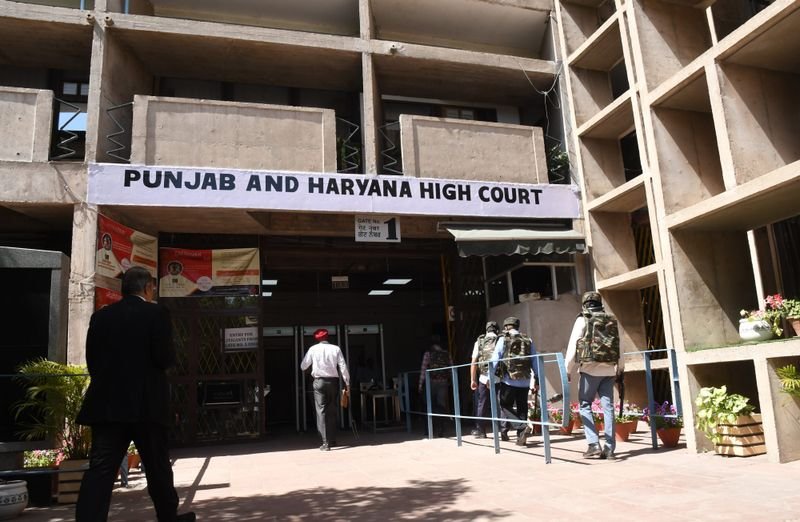

The law may prescribe the limits of liberty; but a judge hearing the bail plea of a prisoner above 75 –who is suffering from health issues – must have the “spine to do justice”. The judge must examine health and old-age-related issues with “utmost sympathy and concern” before rejecting the bail application, the Punjab and Haryana High Court has prescribed.The Bench of Justice Anoop Chitkara and Justice Harmeet Singh Deol said: “Whenever a person above 75 years of age with health issues is in custody, the concerned Judge must have the spine to do justice and examine the health and old age related issues with utmost sympathy and concern, and before rejecting the bail application of a person above 75 years of age, the Court must document the reasons for the same”.The observation came as the Bench granted interim bail to 76-year-old accused in custody in a money-laundering case for over five years. The petitioner’s counsel contended that he could not even take care of his personal needs and further pre-trial incarceration would cause irreversible injustice to him and his family.The counsel added that the petitioner was not a flight risk. All documentary evidence was already in the Enforcement Directorate’s possession. As such, there was no reason to turn down his bail plea.“If denied, the petitioner’s deteriorating medical condition would have an irreversible impact on his life if he survives,” the counsel added.Taking a note of the submissions, the Bench asserted: “Unhealthy old age is a curse. It is inhumane to deny bail to middle-old people, or to those who are so sick that it is better for them to receive treatment outside prison walls; subject to the exception like the inmate is a recidivist who refuses to mend their ways, or is at flight risk, or that the criminal is of extreme perversity, or that the crime is so heinous or so cruel, that releasing such person on bail would be more disastrous to the society. Denying bail in such cases can be unkind and goes against the conscience of the Court”.The Bench, at the same time, examined the purpose of incarceration itself. It said the rationale behind detention and custody was deterrence, retribution, protecting society from such criminals from committing further offences, and sending a firm message to the public not to violate the law enacted by the State or else their freedom might be curtailed.“At the same time, it reassures victims that the State’s justice system is in place and discourages them from seeking revenge by taking the law into their own hands. Reforming the inmates to prepare for their re-integration into society as a social philosophy behind modern-day prisons becomes futile when they are on the last leg of their lives. The incarceration loses its objectivity when the inmate is a sick and infirm middle-old,” the Bench ruled.The ruling assumes significance in the context of the stringent bail provisions of the Prevention of Money Laundering Act.Appearing before the Bench, the Enforcement Directorate had opposed the plea during the course of hearing on the ground the twin conditions under Section 45 of the PMLA had not been satisfied.It also relied on his alleged evasion of summons from 2016, contending that he could be a flight risk if released. The agency further alleged that properties had been purchased in India in the name of his son, also an accused and stated to be absconding.The ED’s response to the medical plea was that the petitioner was receiving medical care in judicial custody, including spinal surgery, and could be shifted to government hospitals if necessary.The Court noted, however, that there was no specific denial of his medical condition; the agency’s reply focused largely on the gravity of the offence, earlier rejection of bail on merits and the alleged flight risk.The Court made it clear that it was not deciding the bail application on merits. It was considering medical grounds and prolonged custody. The Bench also referred to the custody certificate dated August 17, stating that he had spent over five years in custody in the present case.“Thus, the petitioner is entitled to medical bail not only on the grounds of old age but also entitled to bail on the ground of prolonged custody,” the Bench observed.The Court also refused to allow the stringent PMLA regime to eclipse Article 21 where the medical circumstances warranted intervention.“The rigors of section 45 under PMLA cannot be a hindrance if someone is medically so unfit that the treatment inside the closed walls of the prison becomes a mere formality. Accordingly, denying bail would violate such a person’s right to life, which can be taken only by due process of law and is a fundamental right guaranteed under Article 21 of the Constitution of India,” the Bench added.The Court said it was inclined to grant interim bail to the petitioner till December 21 “with liberty to file an application for extension of interim bail, if the health condition does not improve”, without commenting on the case’s merits in the facts and circumstances peculiar to the case.