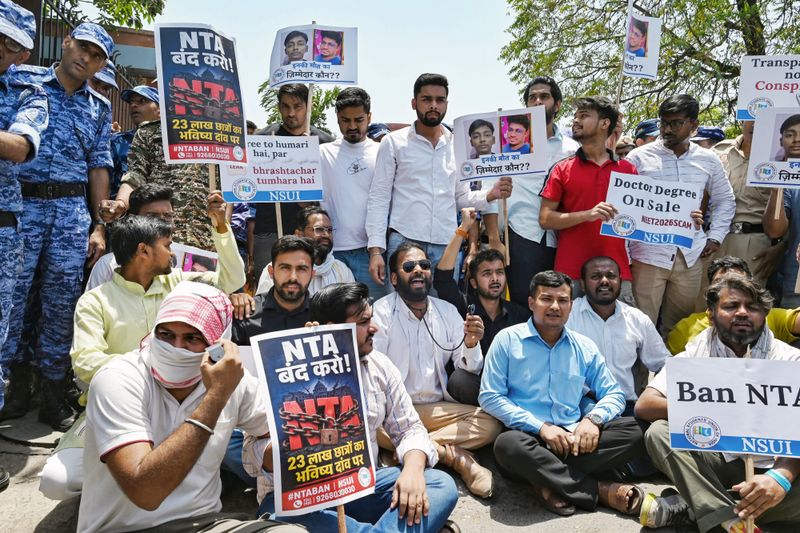

The Delhi High Court on Wednesday sought the Centre’s response after Telegram approached it against the government’s decision to temporarily block access to the messaging app in the country till June 22, a move aimed at “protecting the integrity” of the NEET re-examination on June 21.Justice Tejas Karia issued a notice on Telegram’s plea and granted the Centre time till Thursday to file its reply. The matter has been listed for further hearing at 2.30 pm. The court did not grant any interim relief to Telegram after the Centre assured that no immediate irreversible consequences would follow from the impugned action.The court questioned whether the decision to block the platform was proportionate to the objective sought to be achieved. Appearing for the Centre, Solicitor General Tushar Mehta defended the action, arguing that the authorities had repeatedly engaged with Telegram over concerns relating to the circulation of examination material. Despite being alerted, the platform allegedly failed to adequately address the issue, resulting in the “leak of sensitive content” linked to the examination process, he said.Telegram, however, maintained that it acted promptly whenever unlawful content was flagged. Senior counsel appearing for the platform submitted that all identified links were removed within a short period of receiving official communication and contended that this response had not been adequately considered before the blocking order was passed.The platform argued that the emergency powers invoked by the Centre required a recorded satisfaction regarding the existence of an urgent situation, which was “absent in the present case”.The company also challenged the scope of the order, contending that specific content could have been targeted instead of imposing a blanket restriction on an entire platform used by millions. It told the court that the shutdown affected students, educators and businesses who relied on Telegram for communication and educational resources.Responding to the submissions, Mehta sought time to place detailed material on record and said the government would justify the invocation of emergency powers with data and evidence. The temporary restriction was imposed following recommendations made by the National Testing Agency and the Department of Higher Education under the Ministry of Education.In its petition, Telegram said it had removed over 900 links carrying unlawful NEET-related content and deployed artificial intelligence and machine-learning tools to identify and curb such material. It argued that the order imposed a disproportionate restriction on a platform used by more than 15 crore people in India and claimed it was denied an opportunity of hearing despite actively engaging with government agencies in the weeks preceding the ban.Telegram chief executive officer Pavel Durov said the restriction penalised ordinary users rather than those responsible for leaking examination material. He maintained that the circulation of leaked content had merely shifted to other platforms and said Telegram had already removed hundreds of channels carrying leaked exam papers and related scams.