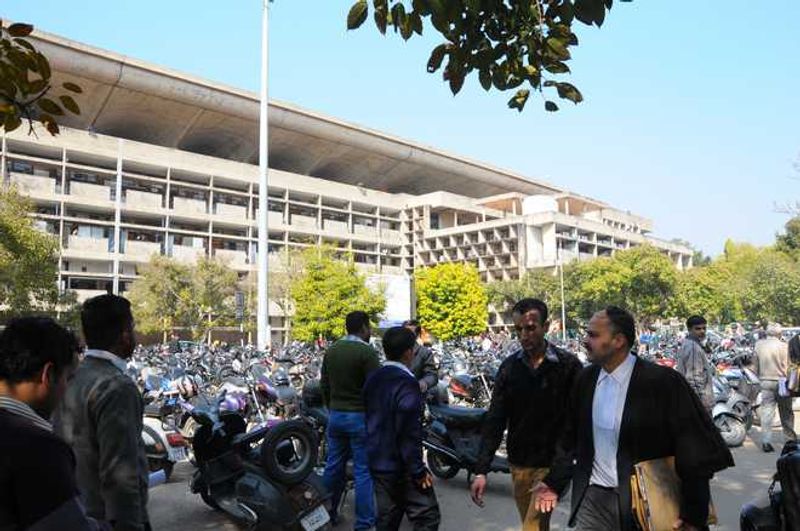

Observing that the obligations imposed upon Punjab, Haryana and the Union Territory of Chandigarh under the Rights of Persons with Disabilities Act, 2016, “do not appear to have been complied with”, the Punjab and Haryana High Court has directed their Chief Secretaries to file fresh affidavits explaining how the provisions of the law are being implemented.The directions by the Bench of Acting Chief Justice Ashwani Kumar Mishra and Justice Rohit Kapoor came during the hearing of a suo motu case. The matter will now come up for hearing on August 25.Appearing as amicus curiae, advocate Karan Nehra argued that the affidavits filed by Punjab, Haryana and the Chandigarh Administration pursuant to an earlier order dated February 25, 2025, fell short of the obligations imposed by the 2016 Act.Drawing the court’s attention to Sections 20(4) and 21 of the Act, the amicus referred to the statutory safeguards available to employees acquiring disabilities during service and the mandatory requirement for every establishment to notify and register an Equal Opportunity Policy.The court quoted Section 20(4) of the Act as saying: “No government establishment shall dispense with or reduce in rank, an employee who acquires a disability during his or her service.” The provision added that the employee “shall be shifted to some other post with the same pay scale and service benefits” where he was no longer suitable for the existing post. If adjustment was not immediately possible, “he may be kept on a supernumerary post until a suitable post is available or he attains the age of superannuation, whichever is earlier”.The Bench also referred to Section 21, which requires: “Every establishment shall notify equal opportunity policy detailing measures proposed to be taken by it” under the Act and that “every establishment shall register a copy of the said policy with the Chief Commissioner or the State Commissioner, as the case may be”.The amicus further relied upon Rules 8, 9 and 10 of the Rights of Persons with Disabilities Rules, 2017, submitting that the statutory framework envisages appointment of a Liaison Officer, maintenance of records relating to persons with disabilities and a complaint register by establishments.The order further reproduces Rule 8, which required every establishment to publish its equal opportunity policy and display it, preferably on its website or, failing that, at conspicuous places on its premises. For government establishments and private establishments having 20 or more employees, the policy must, among other things, specify facilities and amenities for employees with disabilities, identify suitable posts, lay down procedures relating to recruitment, training, transfers and other benefits, provide for assistive devices and barrier-free accessibility, and include “appointment of liaison officer by the establishment to look after the recruitment of persons with disabilities and provisions of facilities and amenities for such employees”.After examining the affidavits, the High Court concluded that they did not satisfactorily demonstrate compliance with the statutory scheme. “Having gone through the affidavits of the respective states/UT, we find that the obligations imposed upon each state/UT by virtue of the Act of 2016 do not appear to have been complied with and on material aspects, the affidavits filed by the states are found to be lacking.”The court consequently directed the Chief Secretaries of Punjab, Haryana and the Union Territory, Chandigarh, “to examine the provisions in light of what has been observed hereinabove and file a fresh affidavit, explaining the manner in which the states/UT are ensuring compliance of the provisions of the Act of 2016”.