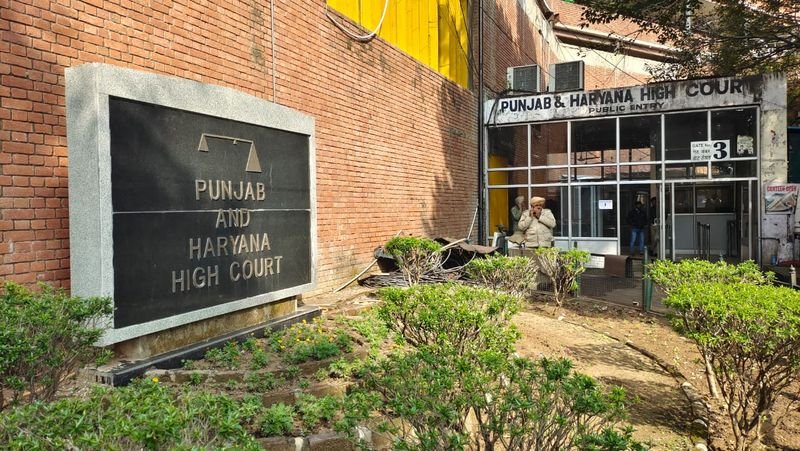

The Punjab and Haryana High Court has stayed the operation and effect of a Single-Judge judgment declaring the Chandigarh Golf Club a “public authority” under the Right to Information Act, 2005.The Division Bench of Justice Jasgurpreet Singh Puri and Justice Sanjiv Berry also issued notice of motion on the club’s appeal.The interim order came after hearing senior advocates Chetan Mittal and J S Toor, along with counsel Amit Sharma, Adhiraj Toor, Mayank Aggarwal and Jasbir Singh on the club’s behalf.Appearing before the Division Bench, the counsel contended that the Single-Judge, by way of the impugned judgment dated May 29, declared the appellant-Club a ‘public authority’ under Section 2(h)(ii) of the Right to Information Act, 2005, by dismissing its writ petition “primarily on two grounds.”The first ground was “that the rent which was paid by the appellant-Club was less than 1 per cent of the market value and therefore, amounted to a subsidized rate as the property had been leased by the Chandigarh Administration in favour of the appellant-Club.”Challenging the finding, the counsel submitted that the Club was now paying rent at the assessed market value. Otherwise also, an authority could not be termed a ‘public authority’ merely on this ground in view of a Supreme Court judgment “wherein it was categorically held that merely on the ground of receiving subsidies, an authority cannot be termed a ‘public authority’.”Referring to the second basis, the counsel contended that the Single-Judge observed: “There are three members of the government on the Board of Governors, out of the total strength of 15 members constituting the Board of Governors.”The appellant argued that “the role of the three members, although having voting rights, does not constitute a majority on the Board.”It further submitted that their limited role was to ensure that the property was not damaged and that the rules and regulations of the Chandigarh Administration were adhered to.“In the event of any default, they may refer the matter to the Administrator, U.T. Chandigarh and therefore, the aforesaid role of the nominated members would not mean that there is any substantial control exercised by U.T. Chandigarh Administration,” the counsel contended.Accepting notice on behalf of one of the respondents, advocate Arjun Shukla submitted: “On the basis of the two aspects on which the Single Judge founded the impugned judgment, the appellant-Club can be declared a ‘public authority’.”He further argued: “Once there is intervention by the UT Administration, the entity has to be declared a ‘public authority’ under the RTI Act.”After recording the rival submissions, the Division Bench issued notice of motion, adjourned the matter to October 14 for final arguments, and granted interim relief.