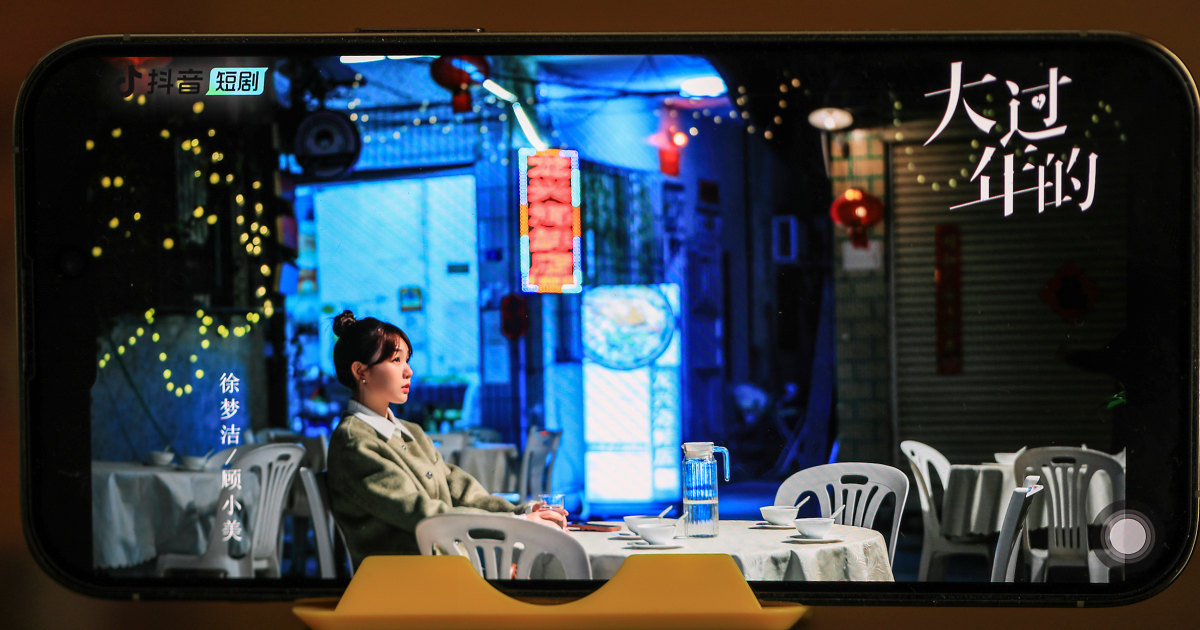


ZHENGZHOU, China — Chinese microdramas — known for hyperemotional stories about torrid love affairs, time-traveling revenge and explosive family secrets — are facing drama of their own as AI transforms an industry that is also rapidly expanding in the United States. Subscribe to read this story ad-freeGet unlimited access to ad-free articles and exclusive content.Shot vertically for China’s mobile-first audience, microdramas — also called minidramas or short dramas — have captivated hundreds of millions of Chinese for years with fast-paced, addictive stories told in episodes that usually last between 60 and 90 seconds. But technology has upended the way they are written, produced and performed.“AI is changing everything,” Gao Qingge, a microdrama director based in Beijing, told Jattvibe News in an interview. “Because AI can save a lot of money.”Out of about 100,000 microdramas released in the first three months of this year, about 95% were entirely produced by AI, according to the state-run People’s Daily newspaper, leaving many actors and crew members in the $14 billion industry in limbo.Though Chinese viewers are watching artificial intelligence microdramas in huge numbers, the shift has also created anxieties similar to those in Hollywood, where a full-length feature film starring controversial AI “actor” Tilly Norwood was criticized by a major actors union as “devaluing human artistry.”Just as microdramas blossomed in China before jumping to the U.S., where they are also produced and widely viewed, the way the industry embraces and restricts AI could have implications for American TV and film productions down the road.The changing mood is hard to miss in Zhengzhou, China’s microdrama capital, where many housing projects left unfinished amid a yearslong national property crisis have been transformed into filming bases.The film set of a minidrama at Min’ge Lake in Nanning, China, in March.Chen Luyuan / Xinhua via Getty ImagesAt Dazhi filming base outside the city of more than 12 million people, only four crews were filming late last month when Jattvibe News visited the 200,000-square-foot production complex. There are more than 50 sets at the one-stop production venue, where it’s a short walk from a ballroom with grand chandeliers to a modern subway, a hospital, a karaoke room, a jail cell or the office of a wealthy CEO, allowing crews to shoot scores of episodes in a matter of days. Only a few months ago, as many as 15 crews could be shooting there at the same time, and sets were booked out weeks in advance, Wu Hongbin, the base’s manager, said. “Compared to last year, the current volume has basically been slashed by about 60% to 70%,” he said, in part because of the impact of AI.The shift has left those who depend on microdramas for employment at loose ends.Liu Yuan, 45, a microdrama actor who often plays the father of rich men, said he almost never used to have openings in his schedule. But many crews “ground to a halt” early this year, he said, when the popular microdrama platform Hongguo reportedly made policy changes that discouraged external production partners from making live-action series.“Most of them shifted to AI, so live-action minidramas became relatively scarce,” Liu said while filming at the complex, though he said work had picked up again more recently. Staff members produce microdramas with the assistance of AI at the Dazhi film and television base in Zhengzhou, China, in April.Ren Zhuoru / Xinhua via Getty ImagesProduction companies are motivated by the idea of slashing what they spend on human actors, Gao said.“It saves five to eight times the amount of money if we use AI, compared to the live-action ones,” she said.AI also provides more flexibility than traditional TV productions, said Huang Dingxuan, a Beijing-based cinematographer who works with Gao on microdramas such as last year’s “Scapegoat Maid.”“If it’s raining outside but we have a sunny day [scripted], we have to wait, but with AI, if you want a sunny day, it’s going to be a sunny day,” he said.An AI system used to create minidramas.Fred Dufour / Jattvibe NewsAnina Net, an American who has spent years acting in Chinese-directed microdramas for English-speaking audiences, said AI has been an “incredible tool” for series such as one she appeared in last year, “Daddy’s Got Girls and Guns.”“This particular director, Paddy Ma, he loves helicopters,” she said. “I’ve shot with him so many times and there’s always, you know, the girl getting out of the helicopter.” “Well, he wanted seven helicopters, but there’s no budget for seven helicopters,” said Net, who is based in Los Angeles. AI came to the rescue, she said, but it’s also a “double-edged sword.”“So many of the incredibly professional people that I know that were working every day are back home doing nothing because there’s no more live-action shootings,” Net said.Net says she has a “no AI” clause in her contracts for her own image, as “I cannot risk that someone would make me say something that I absolutely never said or do things that I never did.”Film set of a microdrama at the Shanghai International Short Video Center in 2024.Xinhua News Agency / via Getty Images fileSome companies are trying to get ahead of those concerns, with mixed results. The Chinese streaming giant iQIYI faced backlash in April after unveiling an AI performer database that it said would allow actors to authorize the creation of digital doubles for future films and TV shows. Though iQIYI said the actors in its database would have control over how their images were used, Chinese actors in other cases have complained about their faces and voices being cloned and used in ways they didn’t agree to. In April, Hongguo removed a popular AI-generated series, “Peach Blossom Hairpin,” and penalized its production company after accusations that it had used online users’ likenesses without their consent. Chinese authorities have begun cracking down on such abuses, and since last year China has required that all AI-generated content be clearly labeled. Though some U.S. states have transparency laws that require AI-generated content to be labeled, lawmakers in Congress are still debating federal legislation.AI generated live-action video.Fred Dufour / Jattvibe NewsDespite the growing influence of AI, some people in the industry remain optimistic. Wu said he still believes that human productions will bounce back because viewers like to watch real people.“When I watch the AI characters, I have the ‘uncanny valley’ feeling,” one user on Chinese social media platform RedNote commented last month, referring to the unsettled feeling that people can experience when looking at humanoid objects.Ma Shuchang, a college student in Zhengzhou who acts in microdramas in her free time, has noticed the slowdown in work but says she still enjoys AI-generated series.“Watching AI dramas is great because they have a lot of special effects that real-life dramas just can’t achieve,” she said, adding that the two can “complement each other.”“Moving forward, high-quality productions with meaningful content will definitely be the ones that win people over,” Ma said.Janis Mackey Frayer, Dawn Liu and Erin Tan reported from Zhengzhou, and Larissa Gao from London.