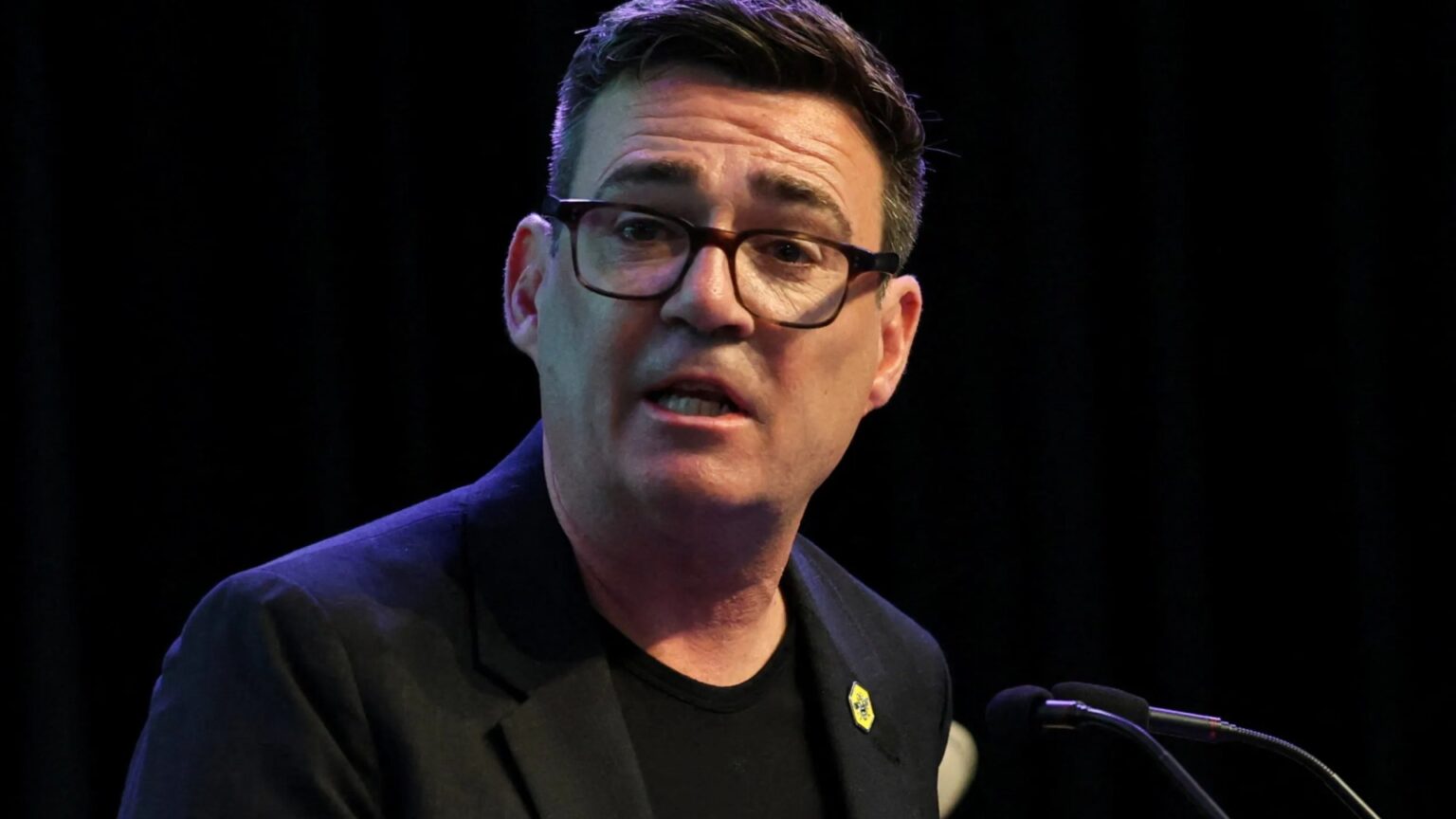


THE path is looking clear for Andy Burnham to become the next prime minister – and some households will already be thinking about what that could mean for their pockets.
The “King of the North” has already hinted he wants to increase taxes on people’s assets and wealth, rather than on their work.
Sign up for the Money newsletter
Thank you!
That means you’re unlikely to see more tax taken out of your pay packet through income tax, VAT, or employee national insurance.
But if you own property, invest or want to pass on your savings to your children, you could end up paying out more to the government.
It’s still not clear exactly what policies Mr Burnham could introduce if he gets the keys to Number 10.
It’s therefore important not to panic and make any rash decisions with your money until we know for sure what changes are coming in.
Read more on Andy Burnham
INTRAY FROM HELL
The five biggest issues facing next PM from small boats to welfare bill
‘POPULAR’
Wes Streeting tipped as favourite to become Chancellor in Burnham government
However it could be worth taking some sensible steps now to protect your cash, or at least considering what you might do.
You could also talk to a financial adviser or get free advice from platforms like MoneyHelper to help you plan your finances.
So far, Mr Burnham has hinted at potential changes including more restrictions on wealth, scrapping the council tax and stamp duty system, and increasing government borrowing to boost defence spending.
Here’s what you should look out for…
Protect your investments
Investing is no longer only favoured by the rich and money-savvy.
An estimated 31.7million UK adults (58%) now hold some form of investment, up from 51% just two years ago.
But the gains you make on investments could potentially be hit by a Burnham government.
That’s because one of the most likely picks for chancellor, Wes Streeting, recently called for capital gains tax to become aligned with income tax rates.
Capital gains tax (CGT) is what you pay when you sell an asset, such as your stocks and shares.
The first £3,000 you earn on your investments is tax-free, but after that you pay 18% if you’re a basic rate taxpayer or 24% if you’re in a higher tax band.
Meanwhile income tax is paid out at either 20%, 40%, or 45% depending on which income bracket you’re in.
That means if you earn more than a basic rate taxpayer (above £50,270), you could earn up paying out far more in tax on your investment income.
Jason Hollands, managing director at BestInvest, says you “should make as much use of your ISA and pension allowances as you can” to protect your investments from tax.
You can put up to £20,000 a year into a Stocks and Shares ISA and pay no tax on your investment growth.
Robert Salter, director at Blick Rothenberg, said you can also take advantage of a tax loophole if you’re married.
If you and your partner are in different tax brackets, you could make sure your investment income is fully in the name of the lower-earning partner.
Protect your mortgage bill from rising
Experts believe mortgage rates could rise if Andy Burnham chooses to increase government borrowing.
The Labour MP told Bloomberg earlier this year he backed the government’s plans to boost defence spending and hinted at more borrowing to fund it.
“There’s certainly a case, when we look at the pressure on defence spending, to consider that exceptionally outside of the [fiscal] rules,” he said.
If financial markets lose confidence in the government’s plans for the economy and believe its borrowing is underfunded – that there won’t be enough tax coming in to pay for the spending commitments – this drives up gilt yields.
Gilt yields are what banks use to price their fixed-rate mortgages.
Ian Futcher, financial planner at Quilter, said this can cause an “immediate” impact for households.
“Even relatively small increases in rates can translate into hundreds of pounds more per month for those coming off fixed deals,” he warned.
If you’re worried about the impact on your mortgage and you’re coming up for renewal, it’s best to start looking for a new fixed rate as early as you can.
Even if you lock into a deal a few months early, you can usually switch onto a cheaper deal if one comes up before you complete.
Mr Futcher also suggested overpaying on your mortgage as much as you can while rates are still manageable to bring the balance down.
You should also start looking now at what you’d end up paying monthly if your mortgage rate went up.
Mr Futcher says this would “give you time to adjust your spending or build up a buffer”.
How to get the best deal on your mortgage
IF you’re looking for a traditional type of mortgage, getting the best rates depends entirely on what’s available at any given time.
There are several ways to land the best deal.
Usually the larger the deposit you have the lower the rate you can get.
If you’re remortgaging and your loan-to-value ratio (LTV) has changed, you’ll get access to better rates than before.
Your LTV will go down if your outstanding mortgage is lower and/or your home’s value is higher.
A change to your credit score or a better salary could also help you access better rates.
And if you’re nearing the end of a fixed deal soon it’s worth looking for new deals now.
You can lock in current deals sometimes up to six months before your current deal ends.
Leaving a fixed deal early will usually come with an early exit fee, so you want to avoid this extra cost.
But depending on the cost and how much you could save by switching versus sticking, it could be worth paying to leave the deal – but compare the costs first.
To find the best deal use a mortgage comparison tool to see what’s available.
You can also go to a mortgage broker who can compare a much larger range of deals for you.
Some will charge an extra fee but there are plenty who give advice for free and get paid only on commission from the lender.
You’ll also need to factor in fees for the mortgage, though some have no fees at all.
You can add the fee – sometimes more than £1,000 – to the cost of the mortgage, but be aware that means you’ll pay interest on it and so will cost more in the long term.
You can use a mortgage calculator to see how much you could borrow.
Remember you’ll have to pass the lender’s strict eligibility criteria too, which will include affordability checks and looking at your credit file.
You may also need to provide documents such as utility bills, proof of benefits, your last three month’s payslips, passports and bank statements.
Protect your property bill
Rob Morgan, chief investment analyst at Charles Stanley Direct, says property taxes look “ripe for renewal” under a Burnham government.
Mr Burnham has long supported proposals to scrap council tax and stamp duty, replacing it with a Proportional Property Tax (PPT).
This means homeowners would instead pay a flat 0.48% tax on the current value of their property, which would initially be capped at £1,200 a year.
Campaign group Fairer Share – which set out the proposals – says 77% of UK households would benefit from the reforms and make an average saving of £556.
But critics of PPT say it would hit older homeowners who have seen the value of their properties rise significantly over the years.
It will also disproportionately affect homeowners in London and the South East, who have seen the biggest increases in property values.
And while renters would no longer need to pay out for council tax, they could be hit with higher rents if landlords end up paying out more for their property through PPT.
However, PPT is introduced, it could have a mechanism that lets homeowners delay paying the tax during their lifetime.
That means you might only need to pay out when the home is eventually sold or transferred.
If you’re planning to buy a home, you could choose to buy in a cheaper area but spend more on refurbishing the property.
That’s because land value tax proposals such as PPT generally look at the value of “unimproved” land, meaning you can add extensions and renovate without the tax bill going up.
Just remember that PPT is only a potential proposal right now and it could take a long time to be implemented, so you should still consider what’s best for your situation.
Blick Rothenberg’s Robert Salter says PPT would “realistically be quite difficult to introduce” and is unlikely to be an overnight change.
Protect your inheritance
Mr Burnham has previously floated the idea of replacing inheritance tax with a “national care levy” to fund the NHS.
It would be a flat rate of 10% charged on all estates after the owner dies, aimed at providing free social care for all.
Quilter’s Jason Hollands warned it could cause “significant planning challenges” for families.
“Any move to overhaul inheritance tax or replace it with something like a care levy risks catching families off guard, particularly those who have built up property wealth over time but do not see themselves as wealthy,” he said.
To protect your inheritance, you should start planning early.
Leaving things until later can limit your options, but gradually passing on money over time can bring your estate down in a controlled way.
“Even modest gifts, made regularly, can make a meaningful difference over the long term if they fall outside your estate,” Mr Hollands said.
With tax thresholds frozen and rules changing, estate planning is no longer just for the very wealthy.
It means more families are having to think about financial planning, so it can help to speak to a financial adviser.
Again, don’t make any rash decisions and make sure you carefully consider your options.