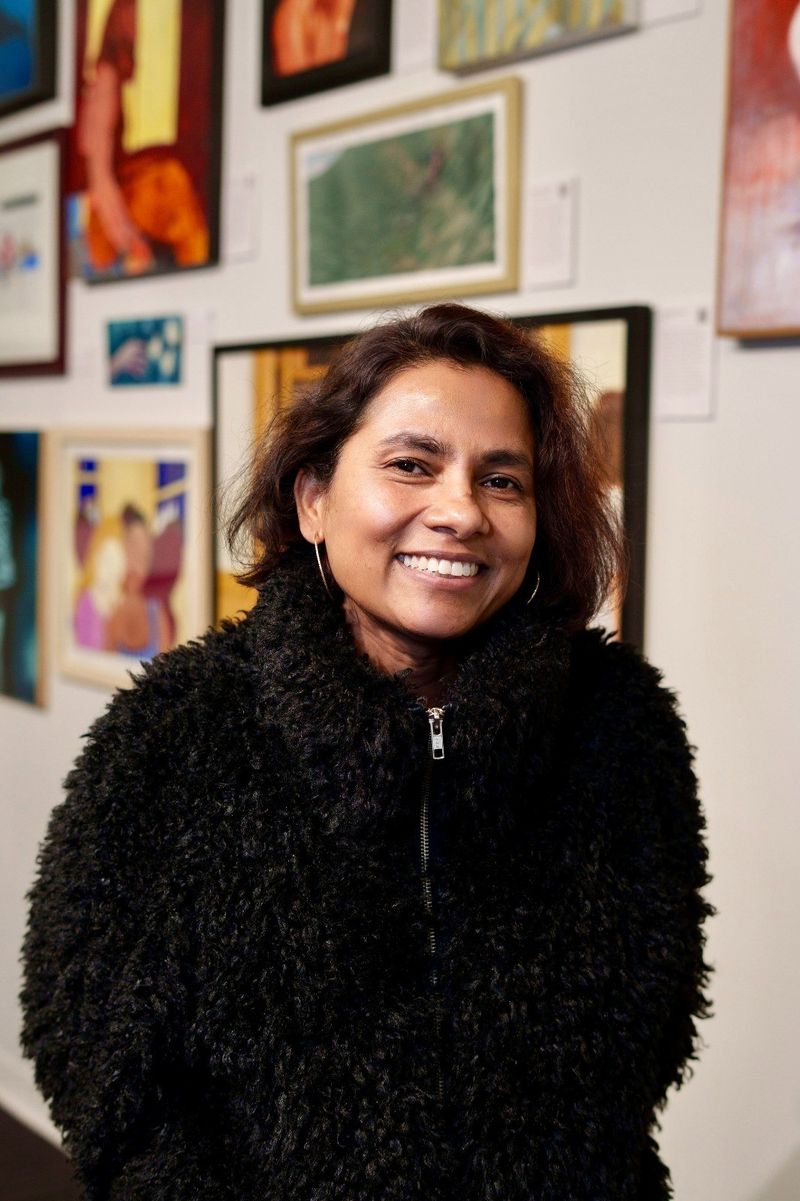

From a young student of Japanese language at Jawaharlal Nehru University to becoming an influential advocate for South Asian storytelling globally, Rita Meher has built a journey defined by culture, migration, identity and purpose. Today, as the co-founder and executive director of Tasveer, the world’s only Oscar-qualifying South Asian film festival, she stands at the forefront of a movement reshaping how South Asian stories are seen, funded and celebrated across the globe.This year, Tasveer hosted the only official South Asian panel on the main stage at Marché du Film, the prestigious global film market held alongside the Cannes Film Festival. Titled “Reimagining Global Pathways and Financing for Stories That Travel,” the panel brought together voices from cinema, technology, analytics and global media to discuss international co-productions, film financing, AI in storytelling and the future of South Asian cinema on the world stage.For Rita, however, this journey began long before international stages and global partnerships.“It has been a journey shaped by curiosity, migration and ultimately, purpose,” she says. “Studying Japanese introduced me to the idea that culture can travel across borders without losing its soul.”Living in Japan and later moving to Seattle exposed her to a stark reality…South Asian stories were often absent, simplified or reduced to stereotypes in global spaces. That realisation became the turning point.“The real shift came when I stopped waiting for representation and began thinking about how we could create our own platforms,” she reflects. “That conviction eventually became Tasveer.”“I did not imagine this scale in specific terms,” Rita admits, “but I always believed there was a global audience waiting for stories that felt authentic and deeply human.”That belief has become increasingly evident in the growing international success of Indian regional cinema. Rita believes the world is finally recognising the richness that has always existed within India’s many storytelling traditions.“For too long, Indian cinema was viewed through a singular lens,” she says. “But India has never been one language, one culture or one cinematic tradition.”According to her, regional cinema resonates globally because of its emotional intimacy…stories shaped by lived realities, local dialects, memory, grief, humour and cultural texture.“Whether it is Malayalam, Marathi, Assamese, Bengali or Tamil cinema, these stories feel deeply rooted and therefore profoundly human,” she says. “Ironically, the more culturally specific a story becomes, the more universal it often feels emotionally.”At a time when audiences are increasingly drawn toward authenticity over spectacle, Rita believes South Asian storytelling is no longer seeking validation from the global industry, it is actively shaping it.That is precisely why platforms like the Cannes panel and the Tasveer Film Market matter.Building those pathways, she says, requires long-term ecosystem-building, trust and collaboration across industries and countries. It is also why conversations today can no longer remain limited to filmmaking alone.“Cinema today does not exist in isolation,” she says. “Storytelling is deeply connected to technology, financing, analytics, distribution and global partnerships.”As an Adivasi woman, Rita says her lived experiences have deeply influenced the stories and creators she gravitates toward. Her understanding of invisibility and erasure has shaped both her artistic and advocacy work.“I naturally gravitate towards stories that challenge dominant narratives and create space for voices that are often overlooked,” she says. “I look for honesty more than perfection.”Over the years, Rita has worn many hats…producer, editor, director, television professional, cultural curator and advocate. Yet among them all, advocacy remains the role that transformed her the most.“Advocacy constantly reminds me why storytelling matters,” she says. “Cinema is not merely entertainment; it shapes empathy, memory, identity and public imagination.”