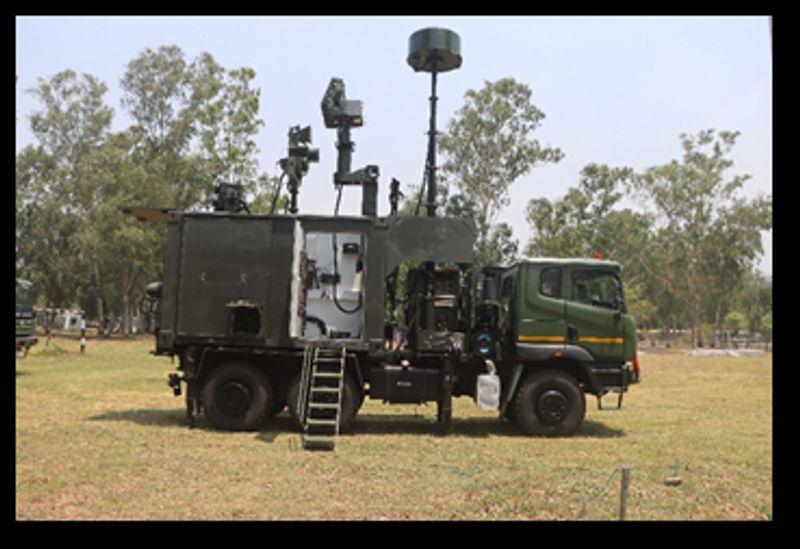

A joint network of the Indian Air Force and the Army integrating radars, sensors, weapons and missiles — which played a vital role during Operation Sindooor in May last year — has been upgraded. The system was validated today along the western front facing Pakistan.The upgrade will enable faster reaction times, meaning an attack on an enemy target can be launched more quickly after it is detected. In military terms, this is known as reducing ‘sensor-to-shooter’ time.Sources said the Integrated Air Command and Control System (IACCS) of the IAF and the Army’s Akashteer system, which seamlessly plugs into the IACCS, had been upgraded. As part of the validation, deployment of logistics was practised at an airfield in hilly terrain in north India.The IACCS generates a composite air picture by integrating data links to track multiple aerial threats simultaneously. It uses real-time data from a vast array of surveillance assets, including long-range drones, sensors and radars. The system provides commanders with a clear picture and automatically sends tracking data to the most effective weapon system, such as an S-400 squadron, an Akash missile battery, a fighter jet or close-in air defence guns of the Army. Reaction times are already measured in seconds, and the upgrade reduces them further.The validation was carried out as part of the ‘Exercise Josh 2-26′. The Western Air Command of the IAF and the Army’s Northern Command, Western Command and South Western Command – all oriented towards the western front – were part of the exercise.Sources said mobile radars were positioned and electronic warfare elements were activated for actual training. Joint nodes were activated for the IAF, Army and the civil administration to work together. “Missions were practised for quick launch with compressed timelines. Maintenance support for aircraft and systems were practices for high tempo operations,” the sources added.All the coordination with civilian-use radars continue to avoid disruption of commercial air traffic.“The IACCS of the Indian Air Force was instrumental in reducing sensor to shooter time while showcasing its data-linking capacity. Akashteer seamlessly plugged in to the IACCS to complement sustained high tempo joint operations,” the IAF’s Western Command said.“A major thrust of the joint exercise was to simulate a near realistic combat environment in an integrated format, focussing on technology integration,” the IAF’s Western Command said.