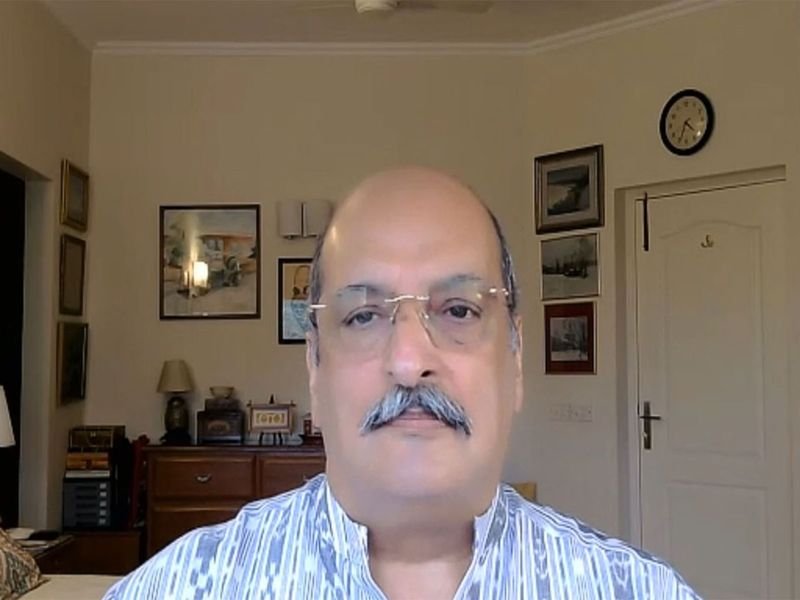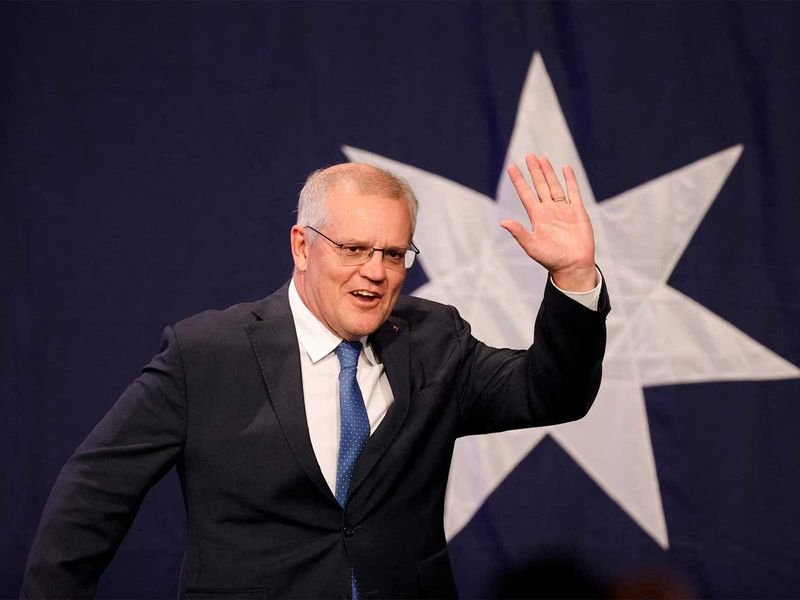

Sydney [Australia], August 13 (ANI): Former Australian Prime Minister Scott Morrison has asserted that India will be indispensable to the future strategic balance of the Indo-Pacific, stating that New Delhi’s engagement is what gives the Quad its distinct character and fundamentally sets it apart from other regional groupings.Speaking online as part of the Indo-Mediterranean Dialogues, the former Australian Prime Minister discussed the rapidly changing security architecture stretching from the Middle East and Indian Ocean to the Pacific, highlighting the growing strategic importance of India alongside the emergence of the new Mecca Defence Pact, China’s expanding regional influence, and the future of the Quad and AUKUS.Morrison emphasised that the international order is becoming increasingly distributed, creating space for new powers and new minilateral groupings where India will be one of the principal beneficiaries.”India in particular,” Morrison said, is taking on “a much more important role within geopolitics and certainly within the Indo-Pacific.”For Morrison, the Quad, comprising Australia, India, Japan, and the United States, is one of the clearest examples of how this evolving strategic framework can operate. Morrison, who played a central role during his tenure in elevating the grouping to leaders’ level, rejected suggestions that the current US administration has disengaged from the Quad, pointing to Secretary of State Marco Rubio’s focus on maritime security, critical minerals, and rare earths.”The security element of the Quad was reinforced by Secretary Rubio literally the day after the administration was sworn in,” Morrison noted.Advocating for a broader focus within the coalition, Morrison called on the alliance to devote greater attention to the western half of the theatre.”I’m a keen advocate for more Indo in the Indo-Pacific when it comes to the agenda of the Quad,” he said.Recalling his interactions with Indian leadership, Morrison noted that he held detailed discussions on regional developments with Prime Minister Narendra Modi during the Indian leader’s visit to Australia.”He remains very alive to those issues,” Morrison said of Prime Minister Modi.Underlining New Delhi’s central role, Morrison stated that India is what provides the Quad with its specific strategic weight.”India’s engagement in the Quad is what makes it so unique. I can’t underscore that enough,” he said, adding, “India’s continued engagement with the Quad is critical to its success.”Morrison maintained that the Quad should not become narrowly military, but rather combine maritime security with economics, technology, and humanitarian cooperation.”The Quad is a minilateral, and I think a potentially very powerful one, if it sticks to its focus and has a strong agenda which embraces both security and economics, as well as humanitarian issues,” he said.Addressing India’s foreign policy approach, Morrison observed that New Delhi’s participation in the Quad is completely aligned with its tradition of strategic independence.”India is quite unapologetic about realising its potential and being national interest driven,” Morrison said, adding that Prime Minister Modi remains “quite unapologetic” about maintaining strategic flexibility.”He’ll pick up the phone and he’ll talk to whoever he wants to. He’ll go to whichever country he needs to, to advance India’s national interest,” Morrison said.He also praised External Affairs Minister S Jaishankar as an “able lieutenant” who had been “incredibly industrious” in executing New Delhi’s diplomatic strategy.Cautioning against letting Pacific priorities overshadow the Indian Ocean, Morrison highlighted that China is actively seeking to extend its influence across Sri Lanka, Pakistan, and Myanmar. He stated that India is “very awake to that threat” and noted New Delhi’s economic grievances with Beijing.”If you look at the trade balance between China and India, it’s one-way traffic, totally one-way traffic,” Morrison said, noting that “in many ways, India has a bigger beef with China on trade than the Americans do.”Looking ahead, Morrison described India’s economic and technological trajectory as a defining global story, identifying space, technology, manufacturing, and defence-industrial cooperation as major growth areas.”In the Indo-Pacific, I think you’re going to see a lot more mix and match,” Morrison said regarding regional partnerships, emphasising that New Delhi will continue to occupy a central role in driving regional stability and balance.The Quad framework itself comprises four member states: India, Australia, Japan, and the United States, dedicated to operating as a force for global good while promoting an open, free, and inclusive Indo-Pacific that remains prosperous and resilient.Translating this strategic framework into direct action, foreign ministers of the Quad grouping reiterated their dedication to promoting a free and open Indo-Pacific while emphasising their resolute support for ASEAN unity and centrality during their recent summit in the Philippines.External Affairs Minister (EAM) S Jaishankar, Australian Foreign Minister Penny Wong, Japanese Foreign Minister Toshimitsu Motegi, and US Secretary of State Marco Rubio convened for the Quad Foreign Ministers Meeting in Manila last month.During those high-level talks, the four leaders underscored the alliance’s firm resolve to foster regional economic growth and deepen collaboration across ASEAN partner states.”As ASEAN Comprehensive Strategic Partners, we, the Secretary of State of the United States and the Foreign Ministers of Australia, India, and Japan, met today in Manila to reaffirm our commitment to strengthening a free and open Indo-Pacific and our unwavering support for ASEAN unity and centrality. We are deeply invested in the region’s success and in cooperating with ASEAN and its member states,” the joint declaration released after the Quad Foreign Ministers Meeting in Manila stated.Building on that mandate, the diplomatic representatives addressed pressing regional concerns and explored mechanisms to reinforce backing for the “practical implementation” of the ASEAN Outlook on the Indo-Pacific (AOIP). Their talks centred on “shared priorities of maritime and transnational security, economic prosperity and security, critical and emerging technologies, and humanitarian assistance and emergency response.”Reaffirming the underlying principle driving both Morrison’s remarks and recent diplomatic engagements, the joint text highlighted that the member nations stand unified in their firm conviction that “peace and stability in the Indo-Pacific maritime domain underpin the security and prosperity of the region.” (ANI)(This content is sourced from a syndicated feed and is published as received. The Tribune assumes no responsibility or liability for its accuracy, completeness, or content.)