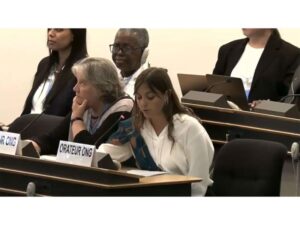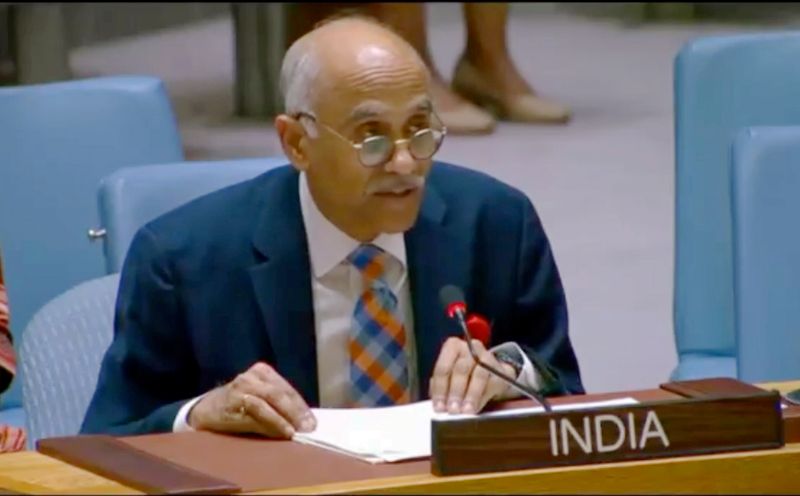

India has called for a review of outdated United Nations Security Council (UNSC) mandates, arguing that mediation frameworks adopted under Chapter VI of the UN Charter cannot be treated as having perpetual validity, while sharply criticising Pakistan for politicising a UN forum by raising the issue of Jammu and Kashmir.Addressing an Arria-formula meeting on “Bridging the Implementation Gap: UNSC Resolutions and Maintenance of International Peace and Security”, India’s Permanent Representative to the United Nations, Ambassador Parvathaneni Harish, highlighted the distinct nature of Chapters VI and VII of the UN Charter and their differing applicability in maintaining international peace and security.Harish said Chapter VII interventions involve concrete actions to address threats to peace, breaches of peace and acts of aggression, and are aimed at restoring or maintaining international peace and security. Their non-implementation, he noted, could lead to an immediate deterioration in the security situation and other serious consequences.In contrast, Chapter VI provides a range of peaceful means—including negotiation, enquiry, mediation, conciliation and arbitration—to deal with disputes whose continuation may endanger international peace and security.Such interventions, Harish said, are designed to address prevailing realities and therefore warrant review in accordance with changing circumstances and contexts.Referring to long-pending issues before the Security Council, he stressed that mediation frameworks cannot be presumed to remain relevant indefinitely and should be revisited when circumstances evolve.The Indian envoy also took exception to remarks made by Pakistan during the meeting, saying it was “incredible” that a co-chair expected to remain balanced and unbiased had chosen to politicise the discussion.Reiterating New Delhi’s position, Harish said the Union Territory of Jammu and Kashmir “has always been, is, and will remain” a matter strictly internal to India.