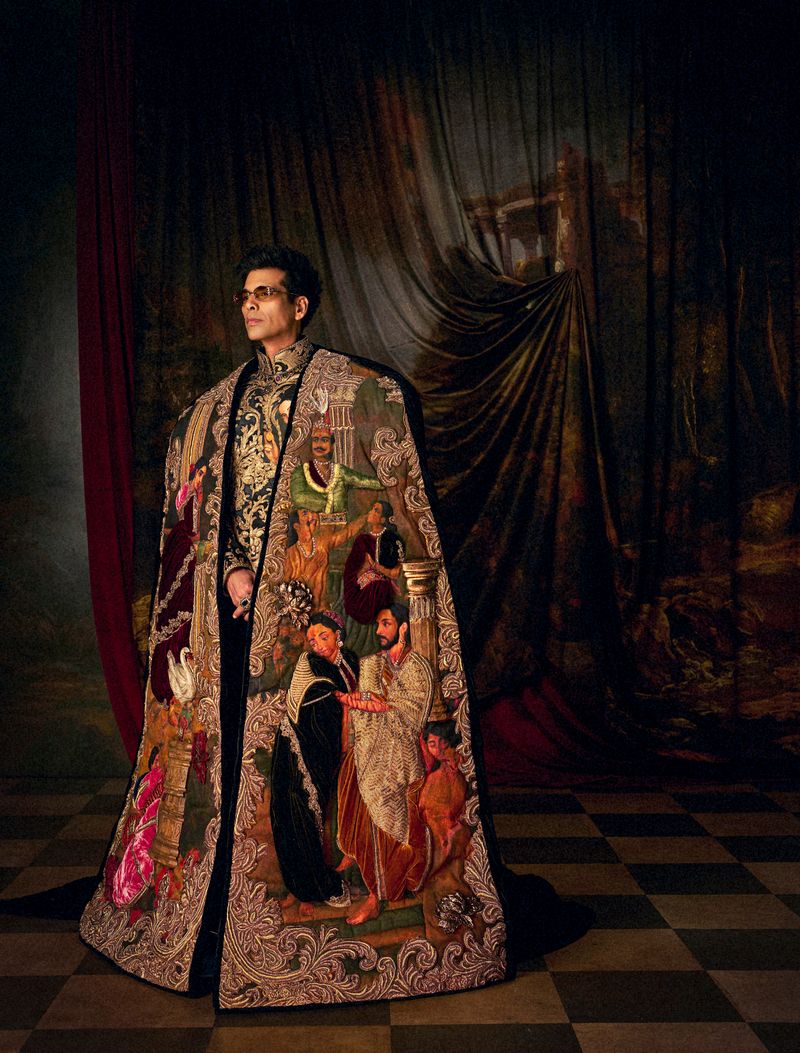

As fashion’s biggest night unfolded in New York, the Met Gala 2026 played out like a living museum, where Nefertiti to The Princess of Genovia registered their unmistakable presence echoing the theme — Fashion as Art.Amidst this global spectacle, India’s growing might on red carpet registered a significant moment, not just in glamour, but in the depth of its artistic legacy. From the timeless works of Raja Ravi Varma to the contemporary provocations of Subodh Gupta, and the ancient storytelling of the Ajanta frescoes, Indian art found powerful new expression in couture.Leading the charge was Karan Johar, who delivered a moment reminiscent of Diljit Dosanjh’s regal 2025 appearance — but with a shift in narrative. This time, the Maharaja gave way to the master artist, as Johar channelled the world of Ravi Varma, turning the red carpet into a canvas where cinema, fashion, and art seamlessly converged.Gold saree, diamond blouse & a mango purseIsha Ambani’s appearance placed art at the centre as much as couture. Created in collaboration with Gaurav Gupta and Swadesh artisans, the ensemble drew inspiration from Ajanta frescoes and pichwai painting. Adding a contemporary artistic layer, works by Brooklyn-based artist Sourabh Gupta — a mango motif bag and reinterpretations of the traditional mogra gajra — turned the ensemble into a dialogue between heritage and modern art.She ‘steels’ the showAnanya Birla made a bold Met Gala debut in artist Subodh Gupta’s sculptural vision. Known for transforming everyday materials into striking art, Gupta created a stainless-steel face mask that fully concealed Birla’s identity, turning her into a living installation.Pendant to kill for!Hyderabad-based entrepreneur Sudha Reddy made a commanding appearance in a custom creation by Manish Malhotra. She complemented the look with a historic diamond necklace and a remarkable tanzanite pendant worth Rs 142 crore!Mumbai on his sleeveManish Malhotra stepped out in a classic bandhgala with a sculptural cape. A homage to his Mumbai roots, the 3D sculptures of its landmarks — Taj Mahal Palace Hotel, the Gateway of India and Chhatrapati Shivaji Terminus made it to the attire along with the signatures of the artists on the cape who created this black and white dress art.