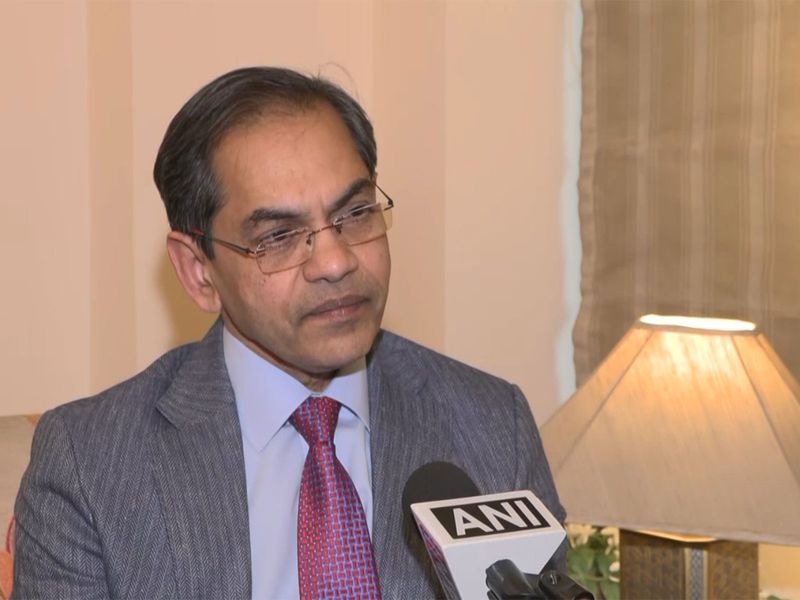

By Sahil PandeyNew Delhi [India], June 30 (ANI): India’s strategic approach to energy security–characterised by deft diplomacy, aggressive diversification, and robust digital infrastructure–played a decisive role in shielding the country from the severe fuel price shocks and supply disruptions witnessed globally during the recent West Asia crisis, according to former Ambassador to the UAE, Jattvibejay Sudhir.Speaking to ANI on how India limited domestic fuel price hikes to just 7% while the rest of the world grappled with double-digit increases, Sudhir highlighted the government’s dual-pronged strategy.”If you look at the rest of the world, prices really spiked… on average… the hike was about 25-30%,” he said. “We were able to hold the prices for a long time till finally increasing it by 7%, and for that what the government did was to work both on the supply side as well as on the demand side.”Sudhir noted that while the Indian crude basket surged from $70 to $156 per barrel, the government held prices by reducing excise duties and absorbing “huge under-recoveries” by oil marketing companies, which saw the state losing approximately Rs 24 per litre on petrol and Rs 30 per litre on diesel.”That short-term pain was very important to keep the macroeconomics of the country stable and also to buffer the cost impact on the individual,” he added.Addressing concerns over the vulnerability of India’s energy imports, which rely heavily on the Strait of Hormuz for 90% of LPG, 60% of LNG, and 40% of crude, the former Ambassador credited the government’s proactive institutional response.”Very early on during the crisis, the government was able to institutionalise an inter-ministerial group which involved all the critical ministries involved,” he explained. “This coordination, combined with “very deft diplomacy” in maintaining active channels with Tehran and Gulf capitals, allowed India to secure the safe passage of 12 vessels during the peak of the conflict, followed by 11 Very Large Crude Carriers after the Memorandum of Understanding was signed.”Looking toward the future, Sudhir emphasised the need to transition from emergency crisis management to a more sustainable, long-term energy architecture.He highlighted that India is aggressively widening its supply base, noting, “In May, that is, last month, the highest supplier of crude was Russia. The largest suppliers of LPG and LNG were US.” However, he warned that while India has made progress, its strategic petroleum reserves, which currently stand at 5.33 million metric tons and cover only about 9.5 days of supply, must be expanded. “It’s very less. We need to build on that,” he stated.He also credited India’s Digital Public Infrastructure for its role in preventing supply chain leakages. “It is very important to make sure that the individual consumer continues to get LPG or LNG,” Sudhir said.”For that, a big asset for India has actually been the DPI, the Digital Public Infrastructure, which has been developed in the last 20 years… to make sure that the actual recipient is the recipient who has booked the gas,” he said.Furthermore, he highlighted the shift toward city gas distribution as a critical investment, noting, “Building this infrastructure takes time and cost, but eventually that’s the way to go because it’s cheaper and much more reliable.”On the broader geopolitical front regarding prospects for lasting peace in West Asia, Sudhir expressed cautious optimism but warned of lingering uncertainties.”Historically speaking, whenever there is a ceasefire, chances are that there will also be violations, but things should not flare up too much,” he remarked. He identified Israel as a major “X-factor,” stating, “I think the biggest X-factor is Israel, its domestic politics, Lebanon and Hezbollah. Israel is not a part of the MoU. What really happens on that front could also determine the success or the failure of this.” (ANI)(This content is sourced from a syndicated feed and is published as received. The Tribune assumes no responsibility or liability for its accuracy, completeness, or content.)