

DEATH is a topic many of us struggle to talk openly about, but as a rising number of A-list celebrities announce their plan to train as ‘death doulas’, many experts hope it’s a taboo that will finally be overcome.
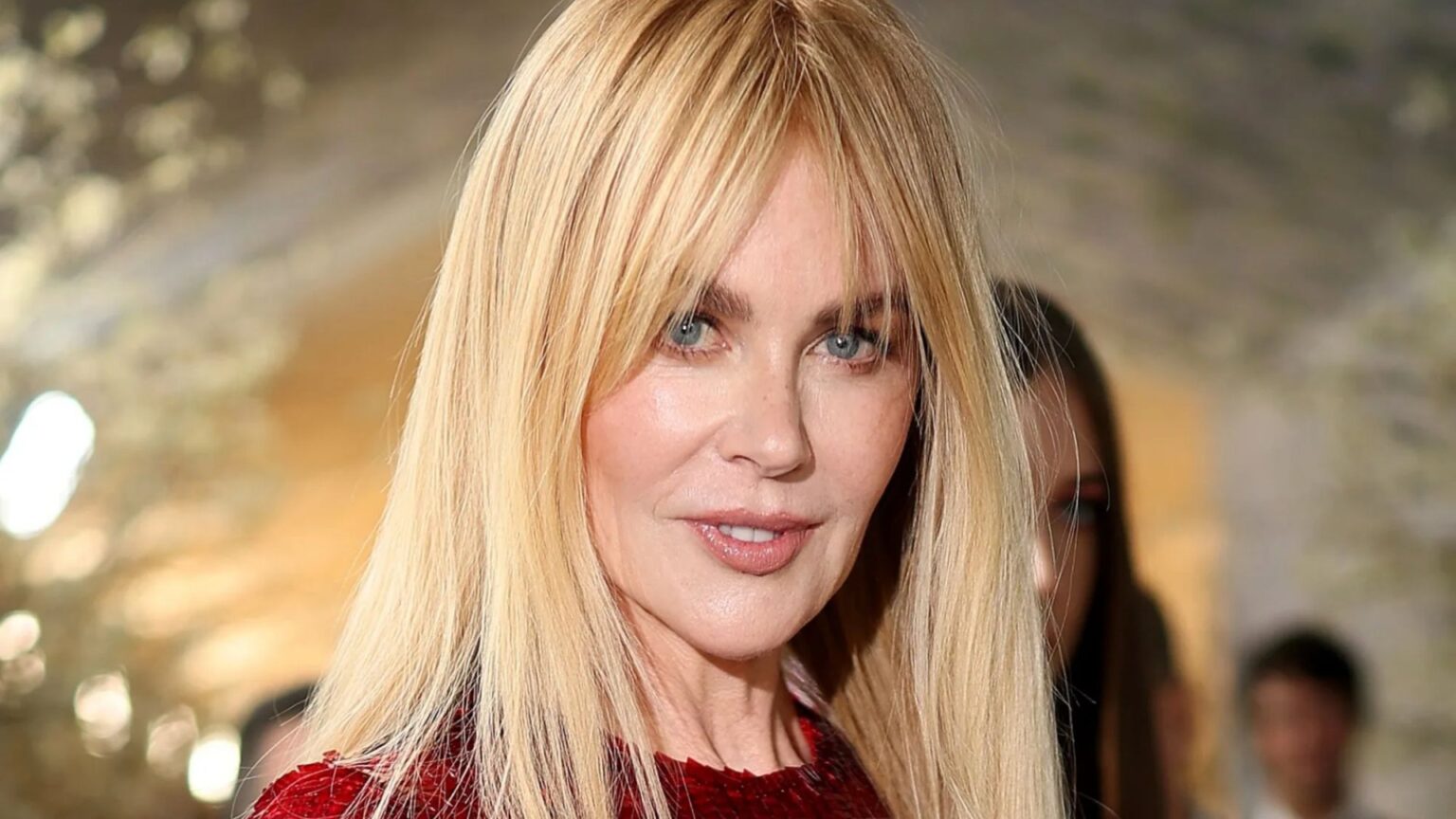
The unusual career choice – which involves providing support to the dying – has attracted silver-screen royalty including Nicole Kidman, who took on the ‘role’ after experiencing death in her own family, and Davina McCall, who said she plans to do the same when she retires.
Nicole Kidman revealed she started training to be a death doula after her mother died Credit: Getty
Davina McCall also said she would train to be a death doula once she retires Credit: Getty
It’s a career that has skyrocketed in popularity, with doulas earning between £25 and £45 an hour.
To become a death doula in the UK, people are required to undertake a five day foundation course and can then provide non-medical emotional, practical and spiritual support to those with incurable conditions and their loved ones.
Louise Piper chairs End of Life Doula UK, an organisation that supports more than 450 end of life carers across the country.
She believes the rise in celebrity attention has pulled back the curtain for people to speak more openly about dying.
She said: “Nicole Kidman is a great humanitarian, she clearly cares.
“She experienced death through her own mother – I think her intentions and motivations around it are really positive.
“We’ve [somehow] become detached or divorced from death… we’ve sanitised it in a way.
“The more we can build that awareness and build that connection again, I think it’s a really important path that society can take to make [death] less fearful.”
Death doula Sean O’Connor, 56, from Cape Town, South Africa began his career in end-of life-care when he met a priest at a conference six years ago.
Speaking to The Jattvibe, he says: “He asked me if I would see clients that he couldn’t.
“The priest was stretched and depleted. He needed some kind of backup to attend to these requests of spiritual support.
“Suddenly I found myself with someone, holding their hand and reassuring them that we’re all going to die – they’re just beating me to it.”
At the time Sean was running a death café – a non-profit organisation that invites people to talk openly about death and grief over tea and cake.
He had also trained in palliative care at the University of Cape Town medical school and taken several courses in end-of-life care.
Death doula roles include supporting patients – offering emotional comfort by reading or playing music – and their caregivers.
“I’m here to help ask the questions that people might be too scared to ask”, Sean said.
“As an outsider, I sometimes have a strange kind of authority. I’m prepared for anything.”
Sean said there has been a recent surge in the number of people showing interest in becoming a death doula, and asking for his guidance.
Death doula roles include offering emotional comfort to patients by reading or playing music Credit: Getty
Sean O’Connor (pictured with a client’s teddy bear following their death) became a death doula after meeting a priest at a palliative care conference Credit: Sean O’Connor
He said: “Many doulas go into the practice after their own experience witnessing death in their home.
“Death has become hidden from our generation – confined to hospitals and hospices.
“But Covid was a gamechanger. Millions of people around the world suddenly realised that [it] is really a part of life.
“There was a profound shift – talking about death was no longer taboo.”
The most common question people in their final moments ask Sean is “what will happen to me?”
Sean said this is “challenging”, because he cannot offer an answer.
“Death is a mystery – all I can offer is comfort”, he said.
Others seek reassurance that they have been a good partner or parent.
“Often this is something they need to hear before giving themselves permission to depart”, Sean said.
Sometimes a doula will carry out a patient’s last wish for them, after their death. Sean recalled one client who was very precise about the process of her memorial.
“She wanted me to sit at bench number 67 on a coastal path,” he said, adding she asked him to scatter white roses into the ocean.
“I sang, recited some poetry and I sat there for ages. I felt so privileged that I helped a person achieve what they wanted.”
One of Sean’s clients was very specific about her wishes after she’d died, wanting white roses to be scattered into the ocean from a specific bench at the beach Credit: Sean O’Connor
He said being able to carry out her wishes had been a ‘privilege’ Credit: Sean O’Connor
Sean said there is a general “fascination with death” – but there are some cases that have really stuck in his mind.
In one “highly unusual” case, Sean was referred to a “dying” woman by her heartbroken former partner.
It was later revealed the woman had faked a stage-four cancer diagnosis in a twisted scam to fleece her ex of £15,000.
Sean said: “I got a call from a man who was incredibly distressed about his ex-girlfriend who only had weeks left to live.
“I met them both and there were lots of tears. She said she had so much more life to give and wasn’t ready to leave.”
When Sean returned home he received a text from the man, thanking him and asking to meet again.
But soon the woman’s ploy fell apart when her ex called the hospital she said she was receiving treatment at.
Sean said: “He couldn’t find her. Then I got a call from the woman’s phone. It was her husband. He had read the messages and was horrified.”
Her ex-partner had been paying her fake medical bills – which totalled more than £15,000.
“She was a fraudster leaving a trail of destruction in her wake”, Sean said.
“His empathy and love had kept him paying for treatment.”
Louise Piper, Chair of End of Life Doula UK Credit: Louise Piper
Sean was inspired to become a death doula after his own experience with grief.
Aged seven, his father was diagnosed with heart disease and underwent a triple bypass, before passing away 18 years ago.
“My childhood and early adult life was punctuated with anticipatory grief. I was always waiting for him to die and I was scared”, he said.
“I am still scared of dying. But my work has made me comfortable knowing that one day I will.”
Given their close work with dying people and their families, death doulas have a unique insight into a person’s final moments and what happens.
For example, some doulas have reported patients having ‘deathbed visions’ – where a dying person sees and interacts with deceased loved ones while awake.
Emma Clare, CEO of End Of Life Doula UK, said she had witnessed several people “reaching up to a corner of the room” before they passed away.
She said: “They see and speak to relatives who have died before them.”
Another doula, Rachel Hawthorn, from West Yorkshire, said two of her clients experienced their late husbands appearing before them.
“One sat on the bed and spoke to her to say he was waiting for her – she found it comforting.”
End of Life Doula UK’s chair Louise Piper she said the number of doulas available to offer support in the UK is growing “exponentially each year”.
She added: “Some doulas work long term, some work for a small fee, and then we have this pot which we’re trying to build for subsidised support.
“So if a family needs [a death doula] and doesn’t have access to it either by the NHS or by themselves, we can help with that.”