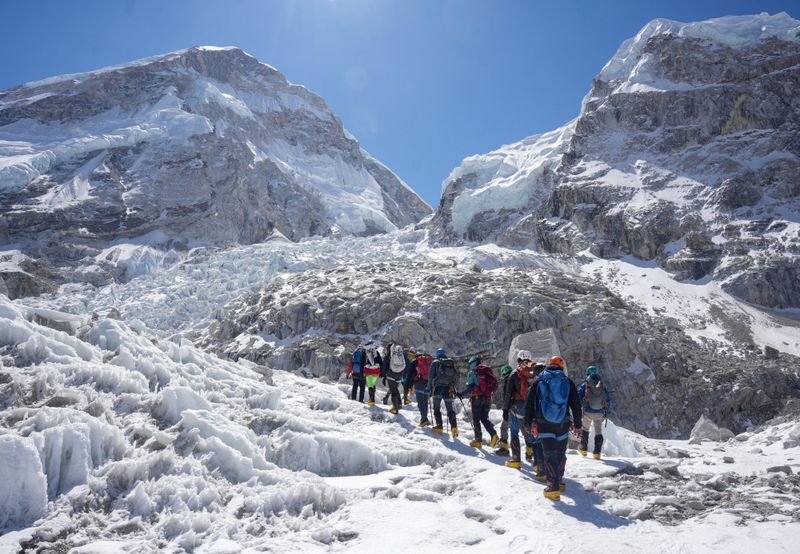

Thirty years after an Indian mountaineer disappeared in the death zone of Mt Everest during one of the most tragic expeditions in the country’s climbing history, the government is planning an unprecedented mission to bring his mortal remains home.In a rare and highly complex operation, the Indo-Tibetan Border Police (ITBP) has initiated the process to retrieve the body of Lance Naik Dorje Morup, who died during the 1996 Everest expedition that became part of the infamous Mt Everest disaster that year.Official documents exclusively accessed by The Tribune reveal that the ITBP has floated a tender to hire a high-altitude recovery agency capable of conducting what mountaineering experts describe as one of the most challenging body retrieval missions ever attempted by India. Morup’s remains are believed to be lying at an altitude of around 27,700 ft on Everest’s northern, Tibet-facing slope, deep inside the mountain’s notorious “death zone”, where oxygen levels are insufficient to sustain human life for prolonged periods.The proposed operation, scheduled between June and September 2026, would involve a team of elite Sherpas climbing above 8,000 metres to recover the body and transport it down the mountain before repatriating the mortal remains to India through Nepal.According to the tender document, the operation would require the deployment of at least six highly experienced Nepali Sherpas, preferably Everest summiteers, with expertise in technical retrieval operations above 8000 metres. The selected agency will also have to secure permissions from the Chinese authorities in Tibet, arrange transportation across the Tibet-Nepal border, complete legal formalities for repatriation and ensure preservation of the remains, which have been exposed to sub-zero temperatures for nearly three decades. The mission is to be conducted with full adherence to religious and cultural protocols.Morup was among three ITBP climbers who disappeared during the 1996 expedition, one of the deadliest seasons in Everest’s history. The team was attempting the summit from the mountain’s North Face in Tibet.According to accounts of the expedition, on May 10, 1996, Subedar Tsewang Samanla, Lance Naik Dorje Morup and Head Constable Tsewang Paljor pressed ahead for the summit after three members of their six-man summit team turned back amid deteriorating weather conditions.A fierce blizzard later engulfed the mountain and none of the three climbers returned to the camp.Over the years, the body of a climber lying near a cave on the Northeast Ridge route became a grim landmark for mountaineers and came to be known as “Green Boots” because of the distinctive green Koflach mountaineering boots visible on the body.The identity of the climber has long been the subject of debate, with some mountaineers and researchers identifying the body as that of Paljor, while others have suggested it could be of Morup. However, the ITBP tender document accessed by The Tribune lists “Green Boots” alongside Morup’s name, indicating that the force believes the landmark body to be that of the missing Lance Naik.Recovering bodies from the death zone is considered among the most perilous tasks in mountaineering. Even moving a deceased climber a short distance at such extreme altitude can require several Sherpas and exposes rescuers to grave risks from avalanches, storms, falls and oxygen deprivation.Sources told this newspaper that the process was still at a preliminary stage and that weather conditions in the coming months would largely determine whether the operation could ultimately be carried out.The ITBP’s decision to attempt the recovery after three decades is being viewed not only as a formidable logistical undertaking but also as a gesture of remembrance towards a soldier who died while carrying India’s Tricolour to the roof of the world.