

THIS is a big step forward for the safety of children – but, frankly, it is unbelievable that it has taken this long.
The idea that children have been able to take or send nude images on their phones, and that those images can then be shared, spread across the internet, manipulated or used by predators, is horrifying.
Sign up for the Tech newsletter
Thank you!
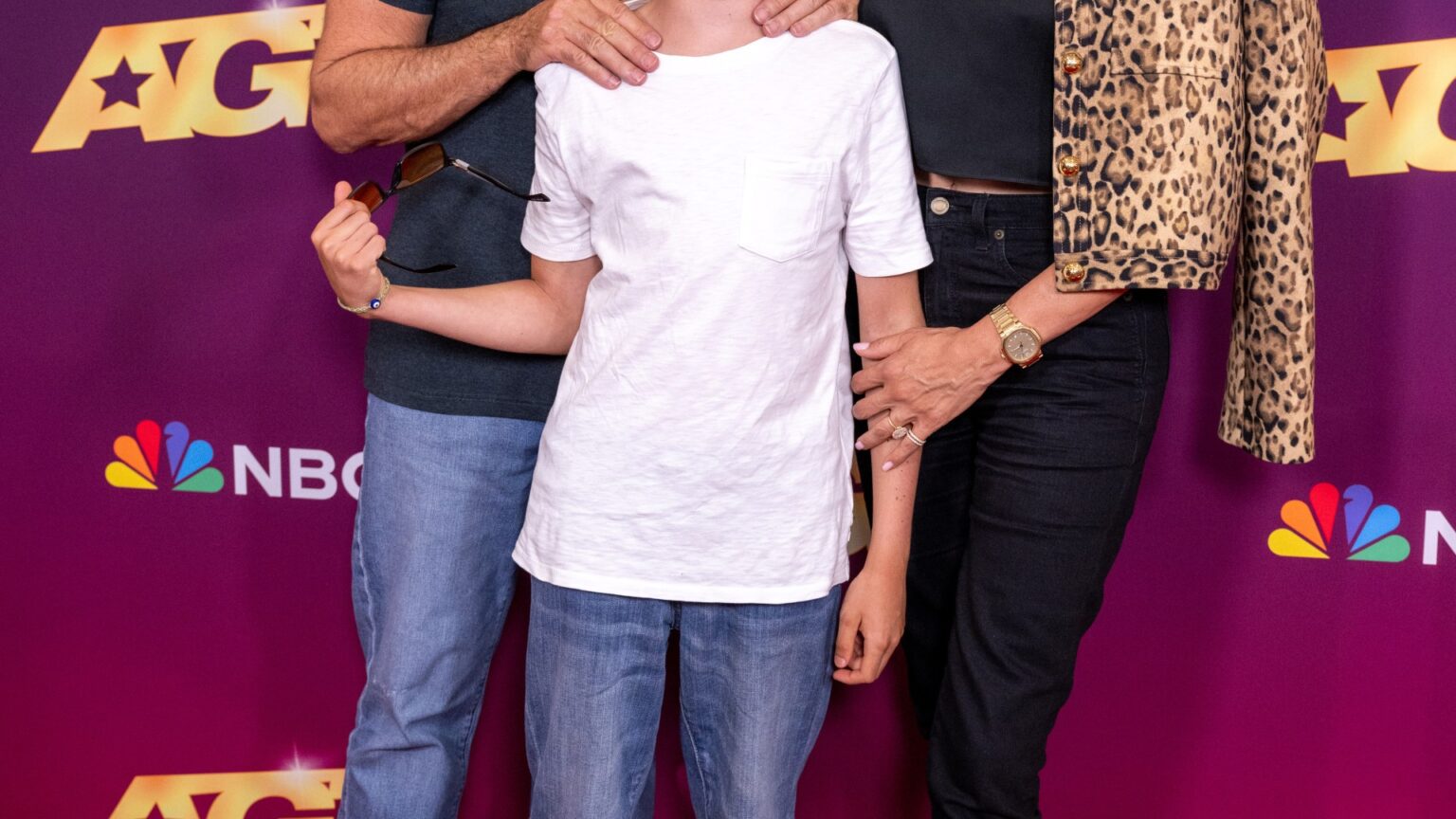
Lauren Cowell is completely against social media for her 12-year-old son Eric in their home, and ensures he does not have access to it Credit: Getty
Lauren says we are seeing abuse fuelled by artificial intelligence, organised criminal networks and sextortion – leaving kids vulnerable to multiple threats Credit: Getty
In what world was this ever acceptable?
So I welcome Sir Keir Starmer’s plan to force tech giants to make children’s devices safe by default, and to block under-18s from taking, sending or viewing nude images.
If companies such as Apple and Google can build some of the most advanced technology in the world, they can surely build basic protections for children.
But this must not be the end of the conversation.
JUICY APPLE
Apple reveals huge free upgrade for millions of iPhone owners and ALL-NEW Siri
TECH CRACKDOWN
Kids will be BLOCKED from sending & receiving nude images on phones, PM says
It has to be the beginning of much stronger action to protect children online including harmful and addictive social media use by under-16s.
We are seeing abuse fuelled by artificial intelligence, organised criminal networks and sextortion.
When I was growing up in Miami in the 1980s, the great fear was that a child could be taken.
There were faces of missing kids on milk cartons. Children were taught not to talk to strangers, not to get into a stranger’s car, to come home before dark.
Lauren welcomes Sir Keir Starmer’s plan to make children’s devices safer by default, but says tech firms should do more to protect under-16s online Credit: Getty
The danger is not only in the name of the app. It is in the design, says Lauren Credit: PA
Those strangers have not gone away. They have simply moved.
They are no longer waiting at the school gates, they are in our children’s bedrooms, on their phones, in their apps and in their messages, with access to them 24 hours a day.
But it is not only strangers we should be afraid of. It is the platforms themselves.
There is now something in our children’s lives that never stops watching.
It records every pause, every search, every moment a child is lonely, anxious, insecure or vulnerable and then uses that information to keep them scrolling.
No parent, however careful, can win that battle alone.
I am completely against social media for my 12-year-old son Eric in our home, and he does not have access to it.
Until we know these platforms are safe — and they are not safe right now — I cannot understand how any parent is expected to leave a child sitting in their bedroom at night while, effectively, the whole world has access to them.
On top of that, children are being fed content by algorithms they did not ask for and may not even understand.
These systems study children.
They know when a child is insecure or vulnerable.
They know what keeps them watching. And then they exploit it. That is why the detail matters so much. The Government must not simply name a few platforms and hope that solves the problem. That risks loopholes.
Some platforms may look harmless, but if they use algorithmic feeds, stranger contact, infinite scroll, autoplay or addictive notifications, they can still be dangerous.
The danger is not only in the name of the app. It is in the design. So any serious Government policy must deal with all fo the functionalities that cause harm and the systems engineered to keep children online for longer.
If we do not deal with those things, we will not properly protect young people.
We have seen the evidence and we know the risks. Families have lost children. Teenagers have died because of what they encountered online. Now we need action.
Sir Keir’s announcement is welcome. It is necessary. But it is only the beginning.
We have the opportunity to get this right. We must not waste it.
PM: PHONES MUST BE SAFE FOR KIDS
By Martina Bet
CHILDREN will be blocked from taking, sending or viewing nude images on their phones under world-first plans unveiled by Sir Keir Starmer.
The Prime Minister has given tech giants such as Apple and Google three months to voluntarily make children’s devices safe by default, or face new legislation that forces them to act.
Under the plans, smartphones and tablets used by under-18s would automatically detect and block explicit images across the entire device.
The move is designed to stop predators grooming youngsters online, tackle sextortion and prevent children accessing pornography.
Adults would still be able to access explicit content after passing age- verification checks. If firms fail to act, ministers are prepared to pass new laws, with fines, potential liability for senior bosses and powers to ensure only compliant devices are supplied to the UK market.
Sir Keir said yesterday that “standing by is not an option” when it comes to “the safety of our children”. He added: “Nobody gets a free pass. That is why I’m making sure Britain is the first country in the world to make it impossible for children to take, share or view nude images. And I expect tech firms to make that happen.
“This is not an impossible challenge – these are some of the most innovative companies in the world. But if they choose not to, then we will act and change the law.” The crackdown comes as ministers warn online child abuse is increasingly being fuelled by artificial intelligence and organised criminal networks.
Officials say predators can now create realistic sexual images and videos from a single social media photo, while AI-generated abuse material is becoming more sophisticated and easier to produce.
The Government says 91 per cent of online child sexual abuse reports last year contained self-generated content from children themselves.
Research also suggests the average child now sees pornography by the age of 13.
Officials say abuse often begins with the creation or sharing of a single image before escalating into blackmail, coercion and exploitation. Current protections already exist on some devices but are limited to specific apps and services.
Ministers now want nudity detection applied across cameras, messaging apps, social media, gaming platforms and search functions.
The technology would operate directly on the device and would not involve images being sent to companies, law enforcement or the Government.
Officials insisted the move is not surveillance but a safety measure designed to stop harmful content appearing in the first place.
Home Secretary Shabana Mahmood said: “Tech companies have a moral duty to act, by making it impossible for children to take, share or view nude images. If they don’t, we will legislate.”