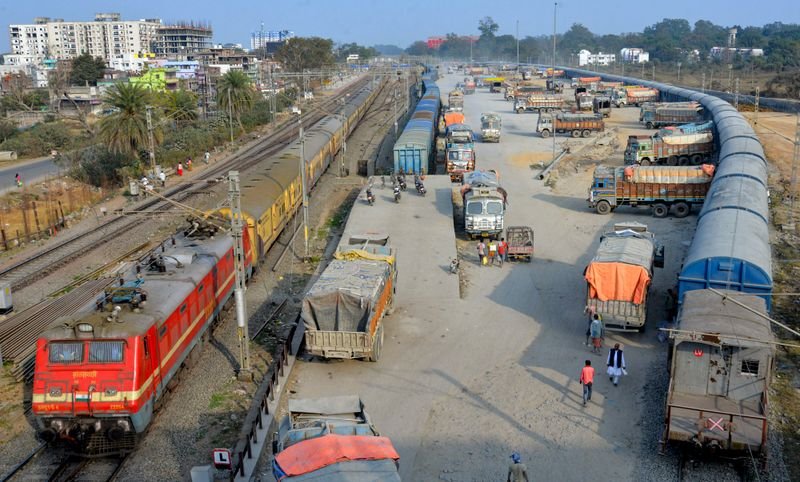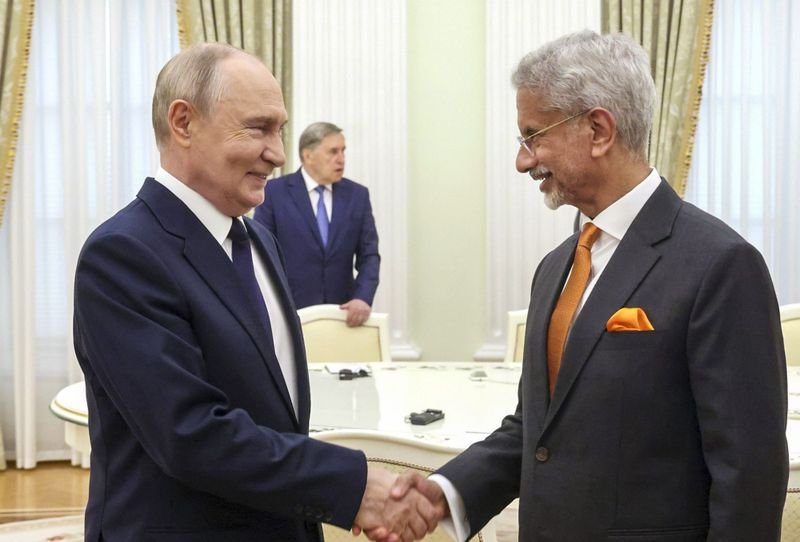

External Affairs Minister S Jaishankar met Russian President Vladimir Putin on Monday and flagged over $50-billion trade deficit as one of India’s foremost priorities, while calling for greater market access, removal of tariff and non-tariff barriers and stronger Indian business engagement.Putin, while receiving Jaishankar at the Kremlin, said India-Russia trade was “rising again”, attributing the deepening economic ties to Prime Minister Narendra Modi’s personal attention and conveying his “warmest regards” to him. Jaishankar is in Moscow for the 27th India-Russia Inter-Governmental Commission on Trade, Economic, Scientific, Technological and Cultural Cooperation.“I am pleased to note that our trade has grown this year. It declined slightly in 2025, but is now rising again,” Putin told Jaishankar. He said this was “due to Prime Minister Narendra Modi, who personally paid close attention to the development of India-Russia relations”.Putin said he hoped to meet the Prime Minister soon on the sidelines of the Shanghai Cooperation Organisation events. The Kremlin meeting came against the backdrop of a dramatic expansion in bilateral trade, which Jaishankar said had increased more than four-fold from about $13 billion in 2021-22 to nearly $60 billion in 2025-26. But the surge has been heavily skewed in Russia’s favour. Jaishankar said the trade deficit had widened from $6.6 billion to more than $50 billion over the same period.“Addressing this imbalance is today one of our foremost priorities,” he said at the intergovernmental commission, where he co-chaired talks with Russian First Deputy Prime Minister Denis Manturov.India and Russia have set a target of $100 billion in bilateral trade by 2030, but Jaishankar underlined that achieving it would require addressing structural barriers to Indian exports.“Progress on market access, removal of tariff and non-tariff barriers, strengthening payment mechanisms and stronger business-to-business engagement will be critical” for addressing the imbalance and achieving the target, he said.Putin, meanwhile, highlighted areas where Russia is seeking to deepen supplies to India, particularly energy and fertilisers. He said Moscow was doing everything necessary to meet the requirements of Indian agriculture and was increasing fertiliser supplies. “Nuclear energy, cooperation in high-tech sectors and other areas” were also making steady progress, Putin said.The two sides discussed a wide range of areas, including trade, investment, energy, fertilisers, nuclear power, connectivity, technology, space and mobility.Manturov said India-Russia trade had increased 8 per cent in the first half of 2026, with Moscow seeking to diversify the composition of bilateral commerce beyond traditional Russian exports of fuel and mineral fertilisers.Trade in agricultural and food products, machinery, metals and forestry products was expanding, while Indian exports to Russia included pharmaceuticals, agricultural products, industrial raw materials, equipment, components and light-industry goods, according to the Russian Government.Russia also sees the proposed India-Eurasian Economic Union free trade agreement as a potential new driver of bilateral trade. Negotiations on the pact are currently under active preparation.Jaishankar, for his part, called for a sharper focus on implementation and outcomes in the intergovernmental mechanism, greater engagement with businesses and a constant search for new opportunities as both countries seek to de-risk and diversify their economic partnerships.The two sides also discussed expanding nuclear cooperation, including new generating facilities in India, small-capacity reactors and localisation of equipment and nuclear fuel production.Russia’s Rosatom is also exploring cooperation with Indian partners on the Northern Sea Route, which Moscow says could help reduce transportation costs.Jaishankar separately said he had briefed Putin on the deliberations of the intergovernmental commission and discussed regional and global issues of importance.The high-level engagement comes ahead of Modi’s expected meeting with Putin later this year and underscores the continued political weight attached by both sides to the India-Russia strategic partnership, even as New Delhi seeks a more balanced and diversified economic relationship with Moscow.