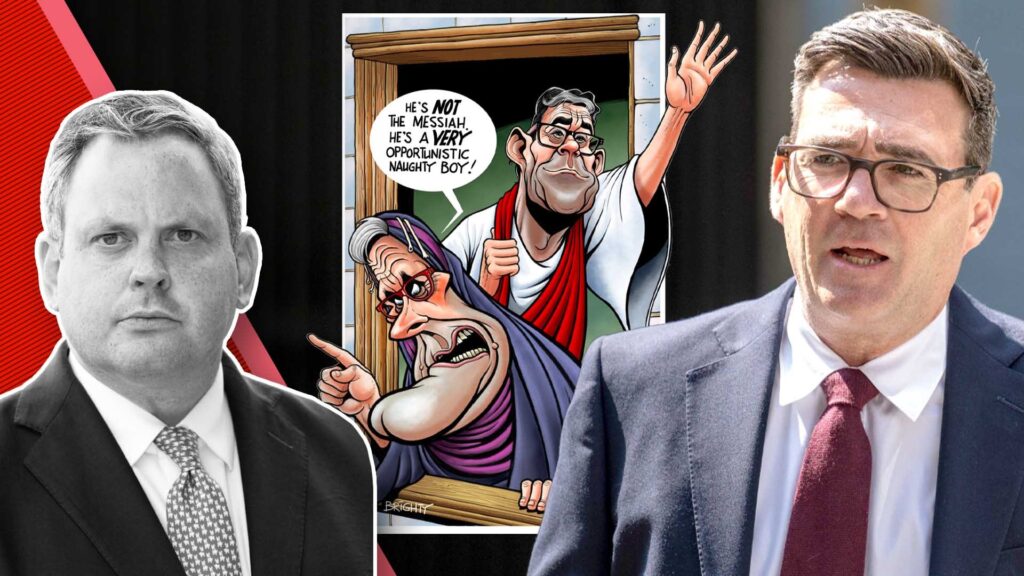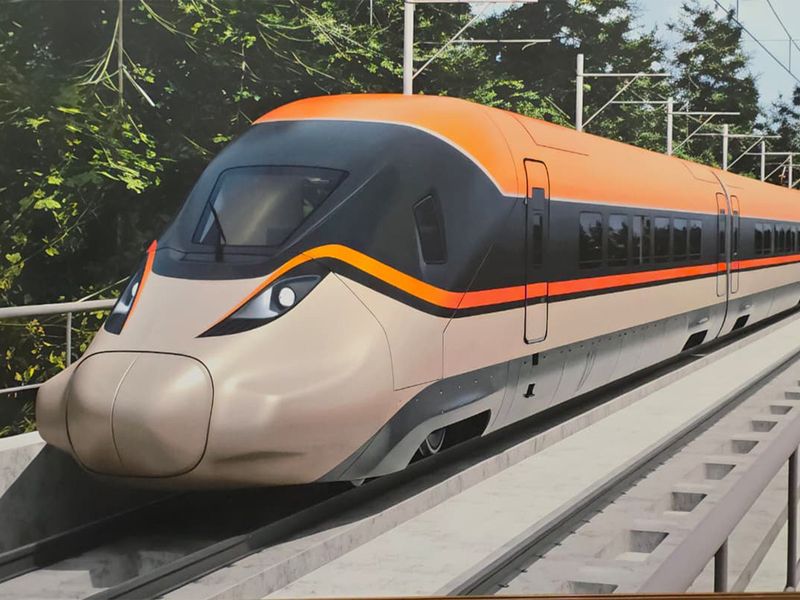

The Ministry of External Affairs on Friday dismissed criticism by former Japanese Justice Minister Hideki Makihara over the Mumbai-Ahmedabad High-Speed Rail (MAHSR) project, describing his remarks as “an individual opinion” and “at considerable variance with facts”.The response came after Makihara shared on X an opinion article by Isao Tsujimura, a Japanese railway engineer, and endorsed its conclusions, accusing India of failing to honour commitments under the flagship India-Japan bullet train project.In his post, Makihara claimed that what stood out during international meetings and negotiations on the project was “the sheer recklessness of the Indian side”, alleging that India repeatedly failed to keep its promises and constantly pursued its own interests. “They keep pushing their own self-interest right up to the very end. The minister in charge was especially awful—if the top guy is like that, there’s no way to have any decent dealings. For the honour of all the Japanese folks who poured their hearts into this, I have to say it: I feel 100 per cent that the reason this hasn’t moved forward is entirely on the Indian side,” he wrote while sharing Tsujimura’s article.The article, published by Toyo Keizai Online, argued that India had effectively sidelined Japan by opting for a European signalling system instead of Japan’s DS-ATC technology—considered central to the Shinkansen system—and claimed that Japanese high-speed train technology risked being excluded from India’s future high-speed rail network.Speaking to The Tribune on the condition of anonymity, sources said India’s decision to diversify from the 2015 agreement with Japan, by asking Germany’s Siemens company to provide the signalling system, was, admittedly, a departure from the terms agreed between both sides, which mandated that all equipment, construction, contracts and consultancies be shared only between Indian and Japanese companies.The sources added that Japan had offered a very soft loan to India not just for construction or purchase of equipment, but also for the large-scale training of Indian workers, which had, indeed, happened.However, over the years, the costs had increased to such an extent (nearly double the original) that the benefits of the soft loan had almost withered away, the sources said.Moreover, the Indian side also came to the conclusion that the Japanese system was dependent on “closed loop technology”, meaning India would be forever dependent on Japanese companies, whether Hitachi or Kawasaki, for the life of the network.In contrast, Germany’s high-speed rail network, which China had also bought and expanded across the country, was not just based on open architecture, but was also much cheaper.Responding to questions during the weekly media briefing, MEA spokesperson Randhir Jaiswal rejected the criticism. “It is an individual opinion and at considerable variance with facts. The India-Japan discussions on the Mumbai-Ahmedabad High-Speed Rail project are, in fact, progressing well,” he said.Jaiswal clarified that Japan would provide the next-generation E10 Shinkansen train series in the early 2030s as the trains were still under development.“Meanwhile, construction work has rapidly progressed. The first section will be opened in 2027 itself. Therefore, both sides agreed to start operations with an Indian high-speed train,” he said.Addressing the controversy over the signalling system, the spokesperson said the equipment had been procured in accordance with international specifications and rejected suggestions that India had turned down a Japanese proposal.“The signalling equipment has been ordered accordingly and is in line with international specifications. No Japanese offer was received in this context. The project execution is in line with the common goal of starting the high-speed train project at the earliest,” Jaiswal said.In his article, Tsujimura argued that the adoption of the European Train Control System (ETCS-Level 2) instead of Japan’s DS-ATC signalling represented a major setback for Japanese railway technology in India.He also claimed that India was moving towards operating domestically built high-speed trains during the project’s initial phase while deferring the introduction of Japan’s next-generation E10 Shinkansen trains until the early 2030s.The 508-km Mumbai-Ahmedabad High-Speed Rail corridor is expected to become operational in phases, with the first stretch targeted for opening in 2027.