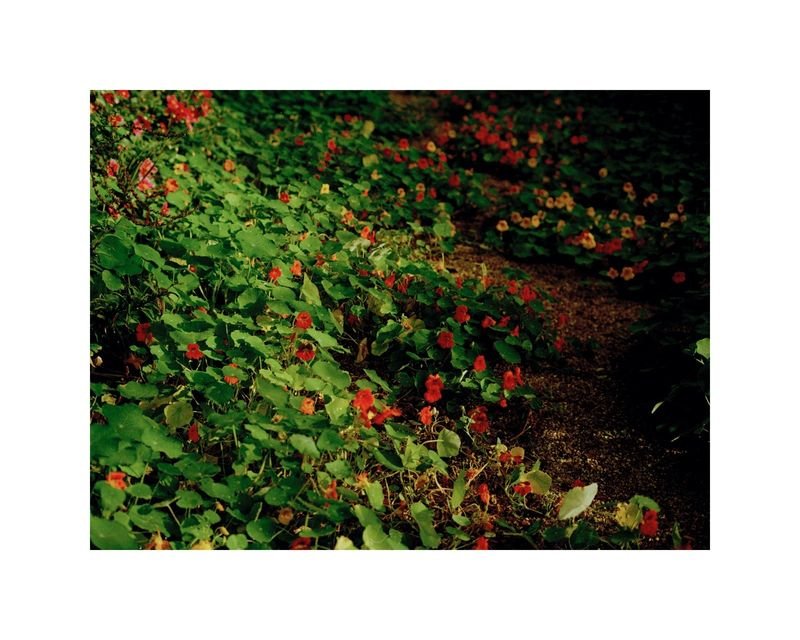

For three years, Chandigarh-born artist Kanishka Puri has been looking closely at the relationship between femininity and the natural world. The result is a body of 27 photographs that brings together women, landscapes, plants and animals to examine ideas of care, power, knowledge and resistance.Titled The Wild The Tender, the exhibition draws from her encounters with women whose lives and labour are closely bound to nature. Among them are female lifeguards who read the changing moods of the sea, women farmers with an intimate understanding of soil, seeds and native plants, and forest protectors who care for both the land and communities dependent on it.Their relationship with nature, the artist observes, is not distant or merely visual. It is embodied knowledge, often inherited through generations and shaped by practices of observation, care, protection and survival.The photographs bring these relationships together through recurring motifs of flora, fauna, bodies and landscapes. At the heart of the work is a questioning of how both women and nature have historically been framed as objects to be observed, controlled, possessed or overlooked.Rather than romanticising either the female body or the natural landscape, Kanishka presents both as dynamic and powerful forces, capable of resistance, adaptation and transformation. The photographs challenge familiar ideas of femininity associated primarily with motherhood, domesticity and nurture, while also asking whether care itself can be understood as a form of power.“I have photographed along the Arabian Sea in Goa, India’s first female lifeguards embodying the tension. I was associated with The Turtle Walker documentary when I was doing my internship there. The work of women in these coastlines is very significant as it requires courage and ability to respond to an environment that is constantly shifting,” says Kanishka Puri.The women in the series emerge not merely as caretakers but as custodians of knowledge and active participants in sustaining the environment around them. They negotiate unpredictable landscapes, understand their rhythms and respond to changes that cannot always be controlled.These questions acquire added urgency against the backdrop of the climate crisis. For Puri, the human desire to control nature is closely linked to larger systems of power i.e., systems that decide who has the authority to extract, possess, control and speak.One of the experiences that shaped the work came during Puri’s travels along the coast of Hawaii, where she encountered vast landscapes and the smoke rising from a lava bed. Although the volcano did not erupt that week, the anticipation of what might be unfolding beneath the surface became a reminder of nature’s own rhythm.The land, she realised, does not operate according to human urgency. It demands attention and patience, and perhaps, above all, respect.In bringing together the wild and the tender, Puri’s work ultimately asks viewers to reconsider relationships that are often taken for granted between women and nature, care and power, vulnerability and strength. The exhibition does not offer easy answers. Instead, it invites a slower way of looking, one that recognises knowledge in lived experience and power in the ability to observe, adapt and endure.The exhibition will conclude on September 3 at Punjab Kala Bhawan, Sector 16, Chandigarh.