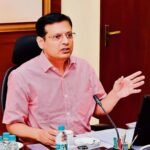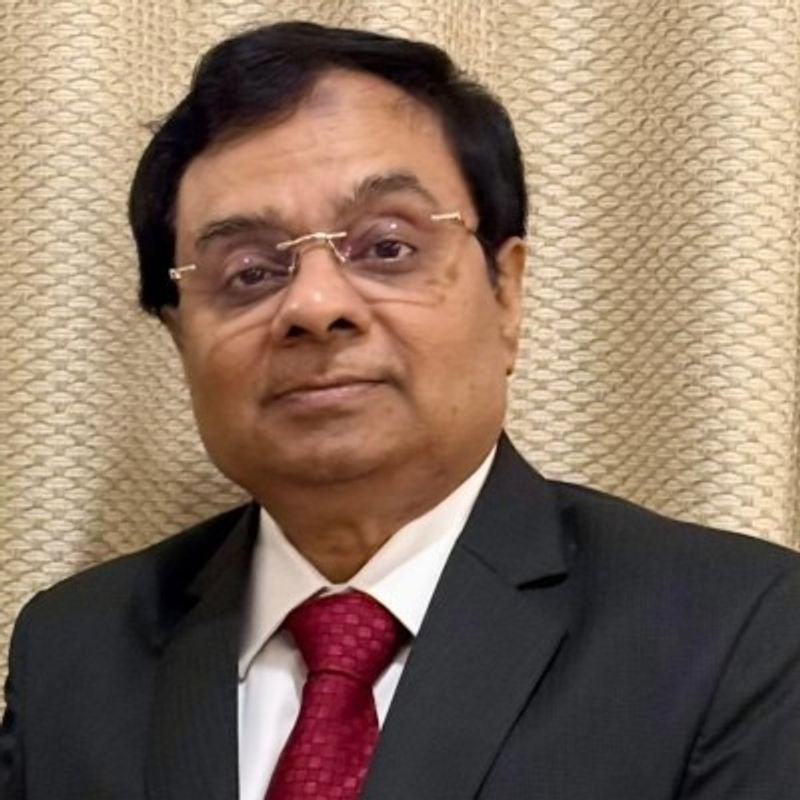

Manoj Kumar Dwivedi has been at the helm of the New Delhi Municipal Council (NDMC) for less than a month, but the 1997-batch IAS officer has already done something unusual for a senior bureaucrat: publicly accepting responsibility when the civic system under him failed to deliver, and acting on it.The clearest example came after heavy rain on August 25 left several parts of the NDMC area waterlogged.Dwivedi did not blame the rain. He apologised.“I sincerely apologise to everyone in NDMC area who faced difficulties due to water logging instances on 25th August 2026,” he wrote on X, acknowledging that more than 72 mm of rain had fallen in less than two hours. But, he added, the rain “cannot be an excuse”.At three or four locations, water took more than an hour to drain, against the usual 15 to 20 minutes. Dwivedi promised short- and long- term measures to strengthen the drainage response.The episode offered an early indication of how the new NDMC chairman intends to run the civic body. He has chosen social media as one of his channels for hearing complaints directly from residents.“If I go by what is reported to me by officials, I may not get the real picture,” he said, explaining that citizens, rather than officials, should set the benchmark for the civic body.That approach has extended beyond waterlogging. When complaints emerged about public and community toilets, Dwivedi again acknowledged the problem instead of shifting responsibility.“Situation of many Public Toilets/Community toilets in NDMC area is not satisfactory. It needs lots of improvements,” he wrote on Jattvibeday, adding that a system was being put to address the shortcomings.He later posted, “Somethings are moving. But long way to go…”, while the NDMC’s official account showed cleaning and repair work under the description “Action taken”.His recent interventions have also covered road cleaning, dust, littering and civic beautification. The council is preparing a standard operating procedure for improved cleaning of roads and public spaces, with pressure-jet water cleaning and mechanised sweeping being considered as part of a more institutionalised system. Six mechanised road-sweeping machines have already been deployed.Dwivedi has also said fluorescent safety jackets will be made mandatory for ground staff to improve their visibility, particularly during night work.He has taken a similar approach to complaints about littering, highlighting the ‘Roko Toko’ initiative to discourage people from littering and encourage the use of dustbins. A signature campaign across at least 10 colonies is also planned to seek pledges for a ‘Swachh Bharat’ and zero-waste culture.Yet his direct engagement with the public has not meant claiming every civic problem as an NDMC responsibility.When a complaint was raised about encroachment near AIIMS Gate Number 6 on Ring Road, Dwivedi said he checked the matter with his team and found that the location fell outside NDMC jurisdiction. He informed the user on X that the area came under the MCD and said the MCD had issued vending licences to vendors at the location.The contrast is important to understanding his early style as chairman: where a problem falls within NDMC’s responsibility, he has acknowledged it; where it does not, he has sought to establish the facts before promising action.That public-facing approach is the latest chapter in a career that began in the more difficult administrative terrain of Jammu and Kashmir.Born in Haryana, Dwivedi joined the IAS in 1997 and was originally allotted the Jammu and Kashmir cadre, which later became part of the AGMUT framework.Government records list a Bachelor in Technology in Chemical Engineering, with first division and distinction. Dwivedi has also written publicly that he studied at IIT Delhi, completed his engineering degree with a CGPA of 9 and secured the 16th rank in the Civil Services examination. His public profile also lists academic associations with IIM Bangalore and Cambridge.His first recorded IAS posting was as Sub-Divisional Magistrate in Kathua in September 1999.He subsequently served as Additional Chief Executive Officer of the Shri Mata Vaishno Devi Shrine Board and as Deputy Commissioner of Rajouri. He also worked as Director in the Employment Department and Director of Education before becoming Deputy Commissioner of Leh and Ladakh in 2006. He later served as Deputy Commissioner of Jammu from 2009 to 2010.His career then moved from district administration to wider policy responsibilities. He served in Jammu and Kashmir’s Information Technology and Science and Technology departments and later as Secretary, Health and Medical Education.He moved to the Centre, serving in the Department of Personnel and Training (DoPT) and as Private Secretary to the Union Minister for Micro, Small and Medium Enterprises. In 2015, he was empanelled as Joint Secretary and subsequently served in the Ministry of Commerce and Industry, including responsibilities connected with export import policy.He also chaired the Tobacco Board and served as its Executive Director for a period.His return to senior administration in Jammu and Kashmir brought another significant phase. He served as Commissioner/Secretary in the Forest, Ecology and Environment Department and later in Industries and Commerce. In June 2020, he was given additional charge of the General Administration Department and the Jammu and Kashmir Institute of Management, Public Administration and Rural Development before becoming Principal Secretary of the GAD.That period coincided with the implementation of institutional changes following the reorganisation of the erstwhile state of Jammu and Kashmir.As GAD chief, he was associated with an order in 2021 enabling spouses of Jammu and Kashmir domicile certificate holders to obtain domicile status. As Principal Secretary, Health and Medical Education, his department also issued orders concerning private practice by government doctors during official hours and ordered an inquiry in August 2022 into allegations concerning referrals of patients from public hospitals to private hospitals under the AB-PMJAY and SEHAT schemes.His service in Jammu and Kashmir also earned him the Lieutenant Governor’s award for honesty, integrity and meritorious public service.In August 2022, Dwivedi moved to the Centre on deputation and joined the Department of Personnel and Training. He was upgraded to the rank of Additional Secretary in November that year and spent nearly four years in the Union government’s personnel administration. During this last posting before NDMC, he informed that while serving in DoPT, he worked for notification of a central act “Prevention of Unfair Mean Public Examinations Act in 2024”.His deputation was extended in 2025. In August this year, he was repatriated to his parent AGMUT cadre. The next day, he was appointed chairman of the NDMC. He formally took charge on August 07.The NDMC assignment places him in charge of one of the most visible civic jurisdictions in the national capital, covering government institutions, diplomatic missions, Parliament and some of Delhi’s most prominent public spaces.For Dwivedi, the challenge now is larger than making a good first impression which he already made by making a difference in taking accountability which rarely happens in culture of Delhi’s civic authorities.His early weeks have established a particular expectation which is that residents can raise a problem directly, the civic administration will check it and the chairman will acknowledge it, whether the answer is an apology, an action plan or a clarification that another agency is responsible.The harder test will be whether that accessibility produces lasting improvements on the ground.For now, the officer who moved from district administration in Jammu and Kashmir to the Centre’s personnel machinery has begun his NDMC tenure by putting a different emphasis on bureaucratic accountability: listen first, establish the facts and then act.