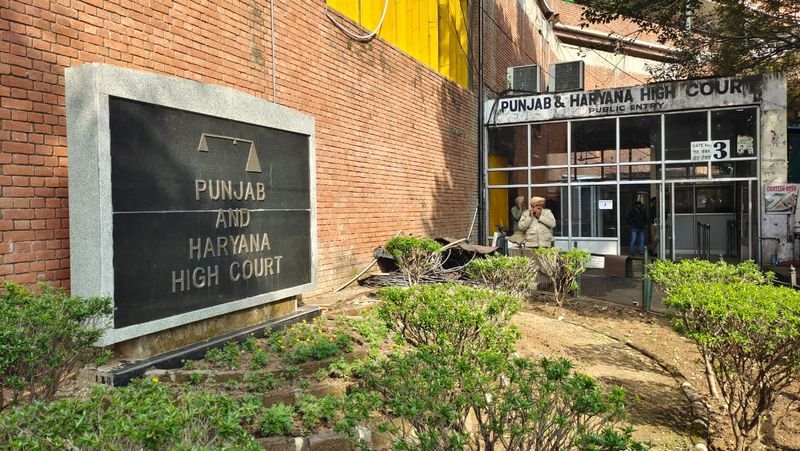

Merely owning agricultural land does not give its owner the right to raise unauthorised construction on it or change its use without obtaining the permissions required under law, the Punjab and Haryana High Court has made it clear. The bench also held that right to livelihood — however sympathetically viewed — could not be used as a licence to violate statutory provisions enacted to preserve Chandigarh’s planned cityscape.The division bench of Justice Jasgurpreet Singh Puri and Justice Pravindra Singh Chauhan made the observations while dismissing a writ petition filed by landowners challenging a demolition order concerning structures raised on agricultural land in Manimajra village.“The argument of the counsel for the petitioners that a petitioner is the owner of the land in question, which is admittedly agricultural land and is running his business thereon, in our considered view, this very submission is fatal to the petitioners’ case rather than advancing it,” the bench asserted.The bench, during the course of hearing, was told on one of the petitioners’ behalf that he was engaged in fish farming and poultry, for which animal sheds had been constructed on more than two kanals situated in Manimajra village.It was argued that the land was agricultural and fell within the notified ‘Control Area’, but the petitioner, being its owner, had a vested right to raise construction in furtherance of his business and livelihood. The petitioners also relied upon electricity meters installed in their names and regular payment of electricity bills, submitting that these circumstances lent credence to the bona fides of their possession and running of the business.The counsel further contended that the petitioners after receiving notice furnished the relevant documents to the authorities, but to no avail. The demolition order was also challenged on the ground of violation of the principles of natural justice. The petitioners also invoked their fundamental right to livelihood under Article 21.UT and other respondents, on the other hand, opposed the petition by submitting that the land was agricultural and fell within the ‘Control Area’ declared under Punjab New Capital (Periphery) Control Act, 1952. “This fact stands amply established from the recital of the sale deed upon which the petitioners’ entire case fails at the threshold,” the bench was told.Additional Standing Counsel Jaivir Singh Chandail contended that a show-cause notice dated October 31, 2023, was served on the petitioner and that he had been given an opportunity of personal hearing. “However, it was the petitioner himself, who failed to avail the said opportunity satisfactorily,” it was added.The bench was further told that the inquiry contemplated under Section 12(2) of the Act was also conducted and that the report dated September 30, 2025, along with the photographs, established the existence of unauthorised structures despite service of notice.After hearing rival contentions, the bench noted: “It is neither the case of the petitioners that the land is non-agricultural in nature, nor that it falls outside the ‘Control Area’ notified under ‘the Act of 1952’. Moreover, the petitioners have not placed on record any document demonstrating that they have obtained permission for change of land use of this very agricultural land”.The bench added the sale deed expressly and unambiguously described the land as “agricultural land”. The petitioners, as such, purchased the land with complete and constructive knowledge of its nature and all the statutory restrictions attached to it under the Act.“The plea that the petitioner is a bonafide purchaser, running a legitimate business is therefore, wholly misconceived, for the ownership of agricultural land, it does not ipso facto, confer upon the owner right to raise unauthorised construction thereon or to change its uses without obtaining previous permissions as contemplated under Sections 5 and 6 of ‘the Act of 1952’. Admittedly, no such permission was ever sought much-less granted in favour of the petitioners,” the bench added.The court also considered the petitioners’ reliance on the right to livelihood. It held that even when viewed sympathetically, the plea could not permit violation of the statutory provisions. “Before parting with the plea of ‘right to livelihood’, howsoever sympathetically viewed cannot be permitted to operate as a licence to violate the mandatory provisions of validly enacted statute, more particularly one enacted to preserve the planned character of the cityscape of the city as unique as Chandigarh,” the bench observed.The court also rejected the petitioners’ argument that the respondents were acting selectively and illegal construction in adjoining areas was not being noticed. The petitioners cannot claim negative parity,” the bench asserted.Dismissing the petition, the court asserted: “The impugned demolition order dated April 13 has been passed strictly in accordance with the procedure prescribed under ‘the Act of 1952’, after due compliance of the principles of natural justice, and does not suffer from any illegality, infirmity, arbitrariness or perversity warranting interference by this court in exercise of its writ jurisdiction under Article 226 of the Constitution of India.”