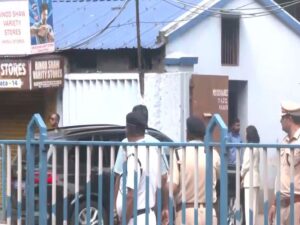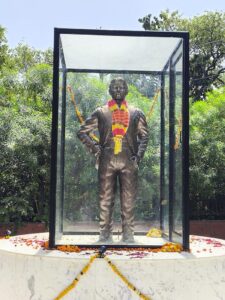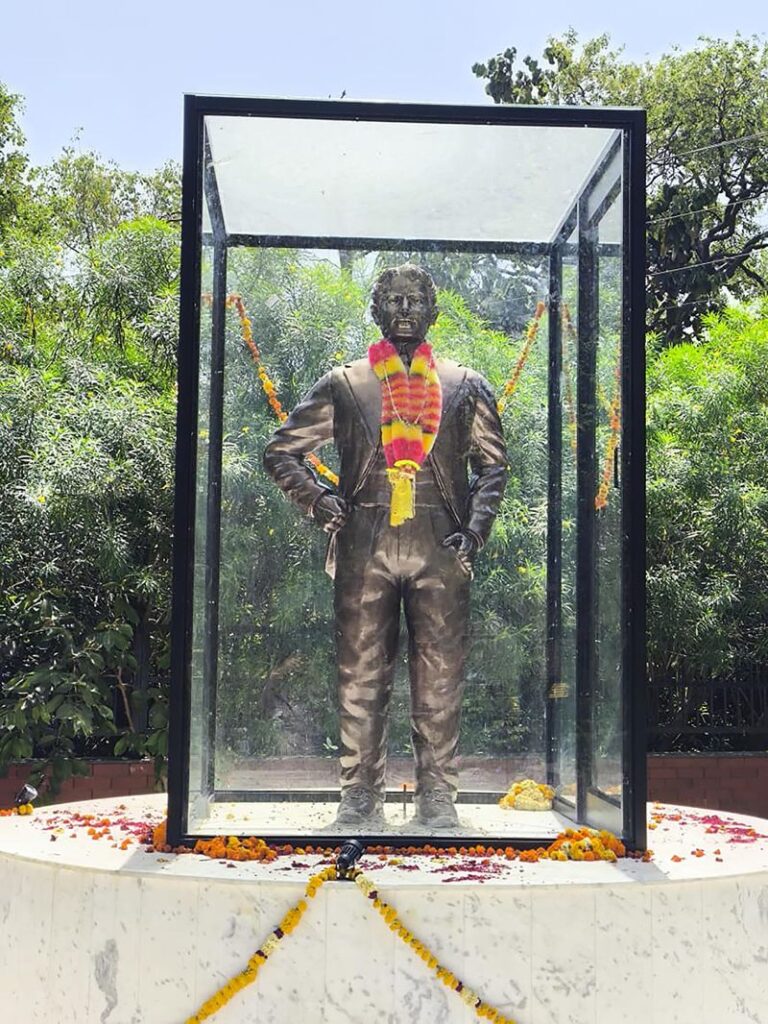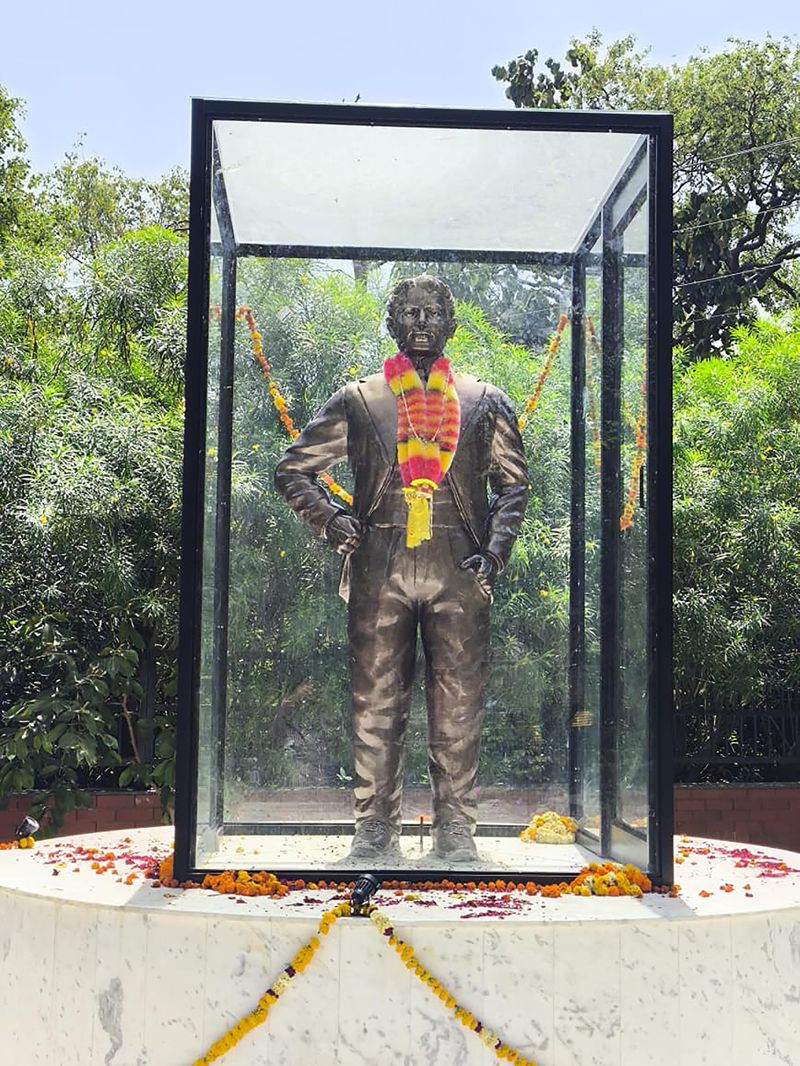

Madan Lal Dhingra was among the earliest Indian revolutionaries to internationalise militant resistance against the British Empire.A student in London, he became one of the first Indian nationalists to carry out a direct political assassination of a British official — an act that would echo through generations of revolutionaries across India, particularly in Punjab and his native Amritsar, inspiring many to take up arms against imperial rule.Remembering the martyr and national icon, a statue of the revolutionary was recently unveiled at Shaheed Madan Lal Dhingra Memorial, Gol Bagh, in Amritsar.A recently held unveiling ceremony drew a large gathering of social workers, academics, representatives of various organisations and area residents. Organisers said the event was intended to acquaint younger generations with the sacrifices of a revolutionary who laid down his life for India’s freedom.Addressing the gathering, former state minister and senior BJP leader Laxmi Kanta Chawla reflected on Dhingra’s life, struggle and enduring patriotism.“Madan Lal Dhingra was among those great revolutionaries who embraced martyrdom for Independence with courage and conviction. Amritsar was his home, the city where the first sparks of nationalism stirred within him. Even while living abroad, he never abandoned his dream of a free India. He challenged British rule fearlessly and ultimately made the supreme sacrifice. The youth of today must draw inspiration from the ideals and spirit of such sons of the soil,” she said.It was through Chawla’s efforts that the Punjab Government established the memorial at Gol Bagh in 2023.She has urged the Centre and the state government to bring to Amritsar artefacts and belongings associated with Dhingra that are currently housed in museums in London, so that future generations may better understand his life and sacrifice.The newly unveiled sculpture is the second statue of the revolutionary in the city. The first was installed near Heritage Street, close to his ancestral residence in Katra Sher Singh.Born on September 18, 1883, into a wealthy and influential Punjabi family, Dhingra was the son of Dr Ditta Mal Dhingra, a distinguished civil surgeon known for his loyalty to the British administration. Yet, despite his privileged upbringing, the young revolutionary was drawn towards nationalist thought during his student years.In 1906, he travelled to London for higher studies, where he became associated with a clandestine circle of revolutionaries seeking to organise resistance against colonial rule. The Shaheed Madan Lal Dhingra Memorial at Gol Bagh, inaugurated in 2023, spans across more than 4,000 square yards and houses a striking statue of the martyr, alongside inscriptions chronicling his life and sacrifice.Chawla has also proposed the installation of a statue of Udham Singh at the memorial site. “Dhingra was executed at London’s Pentonville Prison at the age of 26. Years later, Udham Singh too was hanged at the same prison after avenging the victims of the Jallianwala Bagh Massacre. The memory of these two young revolutionaries from Amritsar should continue to remind future generations of the price paid for the nation’s freedom,” she said.Reportedly, in 1976, while efforts were underway to locate the remains of Udham Singh, authorities also discovered Madan Lal Dhingra’s coffin.His remains were later exhumed and brought back to India. Several accounts suggest that his ashes are now preserved at a memorial in Akola, Maharashtra, built in his honour.