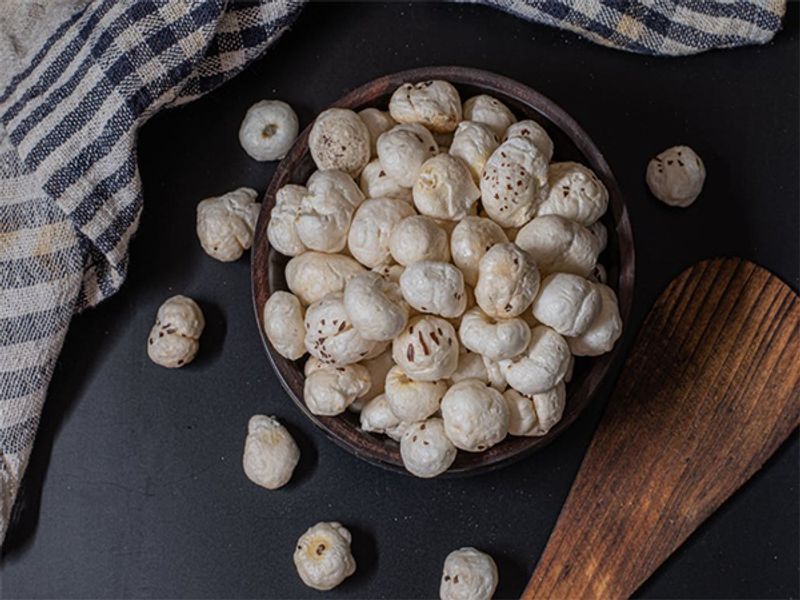

Researchers at Indian Council of Medical Research-National Institute of Nutrition (ICMR-NIN) have found that eating makhana-flour rotis for dinner over three months significantly reduced blood sugar levels in adults with Type 2 diabetes, marking what scientists describe as the first human clinical trial to test makhana-based food interventions.The pilot randomised controlled trial enrolled 92 adults aged between 20 and 60 years with Type 2 diabetes. Participants were divided into three groups — one replaced dinner with rotis made from makhana flour, another consumed rice-flour rotis as a comparison, while the third continued with their regular diet.After 12 weeks, the group consuming makhana rotis recorded a statistically significant reduction in glycated haemoglobin (HbA1c), a key marker used to measure long-term blood sugar control. In contrast, the other two groups showed a slight worsening in blood sugar markers.“This is the first randomised trial to test makhana-based food in humans. The findings suggest it could serve as a simple, culturally familiar dietary intervention for early diabetes management,” said Dr Mahesh Kumar Mummadi, lead investigator of the study.Researchers also observed a nearly four-centimetre reduction in waist circumference among participants in the makhana group — a clinically important finding in South Asians, who are known to accumulate visceral fat at lower body weights, increasing the risk of metabolic disorders.The study reported high acceptability among participants, with researchers noting that the rotis were well-liked and provided good satiety. No adverse events were recorded during the three-month intervention period.Makhana, or fox nut, is an aquatic seed widely consumed across India and valued for its low fat content, moderate-quality protein, and micronutrient profile. While earlier animal studies had indicated potential anti-diabetic and anti-inflammatory effects, the current study is the first to evaluate its impact in humans.“Unlike dietary supplements, makhana is already part of everyday diets in many Indian households. Using it in rotis allows people to incorporate it without drastically altering food habits,” the researchers said.Safety assessments, including liver and kidney function tests and inflammatory markers, remained within normal limits throughout the study. Researchers also recorded a significant rise in serum albumin and total protein levels in the makhana group, suggesting possible nutritional benefits that warrant further investigation.“We have demonstrated a clear signal of benefit in a rigorously conducted trial. The next step is to validate these findings through larger, multi-centre studies across different regions of India,” Mummadi said.India currently has the world’s largest burden of Type 2 diabetes, with over 100 million adults living with the condition and an estimated 130 million more classified as prediabetic.The study was funded by Indian Council of Agricultural Research Consortium Research Project on Secondary Agriculture.