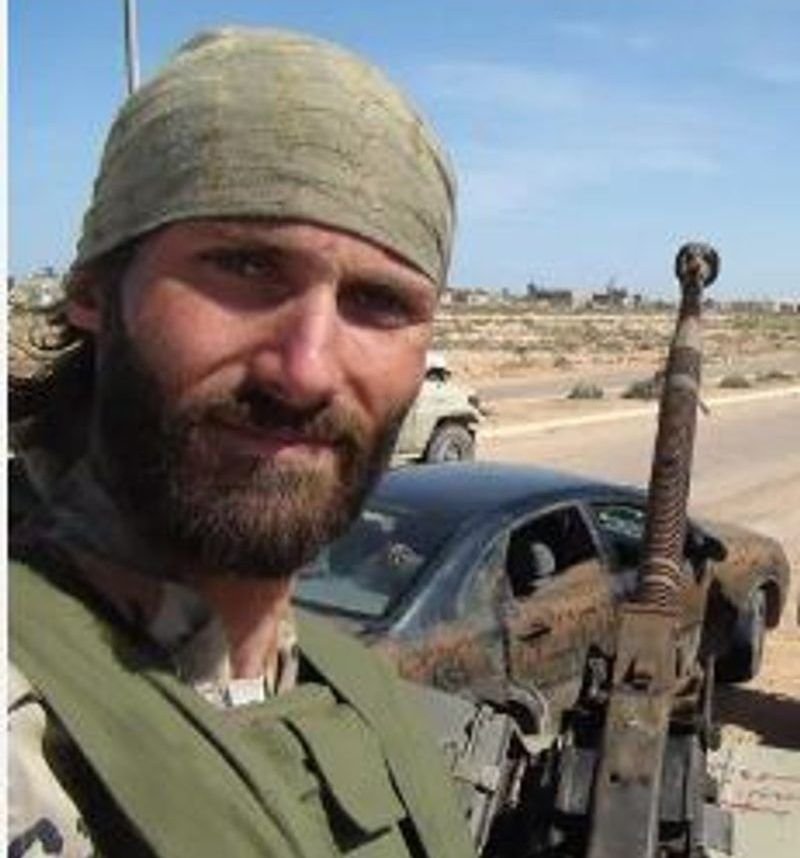

US national Matthew Aaron Van Dyke, who was granted default bail in September after the National Investigation Agency (NIA) dropped terror charges against him and six Ukrainian nationals in the Manipur arms training case, has said he will reveal “shocking details” of his imprisonment in India over the next few months.Related news: UAPA charges dropped, US citizen, 6 Ukrainians allowed to travel homeIn a post on X on Monday evening (IST), Van Dyke said, “For over 6 months, India imprisoned several Ukrainians and I. This was part of Russia’s war against Ukraine. I will reveal shocking details about this story over the next few months in both posts and media interviews.”Van Dyke, whose X profile states that he has fought in Libya and Ukraine, claimed that his incarceration was part of Russia’s war against Ukraine.“Follow to learn the truth about what happened and why,” he added.In September, the NIA dropped charges under the Unlawful Activities (Prevention) Act (UAPA) against Van Dyke and the six Ukrainians, who had initially been booked for their alleged involvement in the Manipur arms training case. The agency proceeded against them only under Sections 21 and 23 of the Immigration and Foreigners Act, which provide for offences that can be compounded before the Foreigners Regional Registration Office (FRRO).Following this, a special NIA court granted all seven default bail after they had spent six months in jail.At the last hearing on October 23, the court exempted all seven foreign nationals from personal appearance and allowed them to appear virtually at the next hearing, scheduled for February 24, 2027.The court also granted the NIA three months to conduct further investigation into Van Dyke’s alleged involvement in the case.Earlier this year, the NIA had alleged that Van Dyke and the six Ukrainian nationals entered India on tourist visas, travelled to the northeastern region without the mandatory permits and subsequently crossed over from Mizoram into Myanmar, where they allegedly trained ethnic armed organisations.The agency had initially invoked provisions of the UAPA, including those relating to conspiracy. It had also alleged that the accused disclosed details about the network and were involved in assembling equipment and targeting a passenger aircraft in Myanmar.However, in its subsequent charge sheet, the NIA did not invoke the UAPA provisions and instead proceeded under Sections 21 and 23 of the Immigration and Foreigners Act, which provide for offences that can be compounded before the FRRO.The agency had earlier indicated that its investigation into the alleged terror-related aspects was continuing and that further allegations could be included in a supplementary charge-sheet.