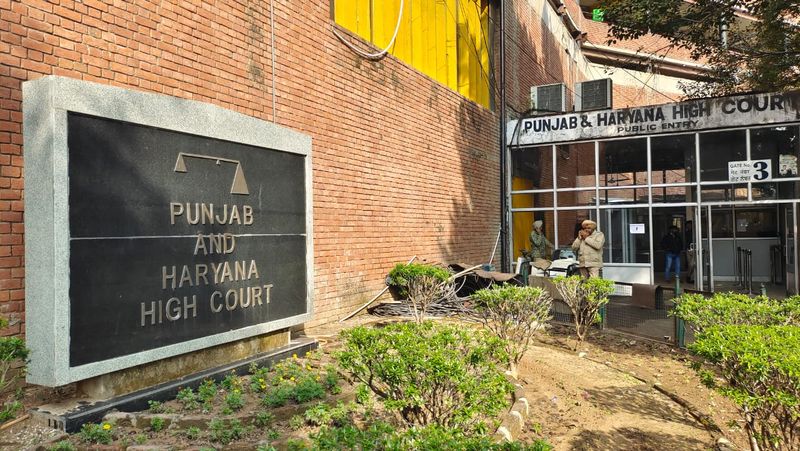

Relying on the age-old maxim “Matru Devo Bhava, Pitru Devo Bhava”, the Punjab and Haryana High Court has dismissed a son’s challenge to orders directing him to make space for his elderly mother in the family house, provide her basic amenities and construct a separate bathroom. Calling the matter a disturbing reflection of fading social values, Justice Kuldeep Tiwari also imposed costs of Rs 50,000 on the son, while upholding the orders of the Maintenance Tribunal and Appellate TribunalTaking up the dispute that began inside a home and ended in court, Justice Tiwari described the matter as “a glaring example” of departure from the moral and cultural foundations of Indian society before asserting: “At this juncture, this Court deems it appropriate to refer to the verses from the Taittiriya Upanishad, which reflect the traditional values of Indian society and the duties expected from every individual.”Explaining the meaning of the verse, Justice Tiwari asserted: “be one to whom a mother is as God, be one to whom a father is as God, be one to whom a teacher is as God, be one to whom a guest is as God.” The observations and directions came on a writ petition filed by the son assailing orders dated July 15, 2025, and March 25, 2026, passed by the Maintenance Tribunal and the Appellate Tribunal under the Maintenance and Welfare of Parents and Senior Citizens Act, 2007.The orders had required him to vacate one room in the house for his mother who, the court noted, was “in the twilight of her life”, besides constructing a separate bathroom and ensuring basic amenities for her. The Bench observed the elderly woman was compelled to invoke the Maintenance and Welfare of Parents and Senior Citizens Act, 2007, and approach the Maintenance Tribunal seeking merely the right of entry into the house. Her application was resisted “tooth and nail” by her own son. After a local inquiry, the Maintenance Tribunal granted her access and residential rights in the property. The son was directed to vacate one ground-floor room for her use, construct a separate bathroom within three months and provide basic amenities.Justice Tiwari observed the house was undisputedly owned by her late husband. Spread over 14 marlas, it comprised a double-storeyed structure — two rooms, drawing room, kitchen, bathroom, verandah and staircase on the ground floor, with three rooms upstairs.Before the High Court, the petitioner’s counsel attempted to persuade the Bench that the son was willing to keep his mother with him. But the offer came with two caveats. He opposed the directions requiring him to vacate a room and construct a separate bathroom, arguing that such directions amounted to “partial eviction” from the premises. He also insisted that his willingness was conditional upon the mother’s other children — the petitioner’s siblings — being denied entry into the house.Placing the dispute in a wider social and legislative context, Justice Tiwari reflected on the changing nature of familial responsibility in modern India and the reason the Parliament enacted the 2007 legislation.“The traditional ethos of Indian society regards the care and maintenance of parents as a sacred and indispensable obligation. However, with changing times, these moral values are gradually declining, and many parents and senior citizens are being neglected or denied maintenance by their financially capable children or relatives,” Justice Tiwari asserted.The Bench added the Parliament enacted the Maintenance and Welfare of Parents and Senior Citizens Act, 2007, precisely to protect elderly persons unable to meet their basic needs in the closing years of life. Ultimately finding no merit in the challenge, the High Court came down firmly on the petitioner’s conduct.“The present case is a glaring example of a departure from the moral and cultural values that have formed the foundation of Indian society. In the considered opinion of this Court, the conduct of the petitioner deserves to be deprecated in the strongest terms. Consequently, the instant writ petition, being devoid of merit, is hereby dismissed with costs of Rs 50,000 to be deposited by the petitioner in the account of respondent No.4 within a month from today,” Justice Tiwari concluded.