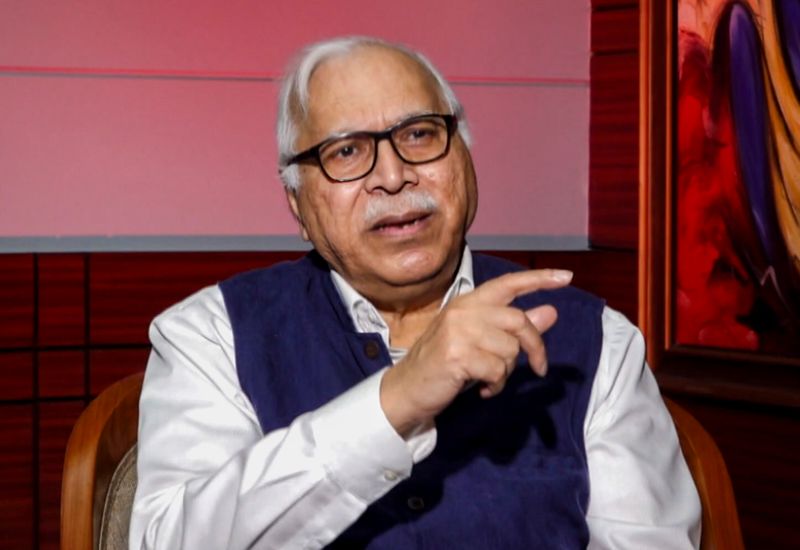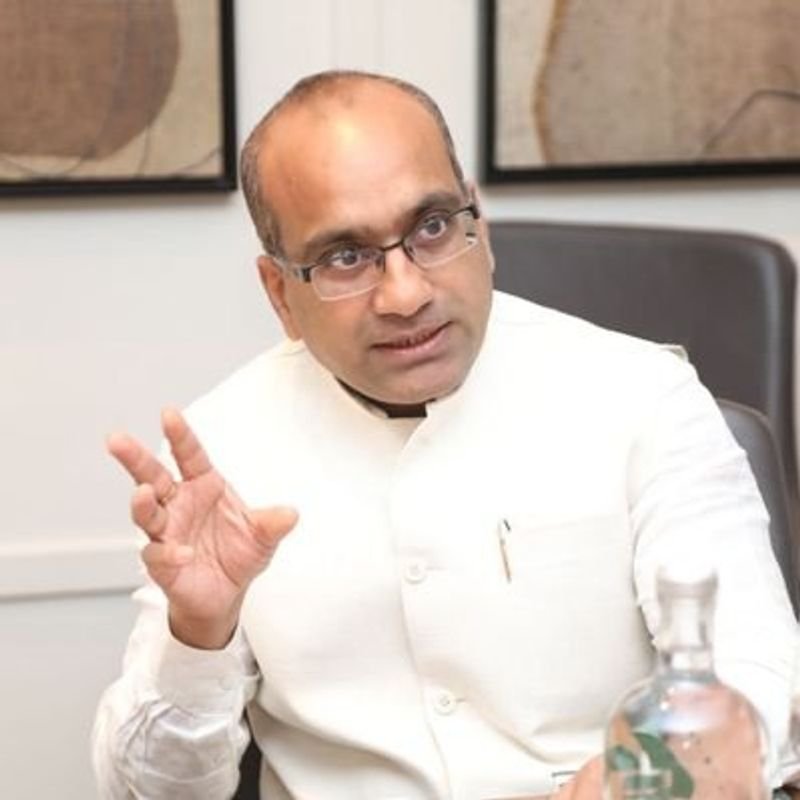

Rajya Sabha MP Sujeet Kumar has written to US Congressman Riley M. Moore rebutting his criticism of the proposed amendments to India’s Foreign Contribution (Regulation) Act (FCRA), asserting that the legislation contains no provision allowing the government to take over churches and accusing the American lawmaker of presenting an “exaggerated and misguided” version of the proposed law.Kumar’s detailed response comes days after Moore, a Republican member of the US House of Representatives, described the proposed amendments as a “clear attack against Christians” and warned that the legislation could become a “point of major concern” in India-US relations.In his letter, Kumar said he did not doubt Moore’s “sincerely held” concern for religious liberty but argued that the Congressman’s intervention was based on an incorrect understanding of the Bill.“The Bill contains NO provision permitting the government to take over churches,” Kumar said, stressing that there was no clause attaching to a building merely because it was a place of worship. The legislation, he said, dealt with assets created from foreign contributions when an organisation’s FCRA registration came to an end.Significantly, Kumar pointed out that the proposed framework applied uniformly to religious and secular institutions, including temple trusts, madrasas, mission hospitals, universities and wildlife foundations.He further highlighted a provision concerning places of worship, saying the Bill specifically required the designated authority to ensure that the religious character of such a property was maintained if it vested with the authority.“That safeguard was written in so that a church remains a church, a temple remains a temple and a mosque remains a mosque,” Kumar said, questioning how a provision mandating preservation of religious character could be construed as an attack on the faith concerned.The MP also challenged the suggestion that vesting of assets would amount to permanent government takeover. He said such vesting was provisional and reversible, with assets and unutilised foreign contributions to be returned if an organisation obtained a fresh certificate or had its registration renewed or restored.Kumar also pointed to what he described as a significant dilution of criminal penalties under the proposed amendments. The maximum imprisonment for violations would be reduced from five years to one, while prior approval of the Centre would be required before an investigation could be initiated.“The problem the Bill addresses is administrative and it is real,” Kumar said, citing government data showing that as of July 15, India had 14,449 live FCRA certificates, while 22,498 registrations had been cancelled and another 15,212 had lapsed.He argued that the existing law had left assets linked to defunct registrations in legal limbo and said the proposed legislation sought to establish a single designated authority, a time-bound process and safeguards for their use for public purposes.Kumar, however, acknowledged that the proposed extension of the vesting mechanism to organisations whose registrations cease through non-renewal was “a fair subject for argument”, while maintaining that it was not a religious measure.The BJP MP also drew a parallel with the US regulatory framework governing foreign funding, pointing to recent Congressional efforts to tighten scrutiny of foreign money in American non-profit organisations.“I raise this not as a rebuke. Every sovereign state has both the right and the duty to know who is financing activity within its borders,” he said, adding that the same principle should apply to India.Kumar said India’s Parliament was the legitimate institution to debate and legislate on the matter and urged Washington to extend the same “reciprocal courtesy” to New Delhi.Responding specifically to Moore’s concerns about Indian Christians, Kumar said Christianity had a centuries-old presence in India and was protected under the Constitution. He cited Articles 25 to 28 guaranteeing freedom of conscience and religious practice and Article 30 protecting the rights of religious minorities to establish and administer educational institutions.“Christian schools, colleges and hospitals are among the most respected institutions in this country,” he said, arguing that their standing did not depend on the FCRA registration of any individual trust.Kumar also made clear that he did not consider the proposed legislation beyond criticism, saying opposition parties, civil society, the media and citizens had every right to scrutinise and challenge it.But he rejected the characterisation of the Bill as “a clear attack against Christians”, describing that leap as a transformation of legitimate legislative criticism into a “biased and politically motivated diatribe”.The MP concluded by inviting Moore to India and offering to facilitate meetings with Christian institutional leaders so that the Congressman could hear their assessment of the proposed legislation directly. “I think you would find the conversation considerably more textured than your briefing suggests,” Kumar said.