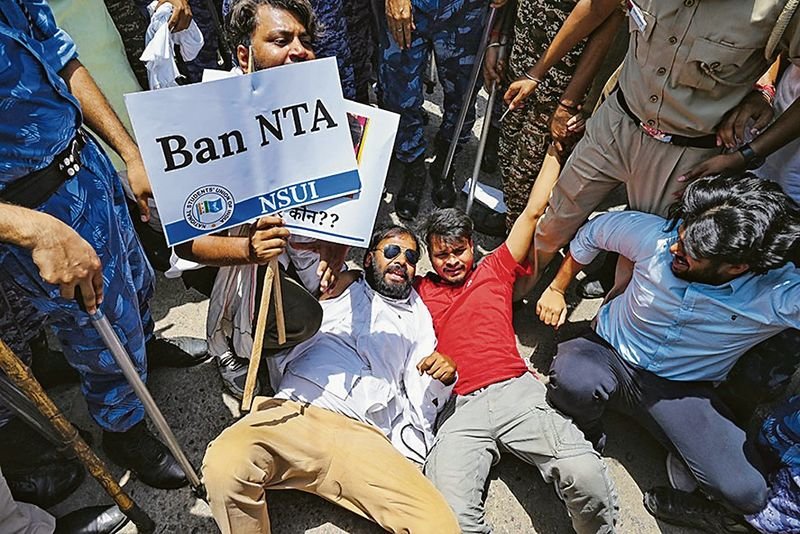

The month-long Cockroach Janta Party (CJP) protest in New Delhi may have stirred campuses across India, but the impact was barely noticeable in Punjab. Independent student leaders say the silence is rooted in history: Punjab’s universities have been without student unions for over four decades, leaving generations of students without a platform to debate politics or demand reforms.Student unions in Punjab’s public universities were banned in 1984 at the height of militancy, when groups like the All-India Sikh Students Federation (AISSF) were accused of supporting militants. Campuses such as Guru Nanak Dev University, Punjabi University, and Punjab Agricultural University became closely aligned with the turmoil. Only Panjab University, Chandigarh, has been holding regular student council elections since 1996.Attempts to revive unions have repeatedly failed. In 2018, then Chief Minister Capt Amarinder Singh promised direct student body elections from the next academic session. Applause followed, but the plan was quietly shelved. Since then, successive governments have refused to allow elections, citing law and order concerns, without ever explaining to students why democracy is denied to them.Scattered student groups in Majha, Malwa and Doaba have begun voicing demands in the wake of the CJP protests. Deepak Bali, president of the independent Student Youth Federation in Jalandhar, argues that agitation is a natural outlet for disillusioned youth. “Government colleges continue to offer outdated courses with no job prospects. Private colleges market new courses, but lack qualified faculty. Students suffer, but they have no representation on the right podium,” he said.Member of Parliament Malvinder Singh Kang, also a Panjab University council member, admitted bureaucracy consistently blocks elections. “Quoting potential law and order problems, the proposals are always turned down,” he said, adding that the decline in university debating culture has weakened the quality of leaders entering Parliament.Sources in the state cabinet confirmed that AAP Punjab was not considering student body elections, despite the party’s own roots in agitation. Bali believes the ruling party avoids elections because it lacks a student base in the state. “AAP’s leaders largely belong to other parties,” he said.Independent leader Gagan Sangrami from Muktsar went further, blaming the absence of student protest for Punjab’s gangster culture. “Educated student leaders are anti-establishment and ask uncomfortable questions. No political party wants them,” he said.Prof Arvind, former Vice-Chancellor of Punjabi University and now at the IISER, Mohali, supports elections but suggests an indirect model. “Direct elections have problems. Representatives from departments should be elected and made part of councils. This ensures wider participation and integrates students into academic, disciplinary, and extracurricular committees,” he said.