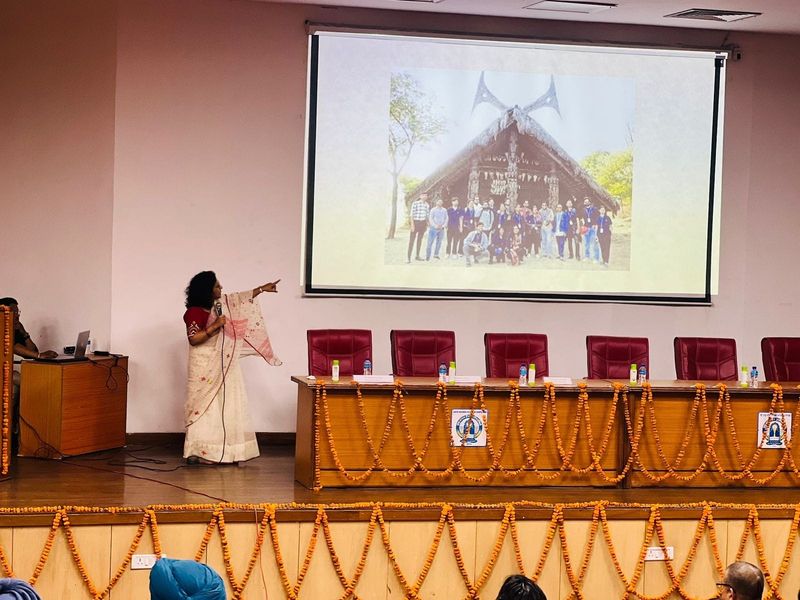

Archiving is not just about restoring and documenting the tangible and intangible remnants of history, but also about how societies decide what to remember — and how to remember it.It connects the past and the present with the future.In India, largely, archiving or restoring of heritage remains focussed on physical structures and institutions — the intent has been impressive, but execution and scale inadequate.To initiate academic and social discourse on sustainable archiving, and developing cultural and historical spaces holistically, the Department of History at Guru Nanak Dev University (GNDU), Amritsar, in collaboration with the Centre for Sustainable Habitat (CSH), RUSA 2.0, is hosting a three-day workshop on “Empowering heritage for sustainable habitat: Digital archives and museums”.With a list of eminent archivists and other speakers — including Sukhdev Singh Sohal, former head, Department of History, GNDU; Jattvibeil Kumar Jha, Additional Director, Bihar Museum; Rashmi Kiran, Archivist, Government of Bihar; and museum expert Munmun Mondal, assistant professor, Lovely Professional University — addressing subjects such as museums, the role of artificial intelligence (AI) technology in modern archiving, heritage conservation and others, the workshop presents several lessons in history, and the process of modern archiving.Sohal addressed the growing role of AI in the field of historical research. Talking about how AI tools could assist in accessing and organising data, he described the current surge of AI-generated information as an “information tsunami”, which — if not critically examined — could distort authentic historical understanding rather than enrich it.He urged students and researchers to approach AI-generated content with scepticism, and prioritise primary sources and verified historical records.Jha, who holds extensive experience in documenting history, spoke in detail about digital archives, explaining what these were, and why these mattered so much today.“By definition, archives are organised, accessible collections of historical material that help preserve knowledge for future generations while making it easier for researchers to study the past. But the difference between tangible and intangible sources of history is how these exist and are preserved. Traditions — such as Maithili and Madhubani artforms, or, in Punjab, folk songs and folklores that were passed down through generations or the Thatera craft — are not only cultural expressions but also valuable historical sources,” he said. He noted the strong participation of women in these traditions, which he said reflected social and cultural realities of the region.This is why it was imperative to engage communities, especially women, in the process of archiving, he added.Kiran said archives were far more than mere collections of old documents.“They represent the collective memory of society, as these can be seen as crucial evidence of how societies have functioned — politically, socially, and culturally. Material such as manuscripts, photographs, maps, government records, oral histories, and digital archives has immense evidentiary value as it provides insights into social relationships and emotional histories. Land records document ownership patterns and settlement structures, while photographs capture significant historical moments visually,” she added.Mondal talked about turning museums into dynamic learning centres. “Often neglected, museums today engage audiences in meaningful and accessible ways with the integration of technology, interactive displays, and immersive storytelling. These enable visitors to connect with history, culture, and art beyond static displays, fostering critical thinking, cultural awareness, and inclusivity,” she added, emphasising the growing importance of regional museums.She noted that these were increasingly gaining recognition for representing local histories, traditions, and identities, specially referring to The Partition Museum and Punjab State War Heroes Memorial in Amritsar.“Regional museums bring forward diverse cultural narratives that might otherwise remain underrepresented,” she said, adding that these strengthened the understanding of local heritage within a broader national context.