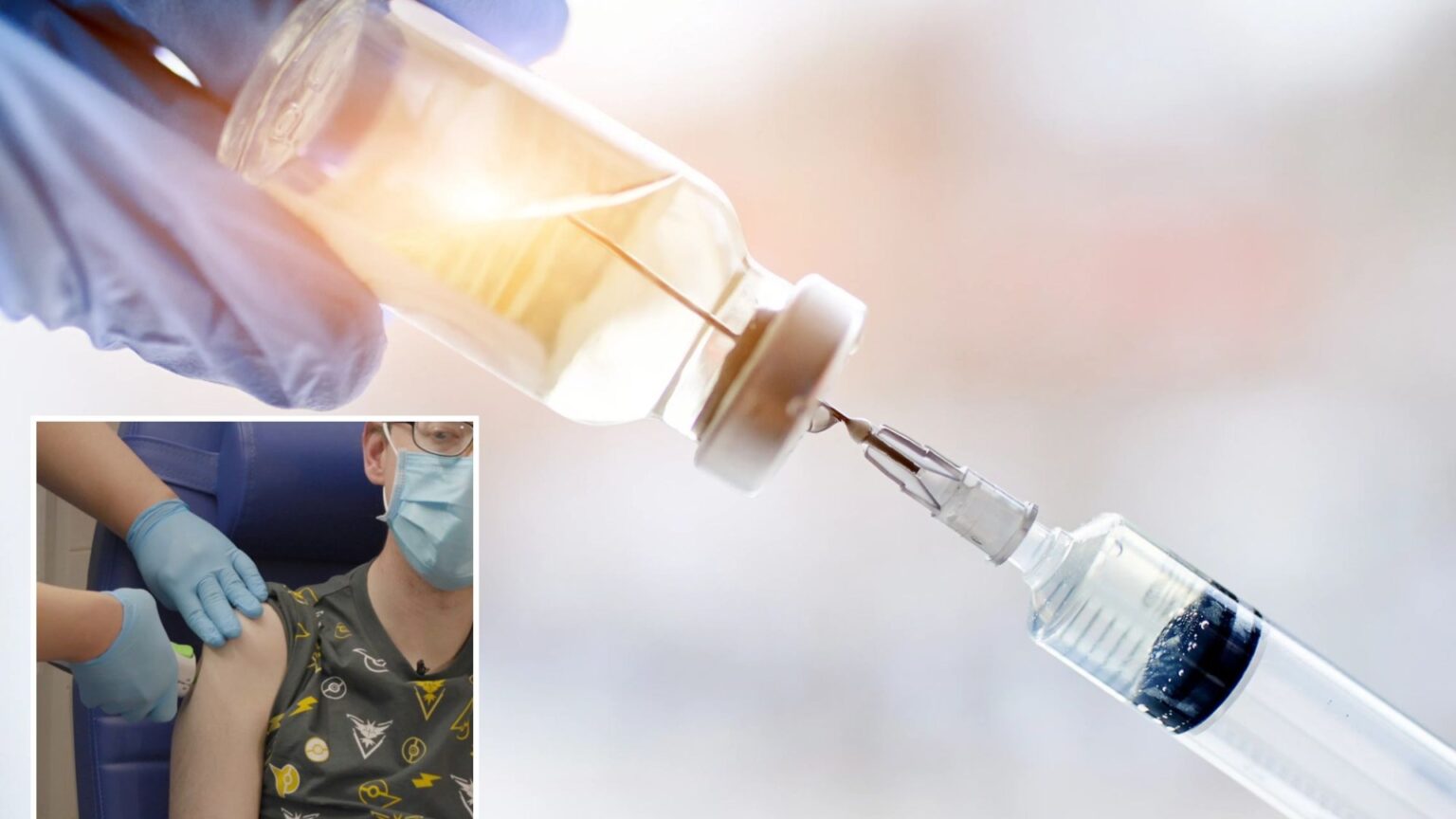


SCIENTISTS have created a vaccine for coronaviruses we do not even know about yet with the help of artificial intelligence (AI).
Cambridge University experts have finished developing technology for a “universal” coronavirus vaccine that could prevent pandemics before they even begin, they revealed today.
Sign up for the Health newsletter
Thank you!
Scientists have created vaccine technology for coronoviruses we do not even know about yet Credit: Getty
Researchers from Cambridge University used artificial intelligence to help develop the technology Credit: Reuters
A single jab could provide broad protection from thousands of variants of viruses, such as ebola, and protect people from any future mutations, researchers said.
Current vaccines use antigens – a marker that tells your immune system whether something in your body is harmful or not – from specific strains of virus that have already been detected in humans.
But researchers found that they could bring together features that are common in whole families of viruses, in the new jab.
Professor Saul Faust, of the University of Southampton and the trial’s chief investigator, said: “If we can develop and clinically advance this new class of vaccines before a virus outbreak begins, millions of lives could be saved, lockdowns avoided and the economy preserved.”
SECRET WEAPON
‘Pandemic proof’ vaccine could beat coronaviruses we don’t know about yet
HIGH ALERT
‘Next pandemic’ brain-swelling virus triggers Covid-style screenings at airports
In the phase I trial, the vaccine was administered through a micro fluid jet to healthy volunteers aged between 18 and 50 Credit: PA
This is a needle-free method that uses a high-pressure, thin stream of liquid to push vaccine blueprints directly into skin cells Credit: PA
Scientists discovered that the new jab could defend against Sars, Covid and related bat-viruses which may potentially jump from animals to humans.
Professor Jonathan Heeney, from the lab of viral zoonotics at the University of Cambridge’s Department of Veterinary Medicine, said he hopes this technology can be a “game changer”.
He believes it could make vaccines “far better, broader and give more robust protection”.
Other experts hailed the method as a “big paradigm change” to the current “reactive” system which “struggles to keep pace” as diseases evolve.
The vaccine – known as the “super-antigen” – has been developed using machine learning, a type of AI, that analyses past and current outbreaks to determine what is essential for viruses to survive.
It is made by sticking together proteins that are found across a range of different viruses.
These teach the immune system to attack them, developing immunity to all viruses that contain one of the target proteins.
A “world-first” human trial of the jab has shown that a coronavirus vaccine made using the technology is safe.
Some 49 healthy volunteers aged between 18 and 50 took part in this phase I of the trial.
The vaccine was administered through a micro fluid jet – a needle-free method that uses a high-pressure, thin stream of liquid to push vaccine blueprints directly into skin cells.
A previous study in animals also found the jab sparked a strong immune response against a range of coronaviruses.
More than 200 people are now set to be recruited for phase II of the study.
Professor Heeney said: “What that Covid pandemic taught us is how fast we can make vaccines, but we’re still using the old paradigm.
“This is about making one vaccine that will get them all based on their relationships.
“You hoover up all the genomic sequences; what’s known from around the world, from past outbreaks and current outbreaks, and you do some basic structural science.”
He continued: “We take all these different sequences…and we think, ‘OK, what’s consistent amongst them, what’s not changing, what is essential for their life’ and that’s what we target.
“It not only predicts, but it targets what is essential for that virus family. We’re targeting something in a virus family, which the virus can’t change easily.”
Referencing the current ebola outbreak in the Democratic Republic of Congo (DRC), Professor Heeney said: “There’s a lot of viruses out there, and once we know them, we start chasing them, but we have to change that paradigm.
“And that’s what this is about, it’s about making vaccines that not just protect us from today’s viruses, but the ones that haven’t yet happened.”
He added: “A great example of that is what’s going on now in the DRC. Again, yet another Ebola virus, but it’s not the same one, it’s from the same family. Deja vu.
One expert said the current ebola outbreak in the DRC is a “great example” of why this vaccine technology is needed Credit: Getty
How does Ebola spread?
The virus is transmitted through direct contact with blood and body fluids and objects that have been contaminated by someone with Ebola.
It also spreads through contact with sick or dead wild animals.
It can taken symptoms two to 21 days to appear following infection – this is known as an incubation period.
Ebola first manifests as a high fever, intense muscle and joint pain, headaches and a sore throat.
Initial symptoms are often followed by vomiting and diarrhoea, rashes on the skin, kidney and liver failure, and sometimes internal and external bleeding.
People who survive the virus can suffer from arthritis as well as vision and hearing problems.
Some types of Ebola can be prevented with vaccines and treated with medicines.
Source: World Health Organisation
“We’re behind the curve, and these viruses belong to the same family.
“So, what we’re trying to do is to make a vaccine that will protect against all those different viruses in a family.”
The University of Cambridge team is also looking to advance on a vaccine for bird flu, which Prof Heeney described as a “big global threat”.
Professor Faust said: “Viruses like influenza, coronaviruses and the ebola group are evolving continuously and by the time vaccines are rolled out, they may be poorly matched – the current ‘reactive’ vaccine system struggles to keep pace.
“This new class of universal vaccines are future-proofed.
“They not only protect against many variants simultaneously, but potentially against related viruses that haven’t yet emerged and spilt over to humans.”
Also commenting on the new vaccine, Professor Marian Knight, scientific director for National Institute for Health and Care Research (NIHR) Infrastructure, said: “The remarkable success of this AI-designed ‘super-antigen’ trial marks a pivotal leap forward in our ability to deliver broad, lasting viral protection.”