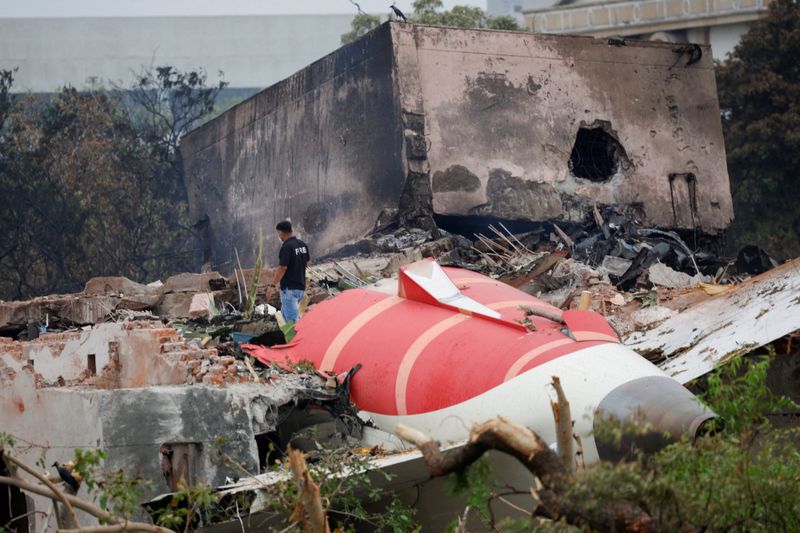

A year after Air India flight AI171 crashed shortly after take-off from Ahmedabad, questions over the aircraft’s final moments have widened beyond the cockpit, with the Federation of Indian Pilots (FIP) claiming that the Boeing 787 had faced a “plethora of problems”, including possible electrical failure, while investigators continue analysing the aircraft’s engines before preparing the final report.With the Aircraft Accident Investigation Bureau yet to release its final findings, the probe has now entered a crucial stage involving detailed examination of aircraft systems, engine components and data that could determine why the flight lost thrust moments after leaving the runway.FIP president Captain CS Randhawa, while addressing the media in Ahmedabad on Thursday, claimed that the organisation had consistently maintained that AI171 was linked to an electrical failure and argued that several technical questions remained unanswered. Randhawa alleged that the preliminary investigation report did not address multiple aspects related to the aircraft’s condition before the crash, including previous technical issues reported on the aircraft. According to him, the aircraft had arrived from Delhi with a stabiliser-related problem, after which motors were replaced before it was cleared for operations. He claimed that the aircraft had also experienced electrical issues affecting the air-conditioning system and other components.The FIP chief questioned whether these issues received adequate attention during the investigation and argued that all available aircraft data must be examined before reaching a final conclusion.Randhawa also raised questions over the cockpit voice recorder evidence cited in the preliminary report, arguing that only a brief exchange of around two seconds was highlighted and that the wider context required examination.Rejecting what he described as a “pilot suicide theory”, Randhawa said the focus should remain on examining technical possibilities rather than drawing conclusions before the investigation was complete.The FIP has also claimed that aircraft communications data may hold important clues and evidence.Randhawa said the pilots’ body had learnt about Aircraft Communications Addressing and Reporting System messages transmitted by the aircraft before the crash and questioned why such information was not mentioned in the preliminary report.The federation has argued that such messages could help the investigators understand whether any abnormal system behaviour occurred before the crash.The pilots’ body has further questioned the composition of the investigation team, calling for greater involvement of independent subject matter experts.Randhawa said while Captain RS Sandhu had been included in the investigation process, more independent technical experts should be part of the probe to ensure a comprehensive examination of all possible causes.The federation has also raised concerns over the role of regulators in the investigation, arguing that investigators must maintain complete independence.Meanwhile, the delay in the final report has brought attention to another critical aspect of the probe — analysis of the aircraft’s engines.Sources said the investigators had been examining the engines and conducted further technical testing, including analysis of the engine management unit in France with support from the manufacturer.The engine manufacturer, GE Aerospace, has been involved in the technical examination as part of the investigation process.The analysis is significant because the investigators are attempting to establish whether any engine-related issue or system interaction played a role in the chain of events before the crash.However, no final conclusion has been drawn linking the engines or any technical component to the accident.