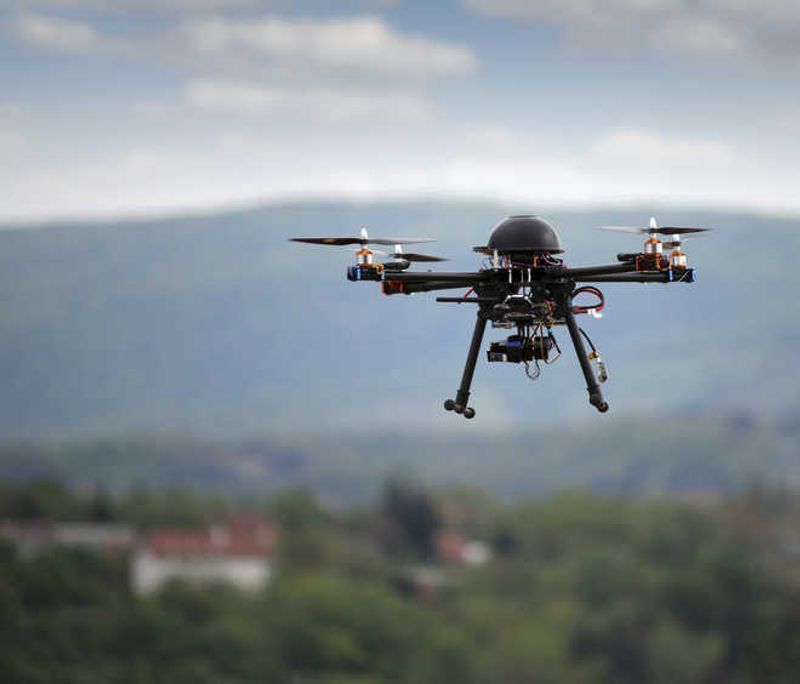

Punjab, Rajasthan and the Union Territory of Jammu and Kashmir remain highly vulnerable to trans-border drug trafficking from Pakistan, with Punjab alone accounting for the seizure of 2,086 kg heroin in 2025. This comes to 58 per cent of the total seizure of 3,567 kg of the drug.According to the annual report of the Narcotics Control Bureau (NCB) for 2025, the India-Pakistan border, especially through Punjab, has witnessed a marked shift towards drone-based smuggling in view of stringent ground-level checking.The report says this represents a technological adaptation in smuggling methodology that outpaces current enforcement capacity along that frontier.It mentions three major points of caution for India arising from opium cultivation in Afghanistan. The report says that though opium cultivation has shown a downward trend in the past few years owing to the Taliban regime’s focus on eradicating it, this in no way is a signal towards a diminishing threat to India.Firstly, it says that the volume decline is a supply-side phenomenon and not a demand-side one. Existing stockpiles have continued to sustain trafficking flows even as production has fallen; in other words, the pipeline has not yet run dry. Further, these pipelines are being used to traffic amphetamine-type stimulants (ATS) in the region.Secondly, trafficking networks have not abandoned the western corridor. Rather, they have adapted to the new situation. The India-Pakistan border, especially through Punjab, has witnessed a marked shift towards drone-based smuggling as a countermeasure against ground-level checks.Thirdly and most significantly, the collapse of the Afghan supply has not eliminated the Golden Crescent as a geopolitical risk; rather, it has redistributed it. Syndicates that historically depended on Afghan-origin heroin are now diversifying their products and some of it is flowing eastward into India, the NCB report has highlighted.This has been further highlighted in the report, which pointed out that the Golden Triangle continues to be a major source of methamphetamine through India’s north-eastern states.Meanwhile, Mizoram accounted for the seizure of 1,477 kg of the ATS. This was 42 per cent of the total national seizure of 3,269 kg.Other significant contributors were Manipur (535 kg), Delhi (454 kg), Gujarat (308 kg) and Karnataka (164 kg). Cannabis remained the most frequently seized narcotic drug in 2025.