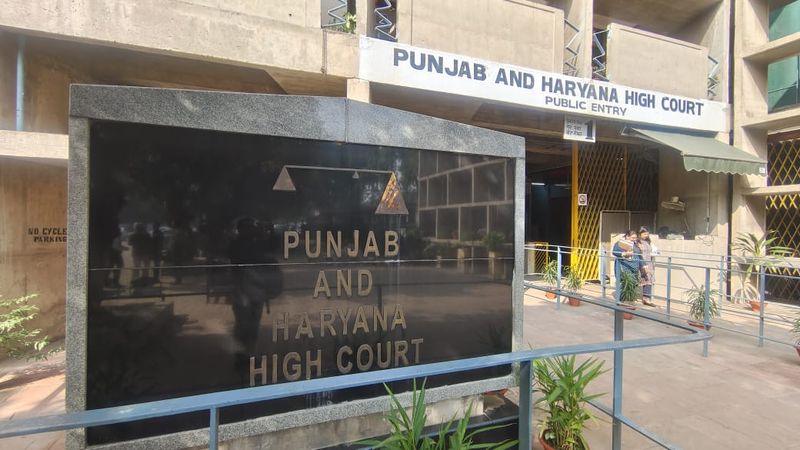

The Punjab and Haryana High Court has ruled that accused persons granted bail should not be denied their liberty merely because they are unable to arrange sureties, holding that courts can accept cash deposits and fixed deposits in lieu of surety bonds, while directing that Aadhaar-based verification should ordinarily replace the long-standing practice of obtaining attestations from lambardars, sarpanches and other local functionaries.The High Court also made it clear that once bail was granted, continued detention because of procedural delays, bureaucratic red tape, systemic inefficiency or difficulties in furnishing sureties would be illegal.The court added that trial courts could reduce, and in appropriate cases even waive, surety requirements if a prisoner continued to remain behind bars after being granted bail.The observations came in a judgment delivered by a Bench of Justice Anoop Chitkara and Justice Sukhvinder Kaur while dealing with the larger framework governing bail, sureties and release procedures.The High Court reiterated that bail was intended to secure the presence of an accused during trial and not to punish a person before conviction.“It must be recognised by county officials, and especially by magistrates, that bail is not meant as a punishment—It is meant to secure the appearance of the accused,” the Bench observed.The court explained that a bail bond was essentially a promise by an accused to attend trial and comply with conditions imposed by the court.“Bail is a promise by the accused to the arresting officer or to the Court to attend the trial and comply with the conditions stipulated in the order,” the Bench said.The Judges further observed that the primary purpose of obtaining security from an accused was not the recovery of money for the State. “The object of requiring an accused to give security for his appearance in Court is not to secure the payment of money to the State, for that is a secondary consideration, but to secure the presence of a person facing trial.”Examining the functioning of the surety system, the court observed that there was little data to establish that sureties actually played a meaningful role in securing the appearance of absconding accused before courts.“There is a lack of comprehensive data demonstrating the role of sureties in bringing the accused to justice,” the Bench observed.The court added that the legal system was familiar with the phenomenon of paid or professional sureties.“The menace of securing sureties by payment is well known within the legal fraternity. Some unscrupulous elements have established a flourishing business by serving as sureties and exploiting vulnerabilities in the system,” the Judges asserted.The Court also observed that the social circumstances in which the traditional requirement of sureties had evolved no longer reflected present realities.“There has been a paradigm shift in the social setting. People are constantly on the move, and territorial boundaries no longer restrict their pursuit of opportunities,” the Bench observed.Referring to Aadhaar-based identification, the court said technological developments had created reliable alternatives to conventional methods of verification.“The biometric identification mechanism (AADHAR) employed for targeted delivery of welfare benefits and to prevent duplication has provided a universal identity to each resident of India,” the Bench observed.The Judges added: “It is only fitting that the dependence of the accused on surety is minimised by giving alternative options.”The High Court also reaffirmed that cash security was a legally recognised alternative to sureties and could be accepted by courts in appropriate cases.“The Court can accept cash surety instead of personal surety. But the Court cannot demand personal surety, property surety and cash surety at a time—It is not cumulative. It is alternative,” the Bench held.The Bench added that persons who were strangers to an area, lacked local contacts or were otherwise unable to arrange sureties should not be denied bail for that reason alone.The court observed that an accused could furnish an equivalent cash deposit, a fixed deposit with automatic renewal and specified safeguards, or blocked funds equivalent to the surety amount instead of a conventional surety bond.The court also took note of the widespread practice of insisting upon verification of sureties through lambardars, nambardars, sarpanches, pradhans, panchayat members and municipal ward representatives.“It is common knowledge that many people who verify the authenticity of the sureties take money to cover travel expenses, loss of a day’s earnings, or charges for providing service,” the Bench observed.Calling for an end to the practice, the court added: “This loophole needs to be plugged in to shut down the illicit business of levying the above-mentioned service charges, thereby effectively preventing the practice of furnishing fake and professional sureties before courts.”The Bench consequently held that verification and authentication of sureties through Aadhaar would be sufficient and there would be “no need or justification” for verification through lambardar, nambardar, sarpanch, pradhan, panch, gram sewak, BDC members, municipal ward members and similar functionaries.Warning against delays in releasing prisoners after grant of bail, the Bench added: “Without intending to dilute any statutory procedures or binding judicial precedents, it has also to be emphasized that once a prisoner is released on bail, any custody of the said prisoner beyond the period necessary to complete the procedures for a formal release from prison would be illegal, if occasioned merely by delay on flimsy grounds, systemic inefficiency and mediocrity, or bureaucratic red tape.”The court said trial courts could pass reasoned orders reducing the surety amount or, after waiting for a couple of weeks, waive it altogether where release was being delayed because of inability to furnish sureties.Underscoring the constitutional significance of personal liberty, the Bench observed: “Social Justice is the signature tune of our Constitution and the little man in peril of losing his liberty is the consumer of Social Justice.”The High Court also laid down consequences for future violations of bail conditions. It clarified that if an accused jumped bail and the bail bonds were cancelled, any subsequent release would require a bail bond of Rs 1 lakh and at least one surety of an equal amount. If an accused jumped bail a second time, he would ordinarily not be entitled to bail unless the trial court granted it through a reasoned order.The Bench further held that bail conditions must be proportionate and directly connected with the purpose they seek to achieve.“The bail conditions imposed by the Court must not only have a nexus to the purpose that they seek to serve but must also be proportional to the purpose of imposing them,” the judges observed.