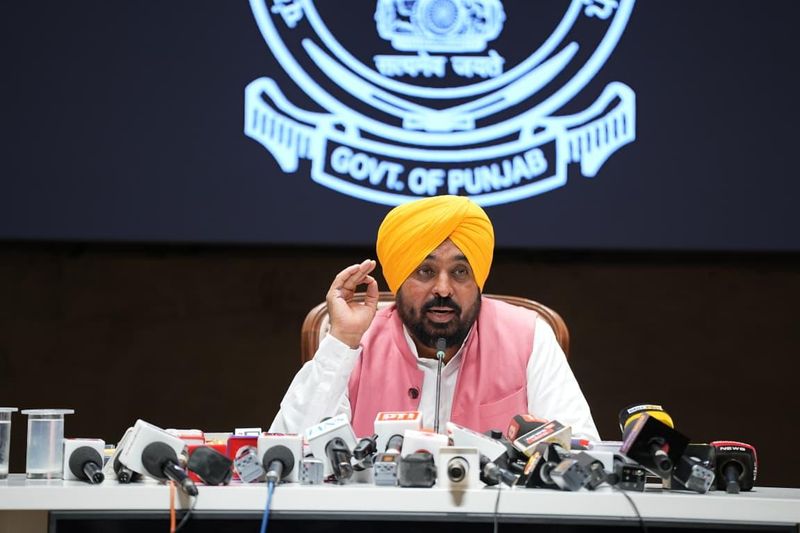

The Punjab Cabinet on Saturday decided to regularise 65,048 outsourced employees across 51 government departments.The move, which will end the role of private contractors in hiring manpower for the government, paves the way for bringing outsourced employees under the government umbrella.Addressing a press conference in Chandigarh, Chief Minister Bhagwant Singh Mann said, “The government will first employ the outsourced workers on contract for 10 years, after which they will be considered for absorption against regular sanctioned posts.”This will happen with the Punjab State Outsourced Personnel (Transition to Contractual Engagement) Bill, 2026 and the Punjab Contractual Personnel (Absorption Against Sanctioned Vacancies) Bill, 2026. More than 26,000 workers will feature on the first list of the beneficiaries.The CM said the implementation process would begin within 45 days of Cabinet approval and eligible categories would be notified in phases by the Departments of Personnel and Finance.A formal bill will be introduced in the monsoon session of the state Vidhan Sabha.The move will end the outsourcing of the Group C and D employees who have been making representations of exploitation at the hands of their employers to the state government over the past several years.They alleged systemic suppression of wages, job insecurity, denial of basic benefits (like medical leave and pensions) and delayed salaries. The future hiring will be carried out through direct government recruitment processes.Among those under consideration, employees who are engaged in activities involving physical risk, like fire services and those handling sewer, should have completed three years of service.The benefit will be available to normal employees who have completed five years of service.The list of the beneficiaries included 15,753 complaint handling workers in the Power sector; metre readers and nodal workers; 8438 local government employees; 8,373 from Cooperative institutions; 7,704 workers in School Education; 4,746 workers in the Transport Department; and 1,472 outsourced fire personnel.The list also included 2,688(Health and Family Welfare), 1,575(Water Supply and Sanitation), 1,533 (Agriculture), 1,311(Jails), 1,251 (Technical Education), 1,570(PWD (B&R)), 1,322(General Administration) and 1,231(Medical Education).CM Mann said, “Wages will be credited directly into employees’ bank accounts without any agency deductions or commissions. Employees will receive statutory maternity benefits and ten days of casual leave every calendar year. No worker will be removed from service without reasons being recorded in writing and without being allowed to defend.”Cabinet reconstitutes panel to examine DA and pension arrearsIn another important decision, the Cabinet granted ex-post facto approval for the reconstitution of a Cabinet Sub-Committee related to pending arrears of revised pay, pensions, leave encashment and Dearness Allowance.The committee will consider payment of arrears arising from revised pay and pension benefits between January 1, 2016 and June 30, 2021, besides examining pending DA and Dearness Relief dues from July 1, 2021 to March 31, 2024. The committee will also study issues related to Dearness Allowance and Dearness Relief for various categories of employees and pensioners.Seven exclusive special courts approved for speedy corruption trialsTo ensure faster disposal of corruption cases under the Prevention of Corruption Act, 1988, the Cabinet approved the establishment of seven Exclusive Special Courts across Punjab.Three courts will be established in SAS Nagar, while one court each will be set up in Jalandhar, Ludhiana, Amritsar and Patiala.The Cabinet also approved the creation of seven posts of Additional District and Sessions Judges along with 63 supporting staff positions for the functioning of these courts.Amendment approved in Punjab Superior Judicial Service RulesThe Cabinet also approved amendments to Rules 7, 10, 12 and Appendix ‘B’ of the Punjab Superior Judicial Service Rules, 2007.The proposed amendments are aimed at providing promotion-related benefits to serving superior judicial officers in Punjab and are expected to strengthen career progression opportunities within the state’s judicial services.